

Archive position — measured, not model output
0 likes on Devpost
2,263 of the 7,850 archived projects have more likes, and 5,587 share exactly 0 — so this project's #7,638 place in the like-ranked listing is a tie-break inside that group, not a ranking.
Projects (log scale)
Likes on Devpost. ▲ marks this project's group.
Show the figures
| Likes | Projects | Share of archive |
|---|---|---|
| 0 | 5,587 | 71.2% |
| 1 | 1,758 | 22.4% |
| 2 | 284 | 3.6% |
| 3–4 | 132 | 1.7% |
| 5–9 | 75 | 1.0% |
| 10+ | 14 | 0.2% |
 User Stories BotA demo video on every pull request
Get a demo video on every new feature
GitHub App that watches your pull requests and records a narrated, captioned demo.
Save time on demo prep and make informed decisions faster with a video walkthrough of every new feature.
Executive Summary
What the company appears to be
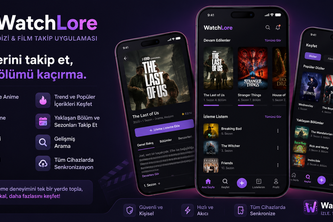
WatchLore is a self-reported multilingual movie, series and anime tracker built as a hackathon project by one developer (AHMET HAZAR). It supports personal watchlists, shared lists, episode tracking, reminders, and cross-device sync across web and mobile. The app was developed using React, TypeScript, Supabase, Firebase, and OpenAI’s Codex with GPT-5.6 during the OpenAI Build Week hackathon.
What changed
The project evolved from a basic tracker into a more complete product through use of AI tools like Codex and GPT-5.6, which helped implement features such as authentication flows, Supabase-backed sync, shared lists, notification scheduling, native packaging, and tests.
The single most important open question
Is there any evidence of user adoption or commercial traction beyond the hackathon submission? The description does not indicate whether WatchLore has moved past prototype stage or gained users outside of the developer team.
What The Product Actually Is
- The description states that WatchLore is a multilingual tracker for movies, TV series, anime and episodes.
- It supports personal watchlists, shared lists, episode tracking, reminders, and cross-device sync.
- The app is built with React, TypeScript, TanStack Router/Start, Supabase, TMDB, TVMaze, Web Push, Firebase Cloud Messaging/APNs-ready notification flows, and Capacitor for Android/iOS packaging.
- It includes Google/Apple-oriented auth architecture, Supabase sync, shared lists, episode notifications, native packaging, regression tests, and a demo video showing core experience.
Confidence Low — this is self-reported functionality with no independent verification of actual product delivery or usage.
Positioning & Claim Evolution
- The author claims WatchLore addresses the everyday problem of losing track of what one watches across platforms.
- It positions itself as a tool for managing personal and shared viewing lists, with reminders and cross-device sync.
- During the hackathon, the team used Codex and GPT-5.6 to extend functionality beyond basic tracking into areas like authentication, notifications, and native packaging.
- The evolution from tracker to full-featured app is described as being driven by AI assistance.
Confidence Low — claims are based on self-reporting without evidence of market validation or product adoption.
Target Customer & ICP
- The description does not specify a defined customer segment or ideal customer profile (ICP).
- It implies the app targets people who watch movies, series and anime across multiple platforms.
- There is no indication of specific demographics, user behavior patterns, or buyer personas.
Confidence Very low — no evidence provided about target users or segmentation strategy.
Business Model & Pricing Evidence
- No business model or pricing information is provided in the description.
- The author does not mention monetization plans, subscription tiers, freemium models, or any revenue streams.
- There is no indication of whether WatchLore intends to charge users or offer premium features.
Confidence Not evidenced — no commercial structure described.
Technical & Delivery Signals
- Built with React, TypeScript, TanStack Router/Start, Supabase, TMDB, TVMaze, Firebase Cloud Messaging/APNs-ready notification flows, and Capacitor for Android/iOS packaging.
- Uses Codex and GPT-5.6 during OpenAI Build Week to improve code quality, test coverage, documentation, and feature implementation.
- Includes Google/Apple-oriented auth architecture, Supabase sync, shared lists, episode notifications, native packaging, regression tests, and a demo video.
- The team reports having completed a runnable project with performance fixes and submission materials.
Confidence Moderate — technical stack is detailed but lacks evidence of production deployment or scalability.
Traction & Maturity Signals
- The project was submitted to the OpenAI 2026 hackathon on Devpost.
- It has reached a "runnable" state with demo video and regression tests.
- No mention of user base, downloads, active usage, or engagement metrics.
- The team plans to expand closed testing and improve recommendation flows.
Confidence Very low — no traction data or evidence of real-world adoption beyond the hackathon.
Competitive Context
- The description does not provide any information about competitors or market positioning.
- No mention of existing solutions in the space of movie/series/anime tracking or social discovery tools.
- No indication of how WatchLore differentiates from similar apps or platforms.
Confidence Not evidenced — no competitive analysis or differentiation strategy described.
Open Questions & Risks
- The project is a single-developer hackathon submission with no verified users or revenue.
- The use of AI tools like Codex and GPT-5.6 may indicate reliance on automation rather than deep product-market fit.
- No evidence of scalability, performance testing beyond demo, or long-term sustainability.
- Lack of business model, pricing, or monetization strategy raises concerns about commercial viability.
Confidence Moderate — risks are inferred from lack of evidence around traction and business planning.
Questions the description leaves open
- What is the actual user base beyond the developer team?
- Has WatchLore been tested with real users or just internal use cases?
- Are there any plans to monetize or scale the product beyond its current prototype stage?
- How does the app handle data privacy and compliance (e.g., GDPR)?
- What are the key assumptions behind the product’s value proposition, and how have they been validated?
- Is there a plan for ongoing development, support, or maintenance post-hackathon?
Overall Assessment
- This is a self-reported hackathon project with no evidence of commercial traction, revenue, or user adoption.
- The product shows early-stage functionality but lacks any indication of market validation or scalability.
- There is no clear business model, pricing strategy, or competitive positioning.
- Given the absence of verified users, revenue, or customer data, this appears to be a pre-product idea at best.
Assessment Not ready for investment or partnership consideration without further evidence of traction, user engagement, or commercial viability. The project remains in early prototype phase with no demonstrated market demand or business model.
User Stories BotA demo video on every pull request
Get a demo video on every new feature
GitHub App that watches your pull requests and records a narrated, captioned demo.
Save time on demo prep and make informed decisions faster with a video walkthrough of every new feature.
Source
Submitted to the OpenAI 2026 hackathon on Devpost. Project home on Devpost. Back to the full gallery on Devpost.
This competitive analysis was produced by top-founders.com (opens in a new tab)
Generated by a language model from this project's public Devpost page — its tagline, the author's own write-up and any built-with tags listed there — as captured in August 2026. Short quotations are the author's words. It is an opinion on the idea as a business, not on the people behind it, and it reflects the description as published then. If the project has moved on, request a correction below. The analysis is not independent research and contains no verified traction, revenue or customer data.
An independent guide by KFG International LLC — not affiliated with, endorsed by, or connected to Devpost or OpenAI.