

Archive position — measured, not model output
0 likes on Devpost
2,263 of the 7,850 archived projects have more likes, and 5,587 share exactly 0 — so this project's #7,628 place in the like-ranked listing is a tie-break inside that group, not a ranking.
Projects (log scale)
Likes on Devpost. ▲ marks this project's group.
Show the figures
| Likes | Projects | Share of archive |
|---|---|---|
| 0 | 5,587 | 71.2% |
| 1 | 1,758 | 22.4% |
| 2 | 284 | 3.6% |
| 3–4 | 132 | 1.7% |
| 5–9 | 75 | 1.0% |
| 10+ | 14 | 0.2% |
 User Stories BotA demo video on every pull request
Get a demo video on every new feature
GitHub App that watches your pull requests and records a narrated, captioned demo.
Save time on demo prep and make informed decisions faster with a video walkthrough of every new feature.
Executive Summary
What the company appears to be
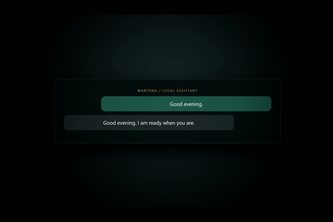
Wantong is a self-reported local AI companion built with Codex and GPT-5.6, designed for work and everyday life. It combines voice interaction, task automation, email drafting, meeting summaries, and original music generation. The project was submitted as part of the OpenAI 2026 hackathon.
What changed
The description does not indicate any prior version or evolution — this is a single self-reported project submission.
Single most important open question
Is there evidence of traction, revenue, or customer adoption beyond the author’s own development?
What The Product Actually Is
- The description states that Wantong is an AI companion.
- It includes voice interaction, meeting summarization, email drafting, task management, knowledge organization, and original song generation.
- It uses local LLMs, speech recognition, text-to-speech, agent workflows, Python backend, and custom UI.
- It runs locally whenever possible.
- The system integrates Codex and GPT-5.6 in its development.
Not evidenced No details on product architecture, APIs, or technical stack beyond what the author reports. No mention of scalability, deployment model, or integration points.
Positioning & Claim Evolution
- The author states that Wantong began with a question: “Can an AI companion be genuinely useful in everyday life while still feeling warm and personal?”
- It is positioned as a local AI companion combining productivity and companionship.
- It aims to provide assistance in daily work and communication, not just isolated features.
- The claim is that it offers a complete experience where conversation, productivity, and creativity feel connected.
Inference The positioning suggests an intent to build a personal assistant with emotional or relational appeal, but this is not substantiated by evidence of user feedback or adoption.
Target Customer & ICP
- The description states that Wantong is built for work and everyday life.
- It targets individuals who may benefit from voice interaction, task automation, and creative assistance.
- The author identifies a personal use case rather than a defined customer segment or persona.
Not evidenced No evidence of target personas, user research, or customer interviews. No indication of whether the product is aimed at consumers or enterprise users.
Business Model & Pricing Evidence
- There is no mention of pricing, monetization strategy, or business model in the description.
- The project was submitted to a hackathon and does not indicate any commercial offering or revenue streams.
Not evidenced No evidence of how the product would be sold, licensed, or offered to users. No pricing tiers, subscriptions, or usage models are described.
Technical & Delivery Signals
- The system uses local LLMs, speech recognition (Whisper), text-to-speech (TTS), agent workflows, and Python backend.
- It was built with Codex and GPT-5.6.
- The UI is custom-built.
- Everything runs locally whenever possible.
Inference The use of local inference suggests a privacy-conscious or resource-constrained approach, but no evidence of performance metrics, scalability, or delivery architecture.
Traction & Maturity Signals
- The project was submitted to the OpenAI 2026 hackathon.
- It is described as a single-person effort (team size: 1).
- No evidence of user adoption, customer base, or product usage data.
Not evidenced No signs of traction, revenue, or user engagement beyond the author’s own development. No mention of beta users, pilot programs, or market testing.
Competitive Context
- The description does not compare Wantong to existing AI assistants or companions.
- It does not name competitors or reference the broader marketplace for AI companions or productivity tools.
Not evidenced No competitive analysis, positioning against other products, or awareness of the competitive landscape.
Open Questions & Risks
- The project is self-reported and unverified — no third-party validation or evidence of traction.
- It was built by a single person (team size: 1), raising questions about scalability and long-term maintenance.
- No pricing, monetization, or business model is described.
- The product is presented as a hackathon submission, not a commercial offering.
Inference There is no evidence of a viable path to market or sustainable business model. The lack of user data or revenue signals raises concerns about commercial viability.
Questions the description leaves open
- What specific problem are you solving for users, and how do you know it matters?
- How does Wantong differ from existing AI assistants in the market?
- Have you tested the product with real users? If so, what feedback did you get?
- What is your plan for monetization or commercialization?
- How do you intend to scale beyond a single-person development effort?
- What are the technical limitations of running everything locally, and how do you plan to address them?
Overall Assessment
- The project is described as a hackathon submission with no evidence of traction or commercial viability.
- It lacks any indication of revenue, customers, or product-market fit.
- The author’s own account does not suggest a scalable or monetizable offering.
Assessment Not evidenced. This is a self-reported idea or prototype with no supporting data to assess its potential for investment or partnership. The lack of evidence around users, revenue, or business model makes it difficult to evaluate beyond the author's claims.
User Stories BotA demo video on every pull request
Get a demo video on every new feature
GitHub App that watches your pull requests and records a narrated, captioned demo.
Save time on demo prep and make informed decisions faster with a video walkthrough of every new feature.
Source
Submitted to the OpenAI 2026 hackathon on Devpost. Project home on Devpost. Back to the full gallery on Devpost.
This competitive analysis was produced by top-founders.com (opens in a new tab)
Generated by a language model from this project's public Devpost page — its tagline, the author's own write-up and any built-with tags listed there — as captured in August 2026. Short quotations are the author's words. It is an opinion on the idea as a business, not on the people behind it, and it reflects the description as published then. If the project has moved on, request a correction below. The analysis is not independent research and contains no verified traction, revenue or customer data.
An independent guide by KFG International LLC — not affiliated with, endorsed by, or connected to Devpost or OpenAI.