

Archive position — measured, not model output
0 likes on Devpost
2,263 of the 7,850 archived projects have more likes, and 5,587 share exactly 0 — so this project's #7,508 place in the like-ranked listing is a tie-break inside that group, not a ranking.
Projects (log scale)
Likes on Devpost. ▲ marks this project's group.
Show the figures
| Likes | Projects | Share of archive |
|---|---|---|
| 0 | 5,587 | 71.2% |
| 1 | 1,758 | 22.4% |
| 2 | 284 | 3.6% |
| 3–4 | 132 | 1.7% |
| 5–9 | 75 | 1.0% |
| 10+ | 14 | 0.2% |
 User Stories BotA demo video on every pull request
Get a demo video on every new feature
GitHub App that watches your pull requests and records a narrated, captioned demo.
Save time on demo prep and make informed decisions faster with a video walkthrough of every new feature.
Executive Summary
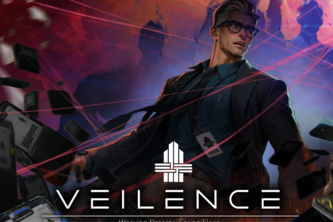
The description states that VEILENCE is a corporate-horror roguelike deckbuilder game built by a concept artist with zero coding experience, using AI tools including Codex and GPT-5.6. The author claims to have used these tools to build the entire product in 10 weeks, with no prior engineering background. The project was submitted to an OpenAI hackathon and is now available on Steam as SEVEIL. The single most important open question is whether the described AI-assisted development approach is sustainable or replicable for a commercial product.
What The Product Actually Is
The description states that VEILENCE is a "corporate-horror roguelike deckbuilder". It describes gameplay elements including:
- A narrative set in a textile company where players are newly hired
- Card-based combat mechanics involving performance reviews, reports and overtime requests
- Living calendar planning system
- Deck building with 118 cards across 6+ archetypes
- Recruitment of coworkers as enemies
- Resource management (health and mind)
- Executive boss fights with separate systems per run
The browser demo covers Chapter One — two archetypes (Rumor & Leader), three in-game weeks, and the first boss.
Positioning & Claim Evolution
The description states that this is a "pre-existing project" extended during Build Week using AI tools. The author positions themselves as a concept artist who cannot code but has directed an AI agent to build a full game. The claim evolution shows:
- Initial positioning: "I'm a concept artist — fifteen years in the industry, and I can't write code"
- Evolution: "I approached this differently: instead of learning to program, I directed AI agents"
- Final positioning: "VEILENCE is my proof that an artist who can't code can still direct a real game into being"
Target Customer & ICP
The description states that the product is a game with a corporate-horror theme. It does not specify target customer segments or personas. The author describes gameplay as involving "performance reviews, reports, and overtime requests" which suggests targeting players interested in workplace satire or horror themes.
Business Model & Pricing Evidence
The description states that VEILENCE is now available on Steam as SEVEIL — free demo, no password needed. It does not provide evidence of pricing models, monetization strategies or revenue streams beyond the free demo.
Technical & Delivery Signals
The description states that the project was built using:
- Cloudflare Pages
- Codex (GPT-5.6)
- Electron
- HTML5
- JavaScript
- Web technologies
It describes technical achievements including:
- Architecture & contracts for card effects, targeting and enemy skills
- Seeded RNG
- Versioned save schema with cross-version replay gate and migration matrix
- Combat correctness with settlement transaction boundary and headless battle-replay harness
- Multi-phase bosses with cinematic presentation
- UI & teaching features including tutorial-lifecycle hardening and multi-enemy view
- 4K-master resolution engine
- Full ZH/EN localization
- Windows portable build and password-gated Cloudflare Pages web deployment
Traction & Maturity Signals
The description states that the browser demo used during Build Week judging has been retired, and the current version is on Steam as SEVEIL. It does not provide evidence of user traction, customer adoption or usage metrics.
Competitive Context
The description does not provide evidence of competitive landscape analysis or direct competitors. The author focuses on their unique approach rather than market positioning or competition.
Open Questions & Risks
- The description states that the author has "zero coding" experience and built the product using AI tools, which raises questions about scalability and maintainability
- No evidence provided of revenue, customers or traction beyond the demo
- The claim that a non-programmer can direct an AI to build a full game raises questions about the replicability of this approach
- The project is described as a "pre-existing project" with only "substantial extension" during Build Week, suggesting limited development time
Questions the description leaves open
- What specific technical limitations did you encounter when using AI tools for development?
- How do you plan to scale this development approach beyond the current prototype?
- What are your plans for monetization and revenue generation?
- How do you intend to maintain and update the game given the AI-assisted development approach?
- What is your long-term vision for the product beyond the current demo?
Overall Assessment
Not evidenced. The description does not provide sufficient information about financials, traction, market opportunity or strategic fit to assess investment or partnership potential.
User Stories BotA demo video on every pull request
Get a demo video on every new feature
GitHub App that watches your pull requests and records a narrated, captioned demo.
Save time on demo prep and make informed decisions faster with a video walkthrough of every new feature.
Source
Submitted to the OpenAI 2026 hackathon on Devpost. Project home on Devpost. Back to the full gallery on Devpost.
This competitive analysis was produced by top-founders.com (opens in a new tab)
Generated by a language model from this project's public Devpost page — its tagline, the author's own write-up and any built-with tags listed there — as captured in August 2026. Short quotations are the author's words. It is an opinion on the idea as a business, not on the people behind it, and it reflects the description as published then. If the project has moved on, request a correction below. The analysis is not independent research and contains no verified traction, revenue or customer data.
An independent guide by KFG International LLC — not affiliated with, endorsed by, or connected to Devpost or OpenAI.