

Archive position — measured, not model output
0 likes on Devpost
2,263 of the 7,850 archived projects have more likes, and 5,587 share exactly 0 — so this project's #7,428 place in the like-ranked listing is a tie-break inside that group, not a ranking.
Projects (log scale)
Likes on Devpost. ▲ marks this project's group.
Show the figures
| Likes | Projects | Share of archive |
|---|---|---|
| 0 | 5,587 | 71.2% |
| 1 | 1,758 | 22.4% |
| 2 | 284 | 3.6% |
| 3–4 | 132 | 1.7% |
| 5–9 | 75 | 1.0% |
| 10+ | 14 | 0.2% |
 User Stories BotA demo video on every pull request
Get a demo video on every new feature
GitHub App that watches your pull requests and records a narrated, captioned demo.
Save time on demo prep and make informed decisions faster with a video walkthrough of every new feature.
Executive Summary
What the company appears to be: Twin Tongue is a self-reported Windows application that enables real-time bidirectional voice translation during calls. The author states it supports English, Spanish, French, and Catalan, with configurable synthesized voices. It uses Python-based audio pipelines connected through VB-CABLE to route speech between participants in their preferred languages.
What changed: This is a prototype submitted for the OpenAI 2026 hackathon. There is no evidence of prior commercial activity or product development beyond this single project submission.
The single most important open question: Is there any evidence of traction, revenue, customer adoption, or market validation that would indicate whether this concept has commercial viability beyond a proof-of-concept?
What The Product Actually Is
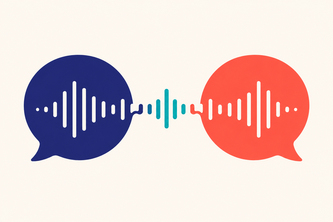
The description states Twin Tongue is a Windows application that provides bidirectional, near-real-time speech translation during voice calls. It creates two independent audio pipelines:
- The remote participant’s speech is captured, transcribed, translated, synthesized, and played through the agent’s headphones.
- The agent’s speech follows the same process in reverse, sending the translated voice back into the calling application.
It supports English, Spanish, French, and Catalan with configurable synthesized voices. The system includes a local control panel showing both interlocutors, original transcription, translated text, language selection, audio-device configuration, pipeline state, voice selection, diagnostic recording, and visibility into connected call applications.
The author describes it as implemented in Python using VB-CABLE for Windows audio routing, with components including:
- Speech-to-text (Silero VAD + ElevenLabs Realtime STT)
- Translation (Google Cloud Translation)
- Text-to-speech (ElevenLabs streaming TTS)
- Audio processing and real-time pipeline management
Not evidenced: No evidence of actual deployment, usage, or performance metrics beyond the author's own account.
Positioning & Claim Evolution
The author positions Twin Tongue as a tool for customer service and global collaboration, aimed at solving language barriers that lead to repeated explanations, call transfers, longer resolution times, and specialist communication gaps.
It is described as built for companies and individuals who want to communicate more effectively without requiring both participants to speak the same language.
The project evolved from personal professional experience observing daily productivity issues caused by language barriers in technical support and customer service settings.
Not evidenced: No evidence of prior positioning, branding, or market messaging beyond this single submission. The claim of solving real-world problems is self-reported.
Target Customer & ICP
The author states Twin Tongue is built for customer service and global collaboration — specifically targeting:
- Support teams
- Specialists working across languages
- Colleagues collaborating internationally
- Individuals needing language assistance during voice conversations
It is intended to help users collaborate effectively regardless of the language they speak.
Not evidenced: No evidence of specific customer segments, personas, or market research. The author does not describe any target customer interviews, user feedback, or segmentation analysis.
Business Model & Pricing Evidence
The description makes no mention of pricing, monetization strategy, or business model. It is a prototype submitted to a hackathon and lacks any indication of commercial intent or revenue streams.
Not evidenced: No evidence of pricing structure, licensing, subscription models, or customer acquisition costs.
Technical & Delivery Signals
Key technical elements described:
- Built in Python
- Uses VB-CABLE for Windows audio routing
- Implements asynchronous audio pipelines
- Integrates with Silero VAD, ElevenLabs STT/TTS, Google Cloud Translation
- Includes configurable voice activity detection and end-of-speech segmentation
- Features diagnostic recording, logging, metrics, and automated tests (169 tests)
- Uses Codex and GPT-5.6 for engineering collaboration
The author notes challenges in real-time audio loop behavior, feedback control, latency, and Windows audio routing.
Not evidenced: No evidence of production-grade infrastructure, scalability, or deployment practices beyond a prototype.
Traction & Maturity Signals
There is no evidence of traction, revenue, customers, or adoption. The project was submitted to a hackathon and described as a validated prototype with end-to-end functional calls but not yet deployed in any commercial environment.
Not evidenced: No data on usage, retention, conversion, or market response.
Competitive Context
The description does not mention competitors or existing solutions in the real-time voice translation space. It is unclear whether similar tools already exist or how Twin Tongue would differentiate itself.
Not evidenced: No competitive landscape analysis, benchmarking, or differentiation strategy described.
Open Questions & Risks
- Prototype-only: This is a hackathon submission with no evidence of commercialization.
- Limited scope: Only supports four languages and Windows OS.
- No traction or revenue: No evidence of customers, sales, or monetization.
- Technical complexity: Real-time audio systems are highly complex; lack of production experience raises risk.
- Unverified claims: All statements are self-reported without independent verification.
Inference: Given the lack of commercial activity and limited technical scope, there is a high risk that Twin Tongue will not scale beyond its current prototype form.
Questions the description leaves open
- What specific customer pain points were you trying to solve, and how did you validate those needs?
- Have you tested this tool with actual users in real-world scenarios outside of the hackathon?
- How do you plan to address latency, audio quality issues, and reliability concerns at scale?
- Is there any evidence of interest from potential customers or partners beyond your own experience?
- What are the key technical limitations that prevent this from being a production-ready solution today?
- Do you have plans for expanding support beyond English/Spanish/French/Catalan?
- How do you intend to monetize this product, and what is your go-to-market strategy?
Overall Assessment
Not evidenced: No evidence of commercial viability, market traction, or financial performance.
The project is a self-reported prototype submitted for a hackathon. It shows technical capability in building a real-time audio translation system but lacks any indication of product-market fit, customer validation, or business development beyond the initial idea.
Confidence level: Low — based entirely on one unverified source with no external corroboration or evidence of traction.
This is not a commercial opportunity at this stage. It may be an early-stage idea worth exploring if further development is pursued, but it does not meet criteria for investment or partnership consideration without additional validation and progress toward product-market fit.
User Stories BotA demo video on every pull request
Get a demo video on every new feature
GitHub App that watches your pull requests and records a narrated, captioned demo.
Save time on demo prep and make informed decisions faster with a video walkthrough of every new feature.
Source
Submitted to the OpenAI 2026 hackathon on Devpost. Project home on Devpost. Back to the full gallery on Devpost.
This competitive analysis was produced by top-founders.com (opens in a new tab)
Generated by a language model from this project's public Devpost page — its tagline, the author's own write-up and any built-with tags listed there — as captured in August 2026. Short quotations are the author's words. It is an opinion on the idea as a business, not on the people behind it, and it reflects the description as published then. If the project has moved on, request a correction below. The analysis is not independent research and contains no verified traction, revenue or customer data.
An independent guide by KFG International LLC — not affiliated with, endorsed by, or connected to Devpost or OpenAI.