

Archive position — measured, not model output
0 likes on Devpost
2,263 of the 7,850 archived projects have more likes, and 5,587 share exactly 0 — so this project's #7,426 place in the like-ranked listing is a tie-break inside that group, not a ranking.
Projects (log scale)
Likes on Devpost. ▲ marks this project's group.
Show the figures
| Likes | Projects | Share of archive |
|---|---|---|
| 0 | 5,587 | 71.2% |
| 1 | 1,758 | 22.4% |
| 2 | 284 | 3.6% |
| 3–4 | 132 | 1.7% |
| 5–9 | 75 | 1.0% |
| 10+ | 14 | 0.2% |
 User Stories BotA demo video on every pull request
Get a demo video on every new feature
GitHub App that watches your pull requests and records a narrated, captioned demo.
Save time on demo prep and make informed decisions faster with a video walkthrough of every new feature.
Executive Summary
Company: Twilight Expedition
Self-reported basis: The description is entirely from the author’s own submission to a hackathon, unverified and without external corroboration.
Commercial due-diligence read: Twilight Expedition appears to be an experimental solo developer project exploring AI-assisted game development for a mobile idle RPG. It is not evidenced to have any revenue, customers or traction. The author states the project is ongoing and experimental, with no indication of commercial viability or market adoption.
What The Product Actually Is
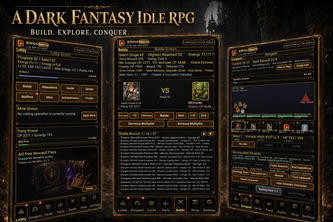
The description states that Twilight Expedition is a mobile idle RPG. It includes features such as:
- Hero progression
- Relic system
- Equipment upgrades
- Dungeon progression
- Offline rewards
- Attendance rewards
- Mailbox rewards
- Persistent save system
It was built using Android Studio and Java, with integration of OpenAI Codex and GPT-5.6 during development. The author notes that AI was used for:
- Implementing gameplay systems
- Debugging Java code
- Designing RPG mechanics
- Balancing progression
- Improving UI architecture
- Iterating game features
- Refactoring existing code
However, the human developer made all creative and design decisions, including art direction, feature priorities, and progression design.
Inference: The product is a mobile game built by one person using AI tools to assist in development. It is not evidenced to be commercially available or used by players beyond the author’s own testing.
Positioning & Claim Evolution
The author states that the project was inspired by a desire to explore how far a solo developer could go when working alongside AI. The goal was to create a game where progression, strategy, and long-term growth feel rewarding while demonstrating a modern AI-assisted development workflow.
The positioning is framed as an experiment in AI-assisted development, not a commercial product. It is described as:
- A demonstration of AI as an engineering partner
- An exploration of how AI can accelerate development without replacing human creativity
Inference: The project is positioned as a developmental experiment, not a commercial offering. No claims are made about market fit, user adoption, or monetization.
Target Customer & ICP
The description does not state the target customer or ideal customer profile (ICP). It only mentions that the game is an idle RPG and that it includes features like hero progression, relics, and dungeon challenges. The author notes that all gameplay direction was decided manually by the developer.
Inference: No evidence of a defined customer segment or ICP exists in the provided description.
Business Model & Pricing Evidence
There is no evidence of any business model or pricing structure in the description. The project is described as an ongoing experiment, and no mention is made of monetization, subscriptions, in-app purchases, or sales.
Inference: No business model or pricing data is evidenced. The product is not described as sold or offered for purchase.
Technical & Delivery Signals
The project was built using:
- Android Studio
- Java
- OpenAI Codex and GPT-5.6
The author states that AI was used to assist with:
- Implementing gameplay systems
- Debugging code
- Designing RPG mechanics
- Balancing progression
- Improving UI architecture
- Iterating features
- Refactoring code
However, all design decisions were made manually by the developer.
Inference: The technical stack is standard for mobile development. AI was used as a tool to assist in coding and iteration, but not to make creative or strategic decisions.
Traction & Maturity Signals
The project is described as an ongoing experiment, with no evidence of traction, users, or adoption. It was submitted to the OpenAI 2026 hackathon, indicating it is a prototype or proof-of-concept. The author states that the current version is only the beginning and that the project will continue to expand.
Inference: No traction or maturity signals are evident. The project is in an early, experimental phase with no indication of user engagement or product-market fit.
Competitive Context
The description does not provide any information about competitors or market context. It does not state whether similar games exist, nor does it describe how Twilight Expedition compares to them.
Inference: No competitive context is evidenced. The project is described as a solo developer experiment with no reference to existing idle RPGs or AI-assisted development tools in the market.
Open Questions & Risks
- No commercial traction or revenue: The project is described as experimental and not yet commercially available.
- Solo developer limitation: With only one team member, scalability and long-term development capacity are uncertain.
- Unproven business model: No monetization strategy or customer base is evident.
- Experimental nature: The project is described as a "work in progress" with no indication of product-market fit or user retention.
Questions the description leaves open
- What is the current status of the game? Is it playable?
- Are there any plans for monetization or commercial launch?
- How does the AI-assisted development workflow scale beyond this prototype?
- Has the developer tested the game with real users, and what feedback was received?
- What are the long-term goals for the project beyond the hackathon version?
Overall Assessment
Not evidenced: The description provides no evidence of revenue, customers, traction or commercial viability. It is a solo developer experiment submitted to a hackathon. No investment or partnership opportunity is evident from the information provided.
The author states that the project is ongoing and experimental, with no indication of market readiness or commercial potential. The product is not demonstrated to be a viable business or product offering at this stage.
User Stories BotA demo video on every pull request
Get a demo video on every new feature
GitHub App that watches your pull requests and records a narrated, captioned demo.
Save time on demo prep and make informed decisions faster with a video walkthrough of every new feature.
Source
Submitted to the OpenAI 2026 hackathon on Devpost. Project home on Devpost. Back to the full gallery on Devpost.
This competitive analysis was produced by top-founders.com (opens in a new tab)
Generated by a language model from this project's public Devpost page — its tagline, the author's own write-up and any built-with tags listed there — as captured in August 2026. Short quotations are the author's words. It is an opinion on the idea as a business, not on the people behind it, and it reflects the description as published then. If the project has moved on, request a correction below. The analysis is not independent research and contains no verified traction, revenue or customer data.
An independent guide by KFG International LLC — not affiliated with, endorsed by, or connected to Devpost or OpenAI.