

Archive position — measured, not model output
0 likes on Devpost
2,263 of the 7,850 archived projects have more likes, and 5,587 share exactly 0 — so this project's #7,292 place in the like-ranked listing is a tie-break inside that group, not a ranking.
Projects (log scale)
Likes on Devpost. ▲ marks this project's group.
Show the figures
| Likes | Projects | Share of archive |
|---|---|---|
| 0 | 5,587 | 71.2% |
| 1 | 1,758 | 22.4% |
| 2 | 284 | 3.6% |
| 3–4 | 132 | 1.7% |
| 5–9 | 75 | 1.0% |
| 10+ | 14 | 0.2% |
 User Stories BotA demo video on every pull request
Get a demo video on every new feature
GitHub App that watches your pull requests and records a narrated, captioned demo.
Save time on demo prep and make informed decisions faster with a video walkthrough of every new feature.
Executive Summary
What the company appears to be
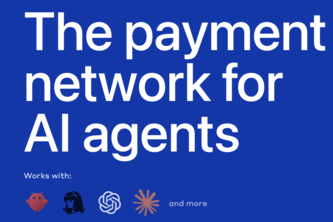
Tilde Pay is a self-reported project that aims to give AI agents access to financial infrastructure — specifically, virtual bank accounts, debit cards (planned), and crypto wallets — to enable them to make real-world payments via x402 and MPP protocols. It allows users or agents to sign up, complete KYC, receive virtual IBANs, and convert fiat deposits into USDC stablecoins in a crypto wallet. The system is built using Rust, TypeScript, React, and other technologies, with an emphasis on API-based access for AI agents.
What changed
The project evolved from prior work on Tilde (a harness SDK & platform for AI agents), integrating shared foundational libraries into a new scope focused on financial capabilities for AI. It was submitted as part of the OpenAI 2026 hackathon, indicating an early-stage prototype or proof-of-concept.
Single most important open question
Is there any evidence of traction, revenue, or customer adoption beyond the author’s own development efforts?
Note
This analysis is based solely on the self-reported description provided by the author. No external verification, financials, or user data are available.
What The Product Actually Is
The description states that Tilde Pay:
- Enables users or AI agents to sign up.
- Requires KYC validation (proof of address, identity, liveliness).
- Generates virtual IBAN bank accounts in Euros and USD.
- Converts deposits into USDC stablecoins held in a crypto wallet.
- Provides access to the account via an MCP server with functions for balance checks, top-ups, and payments using x402 or MPP protocols.
- Currently supports only EVM/Base network transactions within these protocols.
- Plans to add virtual debit cards (via partnership with rain.xyz) and merchant catalogs (e.g., eBay, DoorDash, Shopify).
Inference The product appears to be a financial infrastructure layer for AI agents, allowing them to transact in both traditional and crypto payment rails.
Positioning & Claim Evolution
The author claims:
- That giving AI agents access to banking and payment networks is necessary for useful personal assistants.
- That inherent risk control can be achieved by limiting what is deposited and separating transaction history.
- That the platform should appeal to non-technical users (e.g., "just openclaw, hermes agent users").
Inference The positioning suggests a move toward enabling AI agents to act as autonomous financial entities, but the claim lacks evidence of actual user adoption or market traction.
Target Customer & ICP
The description states:
- The target includes non-technical users such as "openclaw", "hermes agent" users.
- These users may not understand crypto protocols or software engineering.
- The platform aims to be accessible via simple bank account details for fund deposits.
Not evidenced No explicit identification of personas, segments, or buyer types beyond general references to AI agents and non-technical users.
Business Model & Pricing Evidence
The description does not state:
- How the company intends to monetize its service.
- Whether there are any fees, pricing tiers, or subscription models.
- If there is a marketplace or merchant integration model.
Not evidenced No business model or pricing information provided.
Technical & Delivery Signals
The author states:
- Built with Rust, TypeScript, React, axum, tokio, tanstack, codex.
- Uses x402 and MPP protocols for secure payments.
- Implements a modular development approach using remote worktrees and peer code review.
- Works predominantly in Rust, TypeScript, React.
Inference The technical stack suggests a focus on performance, security, and API-first design. However, no evidence of production deployment or scalability.
Traction & Maturity Signals
The description states:
- It works (as a prototype).
- Simple UI/UX.
- Implemented complex crypto protocols quickly.
- Has been built in a short time frame as part of a hackathon.
- Is part of the larger Tilde workspace, which includes prior work.
Not evidenced No evidence of revenue, customers, or product-market fit. The project is described as a prototype, not a commercial offering.
Competitive Context
The description does not mention:
- Direct competitors.
- Market size or competitive landscape.
- How it differentiates from existing solutions in AI finance or agent-based payments.
Not evidenced No competitive analysis or positioning relative to other players.
Open Questions & Risks
Key concerns based on the self-report:
- The platform relies on partnerships with virtual banking providers (e.g., for fiat on-ramping), which are noted as a major challenge.
- x402 and MPP protocols are described as evolving, making implementation difficult.
- No mention of regulatory compliance or risk management frameworks.
- The author is the sole team member, raising questions about scalability and execution capacity.
Inference High technical and operational risk due to reliance on external partners and evolving standards. Lack of team size implies limited ability to scale or iterate rapidly.
Questions the description leaves open
- What are the actual legal and compliance risks involved in offering virtual bank accounts to AI agents?
- How is the KYC process implemented, and what level of verification is used?
- Are there any partnerships with financial institutions or payment rails already in place?
- Has the platform undergone any security audits or penetration testing?
- What are the plans for monetization and revenue generation?
- How does the team plan to scale beyond a single developer?
- What specific use cases are being targeted, and how do they differ from existing AI assistant platforms?
Overall Assessment
Assessment Not evidenced.
The description presents Tilde Pay as an early-stage prototype or hackathon project with no demonstrated traction, revenue, or customer base. While the concept is intriguing and technically ambitious, there is insufficient evidence to assess its viability for investment or partnership.
Confidence Level Low — based entirely on self-reported claims without external validation or data.
User Stories BotA demo video on every pull request
Get a demo video on every new feature
GitHub App that watches your pull requests and records a narrated, captioned demo.
Save time on demo prep and make informed decisions faster with a video walkthrough of every new feature.
Source
Submitted to the OpenAI 2026 hackathon on Devpost. Project home on Devpost. Back to the full gallery on Devpost.
This competitive analysis was produced by top-founders.com (opens in a new tab)
Generated by a language model from this project's public Devpost page — its tagline, the author's own write-up and any built-with tags listed there — as captured in August 2026. Short quotations are the author's words. It is an opinion on the idea as a business, not on the people behind it, and it reflects the description as published then. If the project has moved on, request a correction below. The analysis is not independent research and contains no verified traction, revenue or customer data.
An independent guide by KFG International LLC — not affiliated with, endorsed by, or connected to Devpost or OpenAI.