

Archive position — measured, not model output
0 likes on Devpost
2,263 of the 7,850 archived projects have more likes, and 5,587 share exactly 0 — so this project's #3,368 place in the like-ranked listing is a tie-break inside that group, not a ranking.
Projects (log scale)
Likes on Devpost. ▲ marks this project's group.
Show the figures
| Likes | Projects | Share of archive |
|---|---|---|
| 0 | 5,587 | 71.2% |
| 1 | 1,758 | 22.4% |
| 2 | 284 | 3.6% |
| 3–4 | 132 | 1.7% |
| 5–9 | 75 | 1.0% |
| 10+ | 14 | 0.2% |
 User Stories BotA demo video on every pull request
Get a demo video on every new feature
GitHub App that watches your pull requests and records a narrated, captioned demo.
Save time on demo prep and make informed decisions faster with a video walkthrough of every new feature.
Executive Summary
Project: Codex Climate-Ready Park Studio
Author's Self-Description: A browser-based prototype for reviewing public park concepts using AI-assisted design tools.
Key Claim: The tool enables spatial logic visibility in a climate-ready park concept, with an audit trail and decision model.
What Changed: The author describes building a prototype that visualizes a 15,000 m² park concept using AI to structure the brief and implement interface elements.
Single Most Important Open Question: Is there evidence of traction, revenue or customer feedback beyond the self-reported prototype?
This is a self-reported, unverified account of a single-person project submitted to a hackathon. No evidence exists for revenue, customers, adoption, or commercial viability.
What The Product Actually Is
The description states:
- Codex Climate-Ready Park Studio is a self-contained browser prototype.
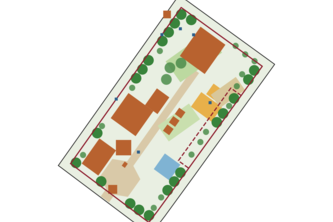
- It visualizes a 15,000 m² park concept including loop paths, cooled spine and branches, Work From Park, fitness, family play, kiosks, water, event areas, security, administration, and service areas.
- The tool allows users to generate timestamped decision entries and export JSON summaries.
- It uses Codex, CSS, HTML, JavaScript, and OpenAI technologies.
Inference: The product is a conceptual design tool for urban planning or architecture, intended for early-stage concept review.
Not evidenced: No evidence of actual use by clients, integration into workflows, or deployment beyond the prototype.
Positioning & Claim Evolution
The author states:
- The tool aims to make spatial logic visible, instead of hiding it in static presentations.
- It is described as an auditable interactive concept.
- The goal is to support a climate-ready spatial review.
- AI was used to structure the brief, implement interface, refine decision model, write README, and test browser flow.
Inference: The positioning is that of a concept design tool for urban planners or architects, with an emphasis on transparency and auditability.
Not evidenced: No evidence of market positioning, customer personas, or competitive differentiation beyond the prototype’s existence.
Target Customer & ICP
The description states:
- The tool was built for Al Safa Park 2, a public park concept.
- It supports spatial logic review and concept-stage screening values.
- It is intended to help with reviewing concepts that require validation from survey, MEP, fire, accessibility, and authority stakeholders.
Inference: The target customer appears to be urban planners, architects, or public park designers working on early-stage concept reviews.
Not evidenced: No evidence of actual customers, user feedback, or market segmentation beyond the author’s own use case.
Business Model & Pricing Evidence
The description states:
- The tool is a self-contained browser prototype.
- It allows exporting JSON summaries and generating timestamped entries.
- It was built for a hackathon submission.
Not evidenced: No pricing model, monetization strategy, or business model details are provided.
Inference: The tool is not yet commercialized; it appears to be a proof-of-concept or prototype.
Technical & Delivery Signals
The description states:
- Built with Codex, CSS, HTML, JavaScript, OpenAI.
- It is a browser-based prototype.
- AI was used for brief structuring, interface implementation, decision model refinement, README writing, and testing.
- The tool supports timestamped entries and JSON export.
Inference: The technical stack suggests a lightweight, web-based prototype with AI-assisted development.
Not evidenced: No evidence of scalability, performance metrics, or production deployment.
Traction & Maturity Signals
The description states:
- This is a working concept-review prototype, not a permit drawing or construction model.
- It was submitted to the OpenAI 2026 hackathon.
- The author notes that geometry, shade performance, life-safety, MEP, accessibility, and authority approvals remain future validation gates.
Not evidenced: No evidence of user adoption, customer feedback, or product maturity beyond prototype stage.
Inference: The project is in a very early stage, likely not yet ready for commercial use.
Competitive Context
The description states:
- It supports climate-ready spatial review.
- It visualizes park concepts with multiple zones and systems.
- It uses AI to assist in design workflows.
Not evidenced: No evidence of competitors or market analysis.
Inference: The tool may compete with urban planning tools, concept visualization platforms, or AI-assisted design tools, but no direct comparison is made.
Open Questions & Risks
- Prototype Only: The project is described as a prototype, not a product.
- No Revenue or Customers: No evidence of monetization or customer base.
- Unverified Claims: All claims are self-reported and unverified.
- Limited Scope: The tool does not address core engineering or regulatory validation (MEP, life-safety, accessibility).
- Single Developer: Only one person built it, suggesting limited scalability.
Questions the description leaves open
- What is the intended use case beyond this prototype?
- Has anyone outside of the author tested or used the tool?
- Are there any plans to commercialize or scale this concept?
- How does this tool differ from existing urban planning or design tools?
- What are the key assumptions in the decision model that need validation?
Overall Assessment
Not evidenced: No evidence of traction, revenue, or customer feedback.
Assessment: This is a self-reported prototype submitted to a hackathon. It does not demonstrate commercial viability, product-market fit, or any signs of traction. The tool is in an early-stage concept phase and lacks evidence of market demand or business model development.
Confidence Level: Low — based on minimal self-reported evidence only.
User Stories BotA demo video on every pull request
Get a demo video on every new feature
GitHub App that watches your pull requests and records a narrated, captioned demo.
Save time on demo prep and make informed decisions faster with a video walkthrough of every new feature.
Source
Submitted to the OpenAI 2026 hackathon on Devpost. Project home on Devpost. Back to the full gallery on Devpost.
This competitive analysis was produced by top-founders.com (opens in a new tab)
Generated by a language model from this project's public Devpost page — its tagline, the author's own write-up and any built-with tags listed there — as captured in August 2026. Short quotations are the author's words. It is an opinion on the idea as a business, not on the people behind it, and it reflects the description as published then. If the project has moved on, request a correction below. The analysis is not independent research and contains no verified traction, revenue or customer data.
An independent guide by KFG International LLC — not affiliated with, endorsed by, or connected to Devpost or OpenAI.