

Archive position — measured, not model output
0 likes on Devpost
2,263 of the 7,850 archived projects have more likes, and 5,587 share exactly 0 — so this project's #7,288 place in the like-ranked listing is a tie-break inside that group, not a ranking.
Projects (log scale)
Likes on Devpost. ▲ marks this project's group.
Show the figures
| Likes | Projects | Share of archive |
|---|---|---|
| 0 | 5,587 | 71.2% |
| 1 | 1,758 | 22.4% |
| 2 | 284 | 3.6% |
| 3–4 | 132 | 1.7% |
| 5–9 | 75 | 1.0% |
| 10+ | 14 | 0.2% |
 User Stories BotA demo video on every pull request
Get a demo video on every new feature
GitHub App that watches your pull requests and records a narrated, captioned demo.
Save time on demo prep and make informed decisions faster with a video walkthrough of every new feature.
Executive Summary
Project: TianruiOS
Author's self-description: A website styled like an OS where the creator can build their own things. Submitted to the OpenAI 2026 hackathon.
Key Claim: The project is a personal, OS-style website that allows users to create content within it.
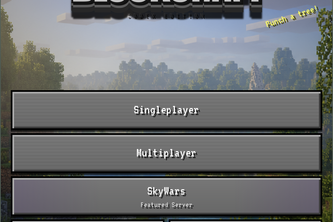
What Changed: The author describes building a Minecraft-like experience inside this OS and plans to add a browser in the future.
Most Important Open Question: Is there any evidence of user adoption or commercial traction beyond the single developer's personal project?
What The Product Actually Is
The description states: “It is the presentation of my inner world in the form of an OS.”
The author also says: “We have built a minecraft in the OS!”
The project was built using CSS and HTML, and the team size is listed as one (Tianrui Zhang).
The author claims to be using Codex with gpt5.6 sol ultra for development.
Inference: The product appears to be a personal website or web application that mimics operating system interfaces, with a Minecraft-like game embedded within it. It is not a commercial product but rather a prototype or personal project.
Positioning & Claim Evolution
The tagline: “It is a OS style website. A place where I can create my own things.”
The author describes the project as an OS-style environment for personal creation.
They state that they built a Minecraft-like experience within it and plan to add a browser in the future.
Inference: The positioning appears to be a personal, creative sandbox or development environment. There is no indication of commercial intent or target audience beyond the creator’s own use.
Target Customer & ICP
The description does not identify any specific customer or ideal customer profile (ICP).
The author states that the project is for “my inner world” and allows “me to create my own things.”
Inference: The target customer is likely the creator themselves, with no evidence of a broader audience or commercial use case.
Business Model & Pricing Evidence
There is no mention of pricing, monetization, or business model in the description.
The project is described as a personal creation and not a product for sale or commercial use.
Inference: No business model or pricing information is evidenced. The project appears to be non-commercial.
Technical & Delivery Signals
Built with: CSS, HTML
Development tools: Codex with gpt5.6 sol ultra
The author mentions building a Minecraft-like experience within the OS
They also state they plan to build a browser in the future
Inference: The technical stack is basic web development (HTML/CSS), and the use of AI tools like Codex suggests an experimental or rapid prototyping approach. No evidence of scalability, performance, or production-grade delivery.
Traction & Maturity Signals
The project was submitted to a hackathon (OpenAI 2026).
It is described as a prototype or personal project with no mention of users, customers, or adoption.
The team size is one person.
Inference: No traction or maturity signals are evident. The project appears to be early-stage and non-commercial.
Competitive Context
No information about competitors or market context is provided in the description.
The author does not reference any existing products or platforms that might compete with or complement this idea.
Inference: No competitive landscape is evidenced. The project seems isolated from broader market dynamics.
Open Questions & Risks
- Single-person team: No evidence of a team, which raises concerns about execution and scalability.
- No commercial traction: The project is described as personal and non-commercial.
- Unverified claims: The use of AI tools like “gpt5.6 sol ultra” is not verifiable or substantiated.
- No monetization strategy: No evidence of a business model or revenue path.
Inference: The lack of team, traction, and commercial intent raises significant risks for any investment or partnership consideration.
Questions the description leaves open
- What is the long-term vision for TianruiOS beyond this hackathon project?
- Are there any plans to expand beyond a personal sandbox into a platform for others?
- How do you intend to monetize or scale this project if at all?
- What specific features or use cases are you targeting for users beyond yourself?
- Have you validated the idea with potential users or collaborators?
Overall Assessment
Not evidenced: There is no evidence of commercial traction, revenue, customers, or a scalable business model.
The project is described as a personal prototype and not a product for sale or market adoption.
Inference: Based on the self-reported description alone, there is no basis to recommend investment or partnership at this stage. The project appears to be an early-stage idea with no demonstrated commercial viability or user engagement.
User Stories BotA demo video on every pull request
Get a demo video on every new feature
GitHub App that watches your pull requests and records a narrated, captioned demo.
Save time on demo prep and make informed decisions faster with a video walkthrough of every new feature.
Source
Submitted to the OpenAI 2026 hackathon on Devpost. Project home on Devpost. Back to the full gallery on Devpost.
This competitive analysis was produced by top-founders.com (opens in a new tab)
Generated by a language model from this project's public Devpost page — its tagline, the author's own write-up and any built-with tags listed there — as captured in August 2026. Short quotations are the author's words. It is an opinion on the idea as a business, not on the people behind it, and it reflects the description as published then. If the project has moved on, request a correction below. The analysis is not independent research and contains no verified traction, revenue or customer data.
An independent guide by KFG International LLC — not affiliated with, endorsed by, or connected to Devpost or OpenAI.