

Archive position — measured, not model output
0 likes on Devpost
2,263 of the 7,850 archived projects have more likes, and 5,587 share exactly 0 — so this project's #7,273 place in the like-ranked listing is a tie-break inside that group, not a ranking.
Projects (log scale)
Likes on Devpost. ▲ marks this project's group.
Show the figures
| Likes | Projects | Share of archive |
|---|---|---|
| 0 | 5,587 | 71.2% |
| 1 | 1,758 | 22.4% |
| 2 | 284 | 3.6% |
| 3–4 | 132 | 1.7% |
| 5–9 | 75 | 1.0% |
| 10+ | 14 | 0.2% |
 User Stories BotA demo video on every pull request
Get a demo video on every new feature
GitHub App that watches your pull requests and records a narrated, captioned demo.
Save time on demo prep and make informed decisions faster with a video walkthrough of every new feature.
Executive Summary
What the company appears to be
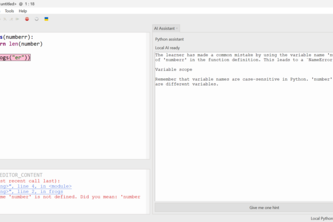
Thonny-Plus is a self-reported Windows-based Python learning IDE that integrates a local AI assistant into Thonny’s existing editor, Shell, Run button, and debugger workflows. The product aims to provide contextual error explanations and next steps without requiring an internet connection or API key.
What changed
The author states they forked the open-source Thonny IDE during OpenAI Build Week and added a local AI assistant using Codex with GPT-5.6. The assistant is designed to work offline, avoid cloud dependencies, and integrate seamlessly into the existing Thonny experience.
Single most important open question
Is there evidence of actual usage or adoption beyond the author’s own development and testing?
What The Product Actually Is
The description states that Thonny-Plus is a Windows Python learning IDE with a local AI assistant, built as an extension to the existing open-source Thonny editor. It includes:
- A local AI assistant that highlights relevant lines in code when exceptions occur.
- An explanation and one next step, streamed directly into the UI.
- No external API calls or cloud services; everything runs locally using
llama.cppand Qwen2.5-Coder-1.5B-Instruct Q4_K_M. - The assistant observes native Thonny execution events rather than replacing its runtime.
- It uses a loopback process to avoid sending learner code to the cloud.
- The installer bundles Python,
llama.cpp, and the model, with checksum-pinned runtimes and licenses staged for distribution.
Inference The product is described as an extension or fork of Thonny, not a standalone application. It integrates AI into an existing educational toolchain.
Positioning & Claim Evolution
The author claims that Thonny-Plus addresses the problem of beginner programmers spending too much time translating error messages rather than learning concepts. It positions itself as:
- A private teaching layer within the IDE.
- An alternative to general AI chatbots which pull learners out of the environment and often jump straight to solutions.
- A tool that preserves simplicity while adding local AI assistance.
Inference The positioning evolved from a broader concept (JavaScript/Go/Python) to a focused Python-only experience, emphasizing integration over feature bloat.
Target Customer & ICP
The description states that Thonny-Plus targets beginner programmers, particularly those learning Python. It is designed for users who are:
- Learning to code.
- Using the Thonny IDE.
- Prefering a simple, offline experience without internet or account requirements.
Inference The target customer is likely students, educators, or self-taught learners in educational settings where simplicity and privacy matter.
Business Model & Pricing Evidence
There is no evidence of pricing, monetization, or business model in the description. The author does not state whether Thonny-Plus will be sold, offered free, or funded through grants or partnerships.
Not evidenced
Technical & Delivery Signals
The description provides some technical details:
- Built using Codex with GPT-5.6.
- Uses Thonny’s event system, not its runtime.
- Integrates llama.cpp and Qwen2.5-Coder-1.5B-Instruct Q4_K_M.
- Runs entirely on the user's machine via a loopback process.
- Installer uses a PowerShell pipeline with checksum-pinned runtimes, smoke tests, and Inno Setup packaging.
- Includes regression testing, prompt caching, JSON schema constraints, and streaming output.
Inference The technical stack is focused on local execution, privacy, and integration into an existing IDE. There is no mention of scalability or multi-platform support beyond Windows at this stage.
Traction & Maturity Signals
There is no evidence of traction, revenue, customers, or adoption beyond the author’s own development efforts. The project was submitted to a hackathon and has no stated user base or usage metrics.
Not evidenced
Competitive Context
The description does not mention competitors directly. However, it implies that Thonny-Plus is positioned as an alternative to general-purpose AI chatbots used in education, such as ChatGPT or Copilot, which are often criticized for pulling learners out of their IDE and offering full solutions rather than scaffolding.
Inference The competitive landscape includes traditional educational tools and AI assistants that lack integration with the coding environment. Thonny-Plus may compete by offering a more focused, integrated experience.
Open Questions & Risks
- No traction or user data: The project is described as a hackathon submission with no evidence of real-world usage.
- Single-person team: Only one member (Wasiu Odebunmi) is listed; this raises concerns about scalability and long-term maintenance.
- Limited platform support: Currently only supports Windows, with no mention of macOS or Linux packages.
- Unverified claims: The author states that Codex/GPT-5.6 was used for development but does not provide evidence of performance or accuracy in real-world use cases.
- No monetization strategy: No indication of how the product will be funded or sold.
Inference While technically impressive, the lack of traction and limited scope suggest a prototype rather than a mature product ready for market.
Questions the description leaves open
- What is the actual performance of the AI assistant in real-world use? How accurate are the explanations?
- Has there been any testing with actual learners or educators?
- Are there plans to expand beyond Windows, and what are the technical challenges involved?
- How does the team plan to sustain development without external funding or users?
- What is the long-term vision for monetization or commercial viability?
Overall Assessment
The description presents a self-contained prototype built during a hackathon. It shows strong technical execution and alignment with educational needs, but lacks evidence of traction, revenue, or customer adoption.
Confidence: Low
This is a self-reported, unverified account of a project submitted to a hackathon. There is no indication of commercial viability, user base, or funding beyond the author’s own efforts. The product appears to be an experimental extension with potential for further development but not yet ready for investment or partnership consideration.
User Stories BotA demo video on every pull request
Get a demo video on every new feature
GitHub App that watches your pull requests and records a narrated, captioned demo.
Save time on demo prep and make informed decisions faster with a video walkthrough of every new feature.
Source
Submitted to the OpenAI 2026 hackathon on Devpost. Project home on Devpost. Back to the full gallery on Devpost.
This competitive analysis was produced by top-founders.com (opens in a new tab)
Generated by a language model from this project's public Devpost page — its tagline, the author's own write-up and any built-with tags listed there — as captured in August 2026. Short quotations are the author's words. It is an opinion on the idea as a business, not on the people behind it, and it reflects the description as published then. If the project has moved on, request a correction below. The analysis is not independent research and contains no verified traction, revenue or customer data.
An independent guide by KFG International LLC — not affiliated with, endorsed by, or connected to Devpost or OpenAI.