

Archive position — measured, not model output
0 likes on Devpost
2,263 of the 7,850 archived projects have more likes, and 5,587 share exactly 0 — so this project's #7,244 place in the like-ranked listing is a tie-break inside that group, not a ranking.
Projects (log scale)
Likes on Devpost. ▲ marks this project's group.
Show the figures
| Likes | Projects | Share of archive |
|---|---|---|
| 0 | 5,587 | 71.2% |
| 1 | 1,758 | 22.4% |
| 2 | 284 | 3.6% |
| 3–4 | 132 | 1.7% |
| 5–9 | 75 | 1.0% |
| 10+ | 14 | 0.2% |
 User Stories BotA demo video on every pull request
Get a demo video on every new feature
GitHub App that watches your pull requests and records a narrated, captioned demo.
Save time on demo prep and make informed decisions faster with a video walkthrough of every new feature.
Executive Summary
What the company appears to be
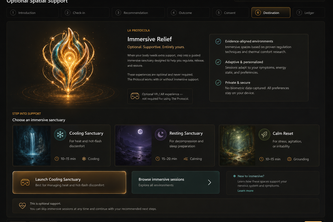
The Protocol is a self-reported system designed to enable governed continuity across specialized AI companions. It aims to make context transfer between verticals explicit, user-approved, and transparent—while preserving user control and accountability through an "Outcome Ledger."
What changed
This project was built during OpenAI Build Week as a prototype. The author states that the broader vision predated this work but focused on implementing a governed continuity layer in a working system.
The single most important open question — the commercial due-diligence read
Is there evidence of traction, revenue, or customer adoption beyond the author’s own development effort? There is no indication of any real-world usage or product-market fit beyond the prototype.
What The Product Actually Is
The description states that The Protocol is a governed continuity system for cross-vertical AI companions. It enables:
- Persistent companion relationships with user-approved context transfer;
- Explicit handoffs between specialized verticals;
- Transparency in what information travels, where it came from, and why;
- An Outcome Ledger to connect recommendations with later outcomes.
It does not describe a product that is currently live or used by customers. The system is presented as a prototype built during a hackathon.
Evidence
- “The Protocol is a governed continuity system for cross-vertical AI companions.”
- “Instead of moving an entire conversation or unrestricted memory between companions, The Protocol creates an explicit cross-vertical handoff.”
- “The Outcome Ledger creates a structured record connecting the original context; the recommendation that was made; the intended outcome; the user’s later follow-up; and the observed result.”
Inference This system is conceptualized as a middleware or architecture layer that governs how AI companions interact with each other, rather than being a standalone consumer-facing product.
Positioning & Claim Evolution
The author positions The Protocol not merely as a memory feature but as a governance model for AI continuity. It emphasizes:
- User-approved context transfer;
- Purpose-bound handoffs;
- Cross-vertical continuity;
- Explainability and outcome accountability;
- Avoiding causal overclaiming.
It is described as transforming AI memory from a convenience into a visible, governed system of continuity.
Evidence
- “The Protocol focuses on the governance of memory across specialized AI systems.”
- “This transforms AI memory from a convenience feature into a visible, governed system of continuity.”
Inference The positioning reflects an attempt to differentiate from existing AI products by focusing on control and transparency over raw intelligence or functionality.
Target Customer & ICP
The description does not clearly identify the target customer. It implies that users are those who interact with specialized AI companions, but it does not specify whether these are end-users, developers, or platform providers.
It also does not define a clear ICP (Ideal Customer Profile). The system is described as a continuity infrastructure that could support additional verticals and models, suggesting a potential future audience of AI product builders or platform owners.
Evidence
- “The next phase is to evolve the prototype into a provider-agnostic continuity infrastructure…”
- “Other AI products could integrate” this layer.
Inference If the system becomes viable, its primary users may be developers or platform providers looking to build interoperable AI companions. End-user adoption remains unproven.
Business Model & Pricing Evidence
There is no evidence of a business model or pricing structure in the description.
The author states that the project was built as a prototype during a hackathon and does not mention any monetization strategy, licensing terms, or revenue streams.
Evidence
- No mention of pricing.
- No indication of monetization or commercial use cases beyond the prototype.
Inference It is unclear whether this will ever become a commercial product or if it remains a proof-of-concept.
Technical & Delivery Signals
The author reports building the prototype using:
- Codex with GPT-5.6;
- React, TypeScript, Vite, Supabase, PostgreSQL;
- Integration with OpenAI tools like GPT and GitHub.
It is described as a working prototype that includes:
- Cross-vertical handoff logic;
- User-approved context transfer;
- Outcome Ledger implementation;
- Governance and product logic.
Evidence
- “I used Codex with GPT-5.6 throughout the implementation process…”
- “The prototype also introduces an Outcome Ledger.”
- “I focused on designing and implementing the new governed continuity layer as a working prototype…”
Inference Technical delivery is self-reported, and there is no evidence of deployment in production or integration into existing AI platforms.
Traction & Maturity Signals
There is no evidence of traction, customers, or revenue. The project is described as a hackathon prototype with no indication of real-world usage or adoption.
The author notes that the broader vision existed before Build Week, but there is no mention of prior development, user feedback, or product iteration beyond this single prototype.
Evidence
- “This prototype demonstrates more than persistent memory.”
- “I am proud that the prototype demonstrates…”
- No mention of users, customers, or revenue.
Inference The project has not yet reached a stage where it can be evaluated for market traction or product maturity.
Competitive Context
There is no evidence of competitors in the description. The author does not reference existing tools or platforms that offer similar functionality.
The system appears to be positioned as a new architecture for managing AI continuity, rather than a direct competitor to an existing solution.
Evidence
- No mention of competitors.
- No comparison with other AI memory or orchestration systems.
Inference It is unclear whether this addresses a known gap in the market or introduces a novel concept without precedent.
Open Questions & Risks
Key risks and open questions include:
- No evidence of traction, revenue, or customer adoption.
- Self-reported prototype only, with no independent validation.
- Unclear commercial viability or path to monetization.
- Highly conceptual architecture without real-world testing.
- Founder-only development, with no team or external support.
Evidence
- “Team size: 1”
- “The next phase is to evolve the prototype…”
- “No revenue, customer or traction data is available beyond what they state.”
Inference This project lacks any evidence of commercial viability or scalability. It remains a speculative idea with no demonstrated product-market fit.
Questions the description leaves open
- What specific use cases or verticals are you targeting for integration?
- How do you plan to validate the need for governed continuity in real-world AI companions?
- Are there any early adopters, partners, or pilot programs already underway?
- What is your roadmap for moving from prototype to production-ready system?
- How will you ensure that user consent and control are maintained at scale?
- What are the technical challenges in scaling this architecture across different AI models?
Overall Assessment
There is no evidence of a product-market fit, revenue, or traction. The project is described as a prototype built during a hackathon by one person.
It is not evident whether this will ever become a commercial product, nor what its path to market might look like.
Assessment Not evidenced. This is a speculative idea with no demonstrated value proposition or commercial viability. It requires further exploration into real-world demand and technical feasibility before any investment or partnership consideration can be made.
User Stories BotA demo video on every pull request
Get a demo video on every new feature
GitHub App that watches your pull requests and records a narrated, captioned demo.
Save time on demo prep and make informed decisions faster with a video walkthrough of every new feature.
Source
Submitted to the OpenAI 2026 hackathon on Devpost. Project home on Devpost. Back to the full gallery on Devpost.
This competitive analysis was produced by top-founders.com (opens in a new tab)
Generated by a language model from this project's public Devpost page — its tagline, the author's own write-up and any built-with tags listed there — as captured in August 2026. Short quotations are the author's words. It is an opinion on the idea as a business, not on the people behind it, and it reflects the description as published then. If the project has moved on, request a correction below. The analysis is not independent research and contains no verified traction, revenue or customer data.
An independent guide by KFG International LLC — not affiliated with, endorsed by, or connected to Devpost or OpenAI.