

Archive position — measured, not model output
0 likes on Devpost
2,263 of the 7,850 archived projects have more likes, and 5,587 share exactly 0 — so this project's #7,128 place in the like-ranked listing is a tie-break inside that group, not a ranking.
Projects (log scale)
Likes on Devpost. ▲ marks this project's group.
Show the figures
| Likes | Projects | Share of archive |
|---|---|---|
| 0 | 5,587 | 71.2% |
| 1 | 1,758 | 22.4% |
| 2 | 284 | 3.6% |
| 3–4 | 132 | 1.7% |
| 5–9 | 75 | 1.0% |
| 10+ | 14 | 0.2% |
 User Stories BotA demo video on every pull request
Get a demo video on every new feature
GitHub App that watches your pull requests and records a narrated, captioned demo.
Save time on demo prep and make informed decisions faster with a video walkthrough of every new feature.
Executive Summary
What the company appears to be
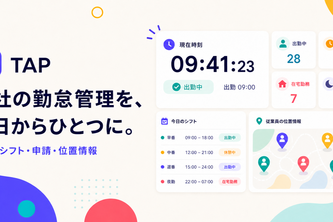
TAP — Construction Workforce OS is a self-described construction workforce operating system built by a single construction worker founder using OpenAI Codex as an engineering partner. It aims to unify attendance, shifts, payroll, safety, GPS evidence, compliance, and skill transfer into one product for field-based construction teams.
What changed
The author states that TAP began from a personal conviction to reduce administrative burden in construction, improve workforce retention, and support knowledge transfer between generations of craftspeople. The project evolved from a domain expert’s understanding of field workflows into a working prototype using AI-assisted development.
Single most important open question — the commercial due-diligence read
Is there evidence of real-world traction or customer validation beyond the founder's own use case and demonstration? The description does not indicate any actual customers, revenue, or adoption beyond the author’s own experience. This is a critical gap in assessing whether TAP has moved from concept to viable product-market fit.
What The Product Actually Is
The description states that TAP is a construction workforce operating system built around field work realities. It includes:
- Mobile clock-in, clock-out, and break recording
- Shift planning, leave requests, corrections, shift swaps, and multi-step approvals
- GPS evidence at punches and at five-minute intervals during work, with offline queue, administrator maps, and CSV export
- Support for standard, flex, and one-month variable working-hour systems
- Monthly close, confirmation, locking, controlled reopening, and audit snapshots
- Payroll estimates and configurable export formats
- Overtime, paid-leave, labor-agreement, and operational risk alerts
- Statutory ledgers, audit logs, and submission-ready compliance packs
- Role-separated company and employee data management
- Field-level AES-GCM encryption, HMAC tamper detection, CSRF protection, secure cookies, administrator re-authentication, and WebAuthn passkeys
The author also notes that location data is treated as evidence—not a shortcut for judging people—and includes requirements for manager review of GPS records.
Inference TAP appears to be a comprehensive digital tool designed specifically for construction companies managing field-based labor. It integrates time tracking, compliance, payroll, and safety features into one platform with an emphasis on security and human dignity in data use.
Positioning & Claim Evolution
The author positions TAP as a solution addressing labor shortages in Japan’s aging construction workforce by reducing administrative burden and enabling better knowledge transfer between generations of workers. The tagline emphasizes that it was built with Codex by a construction worker, underscoring its domain-driven origin.
Key claims:
- TAP helps construction teams do more with fewer people.
- It unifies fragmented tools into one coherent product.
- It supports digital transformation without removing time from craftspeople.
- It aims to make the industry worth choosing for the next generation.
Inference TAP is positioned as a niche, field-focused workforce management tool tailored to the specific needs of small construction companies in Japan. Its positioning reflects both practicality and social impact—addressing labor challenges while respecting worker dignity.
Target Customer & ICP
The description states that TAP targets construction teams, particularly those managing field-based labor. It is aimed at small construction companies where veteran craftspeople are still active and need to pass on knowledge to younger workers.
The author identifies himself as a construction worker founder who wants to build a sustainable future for his employees and their families.
Inference The primary customer segment appears to be small-to-medium-sized construction firms in Japan, especially those dealing with labor shortages and seeking ways to retain experienced workers while attracting new talent. The ICP is likely field supervisors, site managers, and company owners who manage workforce logistics.
Business Model & Pricing Evidence
There is no mention of pricing or business model in the description. The author does not state whether TAP will be sold as a SaaS subscription, a one-time license, or offered through partnerships with construction firms.
Not evidenced No evidence of revenue streams, pricing tiers, or monetization strategy.
Technical & Delivery Signals
The project was built using:
- OpenAI Codex
- CSS3, HTML5, JavaScript
- MapLibre, OpenStreetMap
- PWA (Progressive Web App)
- WebAuthn
The author describes iterative development using Codex to map workflows, handle edge cases, and implement security features. The system includes offline queueing for unreliable connectivity, encryption, role separation, and audit log tamper detection.
Inference TAP is a web-based application designed for mobile use in field conditions. It uses modern frontend technologies and AI-assisted development to create a secure, responsive, and offline-capable solution. The integration of Codex suggests an unconventional but potentially effective approach to product development by non-technical founders.
Traction & Maturity Signals
The author states that TAP is already a working, responsive product with real employee and administrator flows. It can record attendance, manage schedules, detect exceptions, visualize GPS evidence, prepare payroll and compliance outputs, protect sensitive data, and show managers what needs attention now.
However, there is no mention of:
- Real users or customers
- Revenue or monetization
- Product adoption metrics
- Pilot programs or field testing beyond the author’s own experience
Not evidenced No evidence of traction, customer validation, or real-world usage outside of the founder's own company.
Competitive Context
The description mentions that the author translated a benchmark of six major Japanese attendance products and public labor-operation requirements into an implementation checklist. The current TAP demo covers all eight major benchmark themes including mobile/GPS, multi-step approvals, payroll exports, compliance alerts, and secure organization management.
Inference TAP appears to be competing in the niche market of construction workforce management software in Japan. It is positioned to address gaps in existing tools by integrating multiple functions into one system with strong compliance and security features.
Open Questions & Risks
- Founder-only team: The project has only one member, which raises concerns about scalability, product depth, and ability to iterate quickly.
- No customer validation or traction: There is no evidence of real-world use beyond the founder’s own company.
- Unverified claims: All descriptions are self-reported and unverified; there is no third-party confirmation of functionality or impact.
- Limited commercialization strategy: No pricing, monetization, or go-to-market plans are described.
- Dependency on AI tooling: Reliance on Codex for development may not be scalable or replicable in the long term.
Questions the description leaves open
- What specific labor rules or regulations does TAP comply with, and how were they implemented?
- Have you piloted TAP with any real construction crews? If so, what feedback did you receive?
- How do you plan to scale beyond a single founder/developer?
- Are there any existing partnerships or integrations with payroll systems or government compliance platforms?
- What is your roadmap for monetization and customer acquisition?
Overall Assessment
Not evidenced There is no evidence of revenue, customers, or traction to assess viability or investment potential.
Confidence level Low This project is described as a working prototype built by one person using AI tools. While it shows domain expertise and technical execution, there is no indication of real-world adoption, customer validation, or commercial readiness.
Inference TAP may be an early-stage idea with strong potential if validated in the field. However, without evidence of traction, revenue, or a clear path to monetization, it cannot be considered a viable investment or partnership opportunity at this stage. It would require further due diligence into real-world usage and scalability before any serious consideration.
User Stories BotA demo video on every pull request
Get a demo video on every new feature
GitHub App that watches your pull requests and records a narrated, captioned demo.
Save time on demo prep and make informed decisions faster with a video walkthrough of every new feature.
Source
Submitted to the OpenAI 2026 hackathon on Devpost. Project home on Devpost. Back to the full gallery on Devpost.
This competitive analysis was produced by top-founders.com (opens in a new tab)
Generated by a language model from this project's public Devpost page — its tagline, the author's own write-up and any built-with tags listed there — as captured in August 2026. Short quotations are the author's words. It is an opinion on the idea as a business, not on the people behind it, and it reflects the description as published then. If the project has moved on, request a correction below. The analysis is not independent research and contains no verified traction, revenue or customer data.
An independent guide by KFG International LLC — not affiliated with, endorsed by, or connected to Devpost or OpenAI.