

Archive position — measured, not model output
1 like on Devpost
505 of the 7,850 archived projects have more likes, and 1,758 share exactly 1 — so this project's #2,026 place in the like-ranked listing is a tie-break inside that group, not a ranking.
Projects (log scale)
Likes on Devpost. ▲ marks this project's group.
Show the figures
| Likes | Projects | Share of archive |
|---|---|---|
| 0 | 5,587 | 71.2% |
| 1 | 1,758 | 22.4% |
| 2 | 284 | 3.6% |
| 3–4 | 132 | 1.7% |
| 5–9 | 75 | 1.0% |
| 10+ | 14 | 0.2% |
 User Stories BotA demo video on every pull request
Get a demo video on every new feature
GitHub App that watches your pull requests and records a narrated, captioned demo.
Save time on demo prep and make informed decisions faster with a video walkthrough of every new feature.
Executive Summary
What the company appears to be
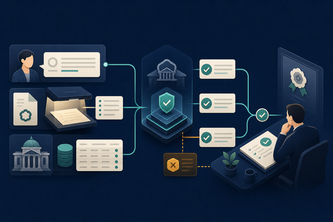
TalkCheck Verified Agent is a self-reported AI-powered verification tool for Korean business vendors, designed to help small finance teams reconcile identity details from user input, extracted fields, and official government sources. It uses an AI model (GPT-5.6) to read and interpret inputs, while a deterministic system reconciles those inputs with verified government data. The product enforces a human decision boundary before issuing financial actions like tax invoices.
What changed
The project was built as part of the OpenAI 2026 hackathon. It represents an experimental approach to verification that separates AI interpretation from official data reconciliation, aiming for clarity in provenance and explicit risk boundaries. The authors state they used Codex to refactor existing tools into a structured agent with evidence-aware logic.
Single most important open question
Is there any evidence of real-world usage or integration beyond the hackathon prototype? The description does not indicate whether this tool has been deployed, tested, or adopted by any organization outside of the development context.
Note: This analysis is based solely on the self-reported project description provided. No external verification, traction data, revenue figures, or customer information are available.
What The Product Actually Is
- The description states that TalkCheck Verified Agent accepts Korean business numbers, identity details, or fields extracted by GPT-5.6.
- It checks number format/checksum and current NTS (National Tax Service) business status and tax type.
- It validates a certificate bundle when key fields like business number, opening date, and representative are available.
- It reconciles every field as claimed, extracted, officially verified, consistent, conflicting, missing, or unavailable.
- The system returns unresolved values and a single clarification question instead of a risk score.
- A 30-minute opaque tax-invoice confirmation handoff is prepared only after workflow resolution.
- It shows a privacy receipt and always states that the invoice has not been issued.
Inference: The product appears to be an AI-assisted verification agent with deterministic reconciliation logic, built for use in financial workflows involving Korean vendor checks.
Positioning & Claim Evolution
- The description states the company’s core idea is: “AI should read and converse, official data should verify, and a person should decide before a financial action.”
- It positions itself as an alternative to generic AI tools that may collapse extracted values into confident sentences.
- The authors claim they avoided incorrect UX by not painting every field green unless officially verified.
- They emphasize the importance of source attribution in the data model rather than relying on prompts alone.
- The product is described as a “working four-tool MCP server and installable Codex plugin.”
Inference: The positioning evolved from a generic AI tool to a structured, evidence-aware agent that enforces human decision-making and transparency in verification.
Target Customer & ICP
- The description states the target audience includes small finance and operations teams.
- These teams are said to verify new Korean vendors by manually copying details between chat, business registration certificates, government lookups, and invoice systems.
- The tool is intended for use in financial workflows where vendor identity must be confirmed before issuing tax invoices.
Not evidenced: No specific customer names, use cases, or adoption data are provided. The ICP is inferred from the stated user group.
Business Model & Pricing Evidence
- The description does not state any pricing model or commercial structure.
- It mentions that no OpenAI API key is required and that GPT-5.6 runs in the user's subscription host.
- There is no mention of monetization, licensing, or revenue streams.
Not evidenced: No evidence of a business model or pricing strategy.
Technical & Delivery Signals
- The system uses two layers:
- AI layer: GPT-5.6 in Codex/ChatGPT for reading and conversing.
- Reconciliation layer: TalkCheck MCP performing deterministic checks against NTS providers.
- Built with Python, FastAPI, Starlette, httpx, Pillow, optional Tesseract OCR, React, Vite.
- Uses MCP (Model Control Protocol) for orchestration and tool management.
- The backend integrates with NTS status/certificate providers.
- Mobile experience uses React and Vite.
- Codex was used to audit the repository and refactor tools into an evidence-aware agent.
Inference: The architecture is modular, with clear separation of AI interpretation and deterministic verification. It includes unit tests, UI validation, and plugin integration.
Traction & Maturity Signals
- The project was built during a hackathon (OpenAI 2026).
- It includes a working MVP with:
- A four-tool MCP server
- An installable Codex plugin
- Deterministic provenance and conflict handling
- A mobile flow demonstrating success and safe stop conditions
- The authors claim to have run UI in a real browser, fixed console errors, and validated manifests.
- No evidence of production deployment or user adoption beyond the hackathon.
Not evidenced: No data on usage, customers, or product maturity beyond prototype stage.
Competitive Context
- Not explicitly stated. The description does not mention competitors or market positioning relative to existing vendor verification tools or AI platforms.
- The tool is described as being built for a specific workflow in Korean finance, suggesting niche relevance.
Not evidenced: No competitive landscape or comparison with existing solutions.
Open Questions & Risks
- The product is described as a hackathon prototype with no evidence of real-world deployment or adoption.
- There is no indication of scalability, performance testing, or integration with live systems beyond sandboxed development.
- The use of GPT-5.6 in a hosted environment raises questions about data privacy and model control.
- No mention of compliance, security, or audit features beyond the stated privacy receipt.
- The project is self-reported and unverified; no third-party validation exists.
Inference: High risk due to lack of real-world usage, unclear scalability, and absence of commercial viability indicators.
Questions the description leaves open
- Has this tool been tested or used in any real financial workflows?
- What is the current status of integration with actual NTS APIs or government data providers?
- How does the system handle edge cases or failures in government data access?
- Are there plans to expand beyond Korean vendors or integrate with other regional systems?
- What are the long-term goals for monetization or product development?
- Has the team considered how to scale this solution beyond a single developer or small team?
Overall Assessment
- The project is described as a hackathon prototype with no evidence of traction, revenue, or customer adoption.
- It shows technical sophistication and a clear understanding of the problem space, but lacks commercial viability indicators.
- The product is positioned for a specific use case (Korean vendor verification) and may have limited appeal outside that niche.
Not evidenced: No basis to assess investment potential or partnership value. The project remains in early-stage development with no demonstrated market fit or business model.
User Stories BotA demo video on every pull request
Get a demo video on every new feature
GitHub App that watches your pull requests and records a narrated, captioned demo.
Save time on demo prep and make informed decisions faster with a video walkthrough of every new feature.
Source
Submitted to the OpenAI 2026 hackathon on Devpost. Project home on Devpost. Back to the full gallery on Devpost.
This competitive analysis was produced by top-founders.com (opens in a new tab)
Generated by a language model from this project's public Devpost page — its tagline, the author's own write-up and any built-with tags listed there — as captured in August 2026. Short quotations are the author's words. It is an opinion on the idea as a business, not on the people behind it, and it reflects the description as published then. If the project has moved on, request a correction below. The analysis is not independent research and contains no verified traction, revenue or customer data.
An independent guide by KFG International LLC — not affiliated with, endorsed by, or connected to Devpost or OpenAI.