

Archive position — measured, not model output
0 likes on Devpost
2,263 of the 7,850 archived projects have more likes, and 5,587 share exactly 0 — so this project's #7,062 place in the like-ranked listing is a tie-break inside that group, not a ranking.
Projects (log scale)
Likes on Devpost. ▲ marks this project's group.
Show the figures
| Likes | Projects | Share of archive |
|---|---|---|
| 0 | 5,587 | 71.2% |
| 1 | 1,758 | 22.4% |
| 2 | 284 | 3.6% |
| 3–4 | 132 | 1.7% |
| 5–9 | 75 | 1.0% |
| 10+ | 14 | 0.2% |
 User Stories BotA demo video on every pull request
Get a demo video on every new feature
GitHub App that watches your pull requests and records a narrated, captioned demo.
Save time on demo prep and make informed decisions faster with a video walkthrough of every new feature.
Executive Summary
What the company appears to be
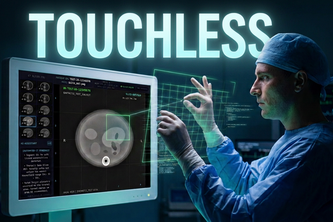
surGestic is a self-reported hands-free, touchless interface for navigating medical imaging in sterile environments like operating rooms. It combines real-time computer vision and offline voice recognition to enable surgeons to interact with CT scans without breaking sterility.
What changed
The project was built as part of an OpenAI hackathon challenge by one developer (Fabi M.), using tools including MediaPipe, VOSK, Python, React, and FastAPI. It represents a proof-of-concept prototype, not a commercial product or service.
Single most important open question
Is there any evidence that surGestic has moved beyond the prototype stage into actual clinical use or development with hospitals?
Note: This analysis is based entirely on the self-reported description provided by the author. No external verification, traction data, revenue figures, customer names, or independent sources are available.
What The Product Actually Is
The description states that surGestic is a dual-modal gesture and offline voice recognition platform designed for use in sterile environments such as operating rooms. It allows surgeons to navigate CT scans touchlessly using:
- Hand gestures tracked via MediaPipe
- Voice commands processed offline with VOSK
- A React-based frontend communicating with a FastAPI backend
It supports:
- Gesture-based slice navigation (pinch + swipe)
- Grid selection via voice command ("C3", "A4")
- Dynamic zooming based on hand distance from pinch origin
- Low-latency operation at 30 FPS
The system is described as modular and low-latency, built for real-time interaction without requiring expensive depth-sensing hardware.
Claim: The product is a hands-free interface for medical imaging.
Evidence: Author's own write-up.
Inference: The system integrates computer vision and speech recognition into a single workflow.
Evidence: Description of MediaPipe, VOSK, and integration architecture.
Positioning & Claim Evolution
The author positions surGestic as a solution to the problem of maintaining sterility during surgical procedures where traditional input methods (mouse, keyboard) are not feasible. The core claim is that it enables surgeons to interact with digital CT scans without physical contact, reducing contamination risk and improving workflow efficiency.
It evolved from an idea sparked by the need for sterile interfaces in high-stakes medical settings. The project was submitted as part of a hackathon, indicating early-stage development rather than commercial deployment.
Claim: surGestic addresses sterility concerns in surgical environments.
Evidence: Author's own write-up.
Inference: It is positioned as an innovation for touchless interaction in healthcare.
Evidence: Contextual framing within operating room constraints.
Target Customer & ICP
The description indicates that the primary target user is a surgeon working in a sterile environment such as an operating room. The system is intended to support hands-free navigation of CT scans during procedures, where maintaining sterility is critical.
There is no mention of other stakeholders like nurses or radiologists, nor any indication of whether the tool is meant for general use or specific types of surgeries.
Claim: Surgeons in sterile environments are the primary users.
Evidence: Author's own write-up.
Inference: The system targets high-risk medical settings where sterility is paramount.
Evidence: Description of contamination risks and workflow issues.
Business Model & Pricing Evidence
No evidence of a business model or pricing structure was provided in the description. The project is presented as a prototype built for a hackathon, with no indication of monetization plans, licensing models, or customer acquisition strategies.
Claim: No business model or pricing data.
Evidence: Author's own write-up.
Technical & Delivery Signals
The system uses:
- MediaPipe for hand tracking
- VOSK for offline speech recognition
- Python for backend processing (OpenCV, threading)
- FastAPI for API layer
- React + Vite for frontend UI
It claims to operate at 30 FPS with sub-100ms response times and handles concurrent audio/video processing without blocking.
Claim: Technical stack includes MediaPipe, VOSK, Python, FastAPI, React.
Evidence: Author's own write-up.
Inference: The system is designed for performance and low latency.
Evidence: Mention of FPS target and response time.
Traction & Maturity Signals
There is no evidence of traction or maturity beyond the prototype stage. The project was built by one person (Fabi M.) in a hackathon context, with no mention of pilot programs, clinical trials, partnerships, or product releases.
Claim: No traction or maturity data.
Evidence: Author's own write-up.
Competitive Context
The description does not reference any existing competitors or similar tools. It is unclear whether surGestic operates in a competitive space or if it represents a novel approach to touchless medical imaging interaction.
Claim: No competitive landscape described.
Evidence: Author's own write-up.
Open Questions & Risks
- Prototype-only status: The project was built for a hackathon and lacks evidence of real-world deployment or clinical validation.
- Single developer team: Only one member is listed, suggesting limited scalability or resources.
- No commercialization plan: No indication of how the idea will be monetized or scaled beyond prototype.
- Unverified claims: All features are self-reported without independent verification.
Inference: Lack of traction and validation raises concerns about viability.
Evidence: Prototype nature, single developer, no external data.
Questions the description leaves open
- Has surGestic been tested in a real clinical setting or with actual surgeons?
- What are the plans for scaling beyond this prototype?
- Are there any partnerships or pilot programs underway?
- How does the system handle edge cases like hand fatigue or environmental interference?
- Is there any plan to integrate with existing hospital systems (e.g., PACS, DICOM)?
- What is the roadmap for moving from offline voice recognition to cloud-based AI assistants?
Overall Assessment
At this stage, surGestic appears to be a conceptual prototype built during a hackathon. There is no evidence of commercial traction, customer adoption, or product-market fit. The idea shows potential in addressing a real pain point in surgical environments but lacks validation and development beyond the initial concept.
Claim: surGestic is a prototype with no demonstrated traction.
Evidence: Author's own write-up.
Inference: Investment or partnership interest would depend on future development and clinical validation.
Evidence: Prototype status, lack of data.
User Stories BotA demo video on every pull request
Get a demo video on every new feature
GitHub App that watches your pull requests and records a narrated, captioned demo.
Save time on demo prep and make informed decisions faster with a video walkthrough of every new feature.
Source
Submitted to the OpenAI 2026 hackathon on Devpost. Project home on Devpost. Back to the full gallery on Devpost.
This competitive analysis was produced by top-founders.com (opens in a new tab)
Generated by a language model from this project's public Devpost page — its tagline, the author's own write-up and any built-with tags listed there — as captured in August 2026. Short quotations are the author's words. It is an opinion on the idea as a business, not on the people behind it, and it reflects the description as published then. If the project has moved on, request a correction below. The analysis is not independent research and contains no verified traction, revenue or customer data.
An independent guide by KFG International LLC — not affiliated with, endorsed by, or connected to Devpost or OpenAI.