

Archive position — measured, not model output
1 like on Devpost
505 of the 7,850 archived projects have more likes, and 1,758 share exactly 1 — so this project's #2,007 place in the like-ranked listing is a tie-break inside that group, not a ranking.
Projects (log scale)
Likes on Devpost. ▲ marks this project's group.
Show the figures
| Likes | Projects | Share of archive |
|---|---|---|
| 0 | 5,587 | 71.2% |
| 1 | 1,758 | 22.4% |
| 2 | 284 | 3.6% |
| 3–4 | 132 | 1.7% |
| 5–9 | 75 | 1.0% |
| 10+ | 14 | 0.2% |
 User Stories BotA demo video on every pull request
Get a demo video on every new feature
GitHub App that watches your pull requests and records a narrated, captioned demo.
Save time on demo prep and make informed decisions faster with a video walkthrough of every new feature.
Executive Summary
What the company appears to be
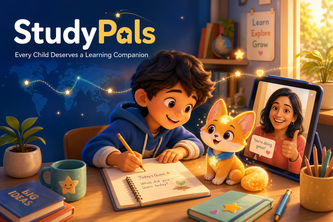
StudyPals is an AI-powered learning companion for children, designed to support remote parent-assigned learning missions through gamified, child-friendly adventures. The product is described as a prototype built for a hackathon and not yet a production service.
What changed
This is a self-reported project submitted to the OpenAI 2026 hackathon. It does not evidence any prior traction, revenue, or customer base — it is an early-stage concept with no verified users or monetization.
The single most important open question
Is there a viable path from this prototype to a scalable, secure, and trusted family learning platform that can attract and retain both parents and children?
What The Product Actually Is
- The description states StudyPals is an AI-powered learning companion for children.
- It is described as a web-based prototype built with HTML, CSS, JavaScript, React, Next.js, Tailwind CSS, Supabase, and OpenAI APIs.
- The core experience involves:
- Parents assigning learning missions (e.g., reading, math, vocabulary).
- AI converting these into child-friendly adventures (e.g., collecting Star Crystals).
- Children completing guided focus sessions and checking in with reflections or recordings.
- A virtual pet that grows and celebrates effort.
- Parents receiving progress summaries and sending encouragement.
Inference The product is described as a prototype, not a production service. It does not store real children’s data.
Positioning & Claim Evolution
- The description states StudyPals is built on the belief: “every child deserves to feel accompanied while learning.”
- It positions itself as a tool that makes studying feel less like an obligation and more like a shared journey.
- It claims to reward effort, consistency, curiosity, and improvement—not grades or perfect performance.
- It emphasizes emotional support over punitive or competitive gamification.
- The project is described as focused on the emotional experience of learning and not increasing screen time.
Inference The positioning is centered on family engagement, emotional learning, and non-punitive motivation. It does not claim to replace teachers or parents but to extend their care into moments when they are absent.
Target Customer & ICP
- The primary users are:
- Children (aged around 10 based on example mission).
- Parents who want to support remote learning.
- Secondary users include:
- Teachers or tutors (mentioned in future plans).
- The description states that StudyPals is designed for global families, with multilingual and culturally adaptable experiences.
Inference The ICP appears to be parents of school-age children (ages 6–12) who are remote learners or want to support their child’s learning habits. It is not clear if the product targets a specific education system or demographic beyond this.
Business Model & Pricing Evidence
- No pricing, monetization, or business model details are provided in the description.
- The prototype is explicitly marked as a demo and not yet a production service.
- The project does not mention any revenue streams, subscriptions, or paid features.
Inference There is no evidence of a business model. Any future monetization strategy remains unspoken.
Technical & Delivery Signals
- Built with:
- Frontend: React, Next.js, Tailwind CSS, JavaScript
- Backend: Supabase
- AI: OpenAI APIs (used for mission generation, encouragement, translation, summarization)
- The prototype is described as a responsive web app.
- Future plans include:
- Voice conversations with the virtual companion.
- Secure accounts for parents and children.
- Integrations with school platforms.
- Accessibility options and curriculum-specific templates.
Inference The technical stack suggests a modern, scalable approach. However, no production-grade delivery or infrastructure details are provided.
Traction & Maturity Signals
- The project is described as a hackathon prototype.
- It is explicitly marked as not yet a production service.
- No evidence of users, customers, revenue, or adoption is presented.
- No mention of testing with real families or educators.
Inference There is no traction or maturity evidence. The product is in early-stage development.
Competitive Context
- The description does not name competitors.
- It positions itself as a tool for remote learning that uses AI and gamification to support children’s emotional engagement.
- It emphasizes non-punitive motivation, which may differentiate it from traditional edtech or productivity tools.
- No mention of existing platforms in the same space (e.g., Duolingo, Khan Academy, ClassDojo).
Inference The competitive landscape is not described. It is unclear if StudyPals is addressing a gap or competing with existing tools.
Open Questions & Risks
- Unverified prototype: The product is a demo, not a production service.
- No revenue model: No evidence of monetization strategy.
- Privacy and safety concerns: The project mentions designing for safety and transparency but does not detail how it will handle children’s data or AI-generated content.
- Scalability risk: The prototype is built with limited tech stack (HTML, CSS, JS) and lacks production-grade infrastructure.
- Market fit uncertainty: No evidence of user testing or feedback from families or educators.
Inference The biggest risks are around product-market fit, scalability, and the lack of a clear path to monetization or trust in a sensitive space like children’s education.
Questions the description leaves open
- What specific data will be collected from children and parents? How is privacy and safety ensured?
- Has the prototype been tested with real families or educators?
- What is the plan for monetization, if any?
- How does StudyPals differentiate itself from existing edtech tools in the remote learning space?
- What are the technical challenges in scaling from a hackathon demo to a production platform?
- How will AI-generated content be curated to ensure it is age-appropriate and emotionally supportive?
Overall Assessment
- The description states that StudyPals is a hackathon prototype, not yet a production service.
- No evidence of revenue, customers, or traction exists.
- The product concept is compelling in its focus on emotional engagement and family support.
- However, the lack of verified progress, business model, or user feedback makes it difficult to assess viability.
Assessment Not evidenced. This is an early-stage idea with a strong narrative but no commercial due-diligence evidence to support investment or partnership. A follow-up evaluation would require proof of concept, user testing, and a clear path to monetization.
User Stories BotA demo video on every pull request
Get a demo video on every new feature
GitHub App that watches your pull requests and records a narrated, captioned demo.
Save time on demo prep and make informed decisions faster with a video walkthrough of every new feature.
Source
Submitted to the OpenAI 2026 hackathon on Devpost. Project home on Devpost. Back to the full gallery on Devpost.
This competitive analysis was produced by top-founders.com (opens in a new tab)
Generated by a language model from this project's public Devpost page — its tagline, the author's own write-up and any built-with tags listed there — as captured in August 2026. Short quotations are the author's words. It is an opinion on the idea as a business, not on the people behind it, and it reflects the description as published then. If the project has moved on, request a correction below. The analysis is not independent research and contains no verified traction, revenue or customer data.
An independent guide by KFG International LLC — not affiliated with, endorsed by, or connected to Devpost or OpenAI.