

Archive position — measured, not model output
0 likes on Devpost
2,263 of the 7,850 archived projects have more likes, and 5,587 share exactly 0 — so this project's #6,998 place in the like-ranked listing is a tie-break inside that group, not a ranking.
Projects (log scale)
Likes on Devpost. ▲ marks this project's group.
Show the figures
| Likes | Projects | Share of archive |
|---|---|---|
| 0 | 5,587 | 71.2% |
| 1 | 1,758 | 22.4% |
| 2 | 284 | 3.6% |
| 3–4 | 132 | 1.7% |
| 5–9 | 75 | 1.0% |
| 10+ | 14 | 0.2% |
 User Stories BotA demo video on every pull request
Get a demo video on every new feature
GitHub App that watches your pull requests and records a narrated, captioned demo.
Save time on demo prep and make informed decisions faster with a video walkthrough of every new feature.
Executive Summary
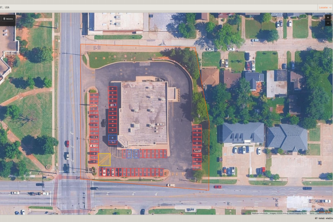
StripeCount is a self-reported tool that claims to automate parts of the parking-lot striping estimation process using satellite imagery, computer vision (Roboflow), and GPT-5.6 for proposal drafting. The author states it converts user-selected aerial maps into contractor-ready proposals with takeoffs, pricing, and GPT-generated scopes of work. It is presented as a single-developer project built for the OpenAI 2026 hackathon.
The central claim is that StripeCount streamlines an estimation workflow by integrating map selection, object detection, quantity calculation, and proposal generation into one interface. The system uses deterministic tools for pricing and human approval for final deliverables, while GPT-5.6 handles visual classification of non-stall markings and proposal language.
What changed: The project description shows a shift from a basic demo to a full-stack prototype with UI/UX design, backend orchestration, and PDF generation. It was built as part of a hackathon submission.
Most important open question: Is there any evidence that StripeCount has been used in real-world contractor workflows or tested with actual estimators? The description contains no data on adoption, revenue, or customer feedback beyond the author’s own claims.
What The Product Actually Is
The description states that StripeCount is a web-based tool that allows users to:
- Search for properties using Google Maps.
- Draw a polygon around a parking lot.
- Capture high-resolution satellite imagery of that area.
- Detect standard and ADA stalls via Roboflow.
- Identify other markings (e.g., arrows, crosswalks) using GPT-5.6.
- Merge detection results and calculate quantities and pricing deterministically.
- Draft a proposal using GPT-5.6 based on verified takeoffs and commercial inputs.
- Generate an annotated PDF proposal requiring named estimator approval.
The system uses a two-process architecture: a public Next.js frontend and a private FastAPI worker for vision and PDF rendering. It integrates with Google Static Maps, Roboflow, OpenAI (GPT-5.6), and optionally PostgreSQL + PostGIS.
Inference: The tool appears to be a proof-of-concept prototype built for a hackathon, not yet a commercial product in production use.
Positioning & Claim Evolution
The author positions StripeCount as a practical estimating agent that transforms fragmented workflows into one accountable workspace. It is described as moving from "real map selection" to "corrected quantities, transparent pricing, field-verification questions, human approval, and a professional customer deliverable."
Key claims include:
- A vision observes, deterministic tools calculate, GPT-5.6 drafts, and the estimator approves workflow.
- The tool is not just a demo but a contractor-ready solution.
- It aims to reduce errors in repetitive tasks like counting markings and calculating prices.
Inference: The positioning evolved from a hackathon idea into a more structured product narrative focused on practicality and contractor utility, though no evidence supports adoption or traction.
Target Customer & ICP
The description states that StripeCount targets parking-lot striping estimators, who currently use multiple disconnected tools to complete jobs involving:
- Property location
- Aerial image capture
- Marking count
- Spreadsheet-based pricing
- Proposal writing
It is designed for users who need to produce accurate, professional proposals quickly and reliably.
Inference: The target customer is likely small-to-medium-sized contractors or estimator teams in the road/parking lot marking industry. No evidence of specific customer segments, personas, or market size is provided.
Business Model & Pricing Evidence
There is no evidence of pricing structure, monetization model, or revenue streams in the description.
The author states that StripeCount:
- Calculates prices deterministically.
- Requires a named estimator to approve the final proposal.
- Generates PDFs for client delivery.
However, there is no mention of subscription plans, per-job fees, usage-based billing, or any commercial framework beyond the idea of "contractor-ready" outputs.
Inference: No business model or pricing evidence is provided. The tool appears to be conceptual and not yet monetized.
Technical & Delivery Signals
The system uses:
- Next.js 14 for frontend
- FastAPI for backend vision and PDF rendering
- Roboflow for stall detection
- GPT-5.6 for long-tail visual detection and proposal drafting
- React for UI components
- Docker for containerization
- Google Static Maps API
- PostgreSQL + PostGIS (optional)
The architecture is described as a two-process system: public-facing Next.js app and private FastAPI worker.
Inference: The technical stack suggests a prototype built with modern tools, but no evidence of scalability, performance metrics, or production deployment details.
Traction & Maturity Signals
There is no evidence of traction, revenue, customers, or adoption beyond the author’s own description. The project was submitted to a hackathon and has not been publicly launched or tested in real-world conditions.
The author mentions:
- A single developer team
- Automated testing and verification
- PDF generation and approval workflow
But no data on user engagement, retention, or usage is provided.
Inference: No traction signals are evident. The project remains unproven in a commercial context.
Competitive Context
No competitive analysis or market positioning relative to existing tools is included in the description.
The author does not name competitors or describe how StripeCount differs from current solutions in the parking-lot estimation space.
Inference: No competitive signals are present. The tool’s place in the market is unknown.
Open Questions & Risks
- Unverified claims: All features and functionality are self-reported without independent validation.
- No commercial traction: No evidence of real-world usage, customers, or revenue.
- AI dependency risks: Heavy reliance on GPT-5.6 for proposal drafting raises concerns about consistency, accuracy, and liability.
- Single developer team: Limited resources may hinder scalability or long-term development.
- Hackathon origin: The tool is presented as a prototype, not a finished product.
Inference: The project lacks commercial viability indicators and is likely in early-stage development.
Questions the description leaves open
- What real-world testing has been done with actual estimators?
- Has the tool been used to generate any actual client proposals or bids?
- Are there any pilot customers or beta users?
- How does StripeCount handle edge cases like poor image quality, unusual layouts, or ambiguous markings?
- What is the current status of the product beyond the hackathon submission?
- Is there a plan for monetization or commercial deployment?
- How is data privacy and security handled, especially with satellite imagery and customer information?
Overall Assessment
Not evidenced
The description provides no evidence of traction, revenue, customers, or commercial viability. It describes a prototype built for a hackathon with no indication of market readiness or scalability.
This project is in an early-stage idea phase, not a product under development or testing. Any investment or partnership would be speculative and based on potential rather than demonstrated value.
Confidence level: Very low — the description is self-reported, unverified, and lacks any commercial signals.
User Stories BotA demo video on every pull request
Get a demo video on every new feature
GitHub App that watches your pull requests and records a narrated, captioned demo.
Save time on demo prep and make informed decisions faster with a video walkthrough of every new feature.
Source
Submitted to the OpenAI 2026 hackathon on Devpost. Project home on Devpost. Back to the full gallery on Devpost.
This competitive analysis was produced by top-founders.com (opens in a new tab)
Generated by a language model from this project's public Devpost page — its tagline, the author's own write-up and any built-with tags listed there — as captured in August 2026. Short quotations are the author's words. It is an opinion on the idea as a business, not on the people behind it, and it reflects the description as published then. If the project has moved on, request a correction below. The analysis is not independent research and contains no verified traction, revenue or customer data.
An independent guide by KFG International LLC — not affiliated with, endorsed by, or connected to Devpost or OpenAI.