

Archive position — measured, not model output
0 likes on Devpost
2,263 of the 7,850 archived projects have more likes, and 5,587 share exactly 0 — so this project's #6,947 place in the like-ranked listing is a tie-break inside that group, not a ranking.
Projects (log scale)
Likes on Devpost. ▲ marks this project's group.
Show the figures
| Likes | Projects | Share of archive |
|---|---|---|
| 0 | 5,587 | 71.2% |
| 1 | 1,758 | 22.4% |
| 2 | 284 | 3.6% |
| 3–4 | 132 | 1.7% |
| 5–9 | 75 | 1.0% |
| 10+ | 14 | 0.2% |
 User Stories BotA demo video on every pull request
Get a demo video on every new feature
GitHub App that watches your pull requests and records a narrated, captioned demo.
Save time on demo prep and make informed decisions faster with a video walkthrough of every new feature.
Executive Summary
What the company appears to be
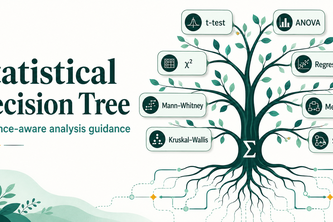
A self-reported educational research tool that guides users through a structured interview process to recommend statistical analysis methods based on their research question and study design. It is built as a bilingual (English-Greek) web application with deterministic logic for method selection, optionally augmented by an AI layer for explanation.
What changed
The author reports building this tool using a hybrid workflow combining domain expertise, low-code UI design, generative AI (GPT-5.6 via Codex), and deterministic software logic. It was submitted to the OpenAI 2026 hackathon.
Single most important open question
Is there any evidence of real-world usage or adoption by researchers? The description states no revenue, customers, or traction data beyond the author’s own account.
Note: This analysis is based entirely on self-reported information from the project description. No external verification or historical data are available.
What The Product Actually Is
The description states that Statistical Decision Tree is a bilingual (English-Greek) web application designed to help researchers turn a research question into a defensible statistical analysis plan. It uses a six-step interview process, collecting inputs related to:
- Research question and analytical goal
- Study design and measurement structure
- Outcome type and model components
- Sample size and assumptions
- Originally planned analysis
- Auditable decision report
The tool provides:
- A primary recommendation
- Explanation of why it fits the design
- Identification of an alternative method
- Audit of originally planned analysis
- Assumptions checklist
- Practical next steps (SPSS, Jamovi menu paths, R code)
- Export options (PDF, audit log)
It does not require raw datasets, participant-level information, account creation, or payment details for core functionality.
Inference: The tool appears to be a decision-support system aimed at novice-to-intermediate researchers in education and social sciences. It is not a statistical software package but rather an interface that leads users through method selection based on structured inputs.
Positioning & Claim Evolution
The author claims the tool addresses a common problem: researchers know how to run familiar commands but are uncertain whether those analyses answer their research question.
Key positioning elements:
- Audience: Educational researchers, particularly those working in social and emotional learning.
- Value proposition: Makes reasoning behind statistical choices visible, teachable, and actionable.
- Differentiation: Emphasizes transparency and reproducibility over generic test lists; uses deterministic logic for core decisions while allowing optional AI explanation.
Inference: The tool positions itself as a bridge between methodological rigor and accessibility, especially for users who lack deep statistical training. It is not positioned as a full-fledged statistical package or platform but as an educational aid.
Target Customer & ICP
The description states that the author is both:
- A primary-school educator
- A PhD candidate in Educational Research
She works with research questions at the intersection of:
- Education
- Social and emotional learning
- Self-regulated learning
The built-in example uses a realistic education-research question involving mediation analysis.
Inference: The primary customer segment appears to be graduate students, early-career researchers, or educators conducting quantitative research in educational settings. The tool is tailored toward those needing guidance on method selection rather than advanced statistical practitioners.
Business Model & Pricing Evidence
Not evidenced.
Note: There is no mention of pricing, monetization strategy, or business model in the description.
Technical & Delivery Signals
The project was built using:
- Technology stack: React, TypeScript, Vite, Tailwind, TanStack, Router, GitHub, Lovable (for UI), Codex (for engineering), GPT-5.6 (via OpenAI API)
- Architecture:
- A deterministic TypeScript engine selects the statistical method from explicit rules
- An optional GPT-5.6 explanation layer provides contextual communication without overriding deterministic decisions
- Deployment: Public demo available; server-side API key handling for optional AI integration
Inference: The architecture reflects a deliberate separation between reproducible logic and AI-enhanced communication. This design choice suggests an emphasis on trustworthiness and auditability.
Traction & Maturity Signals
Not evidenced.
Note: No data on user base, adoption rate, or usage metrics are provided. The project is described as a hackathon submission with no indication of real-world deployment or traction beyond the author’s own use case.
Competitive Context
Not evidenced.
Note: There is no mention of competitors or market landscape in the description. No comparison to existing tools for statistical decision support is made.
Open Questions & Risks
- No evidence of real-world usage – The tool is described only as a hackathon submission with no indication of adoption.
- Limited scope – The current version focuses on mediation analysis and does not cover broader statistical models (e.g., multilevel, Bayesian).
- Dependency on author’s domain expertise – The tool may be tailored to specific research domains (education) and lacks generalizability.
- Unclear scalability – While the architecture separates logic from AI, there is no evidence of how this scales beyond a single developer or small team.
- No commercial viability – No pricing, monetization, or business model described.
Inference: The tool may be useful for its intended niche but lacks signs of broader market traction or commercial readiness.
Questions the description leaves open
- Has the tool been tested with actual users in educational research settings?
- What is the expected timeline to expand beyond mediation analysis?
- Are there plans to integrate additional statistical models or domains beyond education?
- How will the AI explanation layer be scaled or maintained?
- Is there any plan for monetization or commercial deployment?
Overall Assessment
Not evidenced.
Note: No financial data, funding history, or investment interest is mentioned in the description. The project is described as a hackathon submission with no indication of investor or partnership interest.
User Stories BotA demo video on every pull request
Get a demo video on every new feature
GitHub App that watches your pull requests and records a narrated, captioned demo.
Save time on demo prep and make informed decisions faster with a video walkthrough of every new feature.
Source
Submitted to the OpenAI 2026 hackathon on Devpost. Project home on Devpost. Back to the full gallery on Devpost.
This competitive analysis was produced by top-founders.com (opens in a new tab)
Generated by a language model from this project's public Devpost page — its tagline, the author's own write-up and any built-with tags listed there — as captured in August 2026. Short quotations are the author's words. It is an opinion on the idea as a business, not on the people behind it, and it reflects the description as published then. If the project has moved on, request a correction below. The analysis is not independent research and contains no verified traction, revenue or customer data.
An independent guide by KFG International LLC — not affiliated with, endorsed by, or connected to Devpost or OpenAI.