

Archive position — measured, not model output
0 likes on Devpost
2,263 of the 7,850 archived projects have more likes, and 5,587 share exactly 0 — so this project's #6,945 place in the like-ranked listing is a tie-break inside that group, not a ranking.
Projects (log scale)
Likes on Devpost. ▲ marks this project's group.
Show the figures
| Likes | Projects | Share of archive |
|---|---|---|
| 0 | 5,587 | 71.2% |
| 1 | 1,758 | 22.4% |
| 2 | 284 | 3.6% |
| 3–4 | 132 | 1.7% |
| 5–9 | 75 | 1.0% |
| 10+ | 14 | 0.2% |
 User Stories BotA demo video on every pull request
Get a demo video on every new feature
GitHub App that watches your pull requests and records a narrated, captioned demo.
Save time on demo prep and make informed decisions faster with a video walkthrough of every new feature.
Executive Summary
What the company appears to be
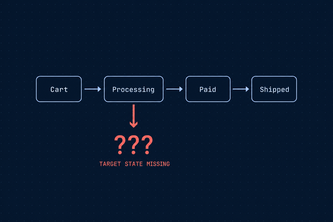
State Gap Mapper is a tool that helps product teams identify behavioral gaps in feature specifications before engineering begins. It uses AI (GPT-5.6) to parse plain English feature specs and extract state machines, then applies deterministic TypeScript logic to detect missing transitions or undefined outcomes. The system allows users to review and accept or dismiss these "structural gaps" and generates test stubs from accepted decisions.
What changed
The author states that this tool was built as part of the OpenAI 2026 hackathon submission, with no prior commercial traction or product history. It is described as a self-contained browser-based application with no account required, using open-source technologies and serverless endpoints for AI processing.
Single most important open question
Is there evidence that this tool has been adopted by teams in real-world workflows, or does it remain an experimental prototype?
What The Product Actually Is
The description states that State Gap Mapper:
- Turns plain-English feature flows into inspectable behavior maps.
- Uses GPT-5.6 to extract states, events, transitions, and sentence-level evidence from a spec.
- Applies deterministic TypeScript logic to compute missing transitions and mark them as red "Structural Gaps".
- Allows reviewers to accept or dismiss gaps, with accepted decisions becoming test stubs.
- Supports import/export of Markdown reports or JSON projects without requiring an account.
- Runs in a browser using React, TypeScript, Vite, React Flow, Zustand, and serverless endpoints calling GPT-5.6.
The tool is described as having a strict boundary between AI judgment (semantic work) and deterministic validation (runtime behavior). It includes visual redlining for gaps, editable canvases, and traceability back to source sentences.
Evidence
- The author describes how the tool works in detail.
- Technology stack includes React, TypeScript, Vite, GPT-5.6, serverless functions, structured outputs, and browser-based import/export.
- No revenue, customers, or usage data are provided.
Inference The tool appears to be a prototype or proof-of-concept built for a hackathon, not yet proven in production environments.
Positioning & Claim Evolution
The description states:
- The product aims to surface missing product decisions that often become bugs only after engineering or QA has already paid the cost.
- It is positioned as a way to find behavioral gaps “before they become a bug.”
- The tagline is: “Find the behavior your feature spec forgot before it becomes a bug.”
The author also mentions:
- A "strict boundary" between AI and deterministic logic.
- A two-tier honesty model where AI handles understanding but TypeScript enforces runtime validation.
- The tool supports human control over every behavior change.
Evidence
- The positioning is based on the author’s own claims about intent and use case.
- No external validation or customer feedback is provided.
Inference The product positions itself as a pre-development quality assurance tool for product teams, aiming to prevent bugs by identifying edge cases early in the specification phase.
Target Customer & ICP
The description states:
- The tool targets product teams who write feature specifications.
- It is intended to help identify behavioral gaps that are often discovered too late in development.
- It supports domain-specific packs for payments and approvals, suggesting potential vertical targeting.
Evidence
- The author describes the problem as affecting teams working on feature specs.
- Mention of future integration with GitHub or issue trackers implies team-level adoption.
Inference The target customer is likely product managers, UX designers, or technical leads involved in writing feature specifications. However, no specific ICP (Ideal Customer Profile) is defined beyond this general group.
Business Model & Pricing Evidence
The description states:
- The hosted app runs in a current desktop browser.
- Users can try it without an account.
- No pricing information is provided.
- Local development requires an OpenAI API key, but no mention of cost or subscription model for the tool itself.
Evidence
- The tool is free to use online and does not require registration.
- Local usage requires an API key, but no commercial pricing is mentioned.
Inference There is no clear business model evidenced. It may be a freemium or open-source prototype with possible future monetization via API access or enterprise integrations.
Technical & Delivery Signals
The description states:
- Built using React, TypeScript, Vite, React Flow, Zustand.
- Uses serverless endpoints calling GPT-5.6 with structured outputs.
- Implements strict runtime decoders and validation before application state changes.
- Includes async state guards to prevent stale responses from overwriting newer work.
- Supports import/export in JSON format with versioned validation.
- The repository includes ADRs, tests (232 passing), architecture records, and reproducible demos.
Evidence
- Technology stack is listed explicitly.
- Development practices include test-driven development, async guards, and deterministic recomputation.
- Repository contains documentation and demo code.
Inference The tool shows strong engineering discipline for a prototype. However, no evidence of production deployment or scalability beyond the author’s own environment.
Traction & Maturity Signals
The description states:
- The project was submitted to the OpenAI 2026 hackathon.
- It includes three instant sample projects that run without an API call.
- No revenue, customer base, or adoption metrics are mentioned.
- The tool is described as a prototype with no prior commercial traction.
Evidence
- The project is a hackathon submission.
- No data on usage, customers, or monetization.
Inference There is no evidence of traction or maturity beyond the author’s own development and testing. It has not yet entered any market or product lifecycle stage beyond prototype.
Competitive Context
The description does not mention any direct competitors.
Evidence
- No competitor analysis or market positioning relative to existing tools is provided.
Inference There is no evidence of competitive landscape awareness. The tool appears to address a niche within product specification and behavior modeling, but no known similar products are referenced.
Open Questions & Risks
The description states:
- The tool uses GPT-5.6 for semantic extraction.
- It relies on deterministic logic for validation, which depends on the accuracy of AI input.
- The system is described as a prototype built for a hackathon.
- No evidence of real-world use or feedback from users.
Evidence
- The product is presented as a hackathon submission with no commercial history.
- Reliance on GPT-5.6 introduces risk in extraction quality and consistency.
Inference
- Risk of over-reliance on AI for initial parsing without human review.
- Lack of real-world validation or feedback suggests unproven utility.
- No evidence of scalability, integration, or long-term viability beyond the author’s environment.
Questions the description leaves open
- What is the current level of adoption or feedback from product teams using this tool?
- How does the accuracy of GPT-5.6 extraction impact the reliability of gap detection?
- Are there plans to integrate with existing product management or engineering tools (e.g., Jira, Notion)?
- Is there a roadmap for monetization or commercial deployment?
- What are the limitations of the current deterministic engine in handling complex state machines?
- How does the tool handle edge cases where sentence coverage is low or ambiguous?
Overall Assessment
Not evidenced
The description provides no data on revenue, customers, traction, or financials. It describes a prototype built for a hackathon with no indication of commercial viability or market readiness.
Confidence Level Low This analysis is based entirely on self-reported information and lacks any external validation or evidence of product-market fit, adoption, or scalability. The tool remains in an experimental phase with no demonstrated business model or traction.
User Stories BotA demo video on every pull request
Get a demo video on every new feature
GitHub App that watches your pull requests and records a narrated, captioned demo.
Save time on demo prep and make informed decisions faster with a video walkthrough of every new feature.
Source
Submitted to the OpenAI 2026 hackathon on Devpost. Project home on Devpost. Back to the full gallery on Devpost.
This competitive analysis was produced by top-founders.com (opens in a new tab)
Generated by a language model from this project's public Devpost page — its tagline, the author's own write-up and any built-with tags listed there — as captured in August 2026. Short quotations are the author's words. It is an opinion on the idea as a business, not on the people behind it, and it reflects the description as published then. If the project has moved on, request a correction below. The analysis is not independent research and contains no verified traction, revenue or customer data.
An independent guide by KFG International LLC — not affiliated with, endorsed by, or connected to Devpost or OpenAI.