

Archive position — measured, not model output
0 likes on Devpost
2,263 of the 7,850 archived projects have more likes, and 5,587 share exactly 0 — so this project's #6,880 place in the like-ranked listing is a tie-break inside that group, not a ranking.
Projects (log scale)
Likes on Devpost. ▲ marks this project's group.
Show the figures
| Likes | Projects | Share of archive |
|---|---|---|
| 0 | 5,587 | 71.2% |
| 1 | 1,758 | 22.4% |
| 2 | 284 | 3.6% |
| 3–4 | 132 | 1.7% |
| 5–9 | 75 | 1.0% |
| 10+ | 14 | 0.2% |
 User Stories BotA demo video on every pull request
Get a demo video on every new feature
GitHub App that watches your pull requests and records a narrated, captioned demo.
Save time on demo prep and make informed decisions faster with a video walkthrough of every new feature.
Executive Summary
What the company appears to be
Spartan Physique Tracker is a self-reported personal fitness transformation system built by one developer (Greg Selby) as a proof-of-concept for an active campaign. It integrates AI-generated daily guidance with deterministic logic to manage progress, recovery, and rewards within a structured framework. The author describes it as a tool that respects effort, protects data, and remains functional when life does not follow a plan.
What changed
During Build Week, the project evolved from a private prototype into a more rigorous system with deterministic progression engines, recovery logic, makeup workout handling, and AI-bound interfaces. It introduced structured daily briefs via GPT-5.6, meal analysis using image input, and a judge simulator to test logic without affecting real data.
The single most important open question
Is there evidence of traction or commercial viability beyond the author’s personal use case? The description does not indicate any external users, revenue, or adoption — only one person building for himself.
What The Product Actually Is
The description states that Spartan Physique Tracker organizes a personal transformation around Body, Mind, and Soul. It uses:
- A GPT-5.6-based AI to generate structured daily Battle Briefs based on campaign context.
- An AI Meal Scan feature that analyzes meal photos and returns a conservative protein range with confidence.
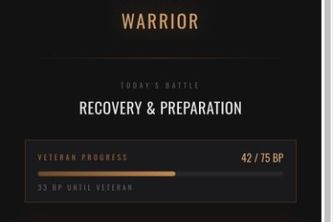
- Deterministic code for managing BP (Body Points), rank eligibility, and campaign history.
- A judge simulator that runs real evaluators but writes no data to production systems.
- Features such as:
- Makeup workout logic preserving original scheduled identity
- Recovery drills and shoulder-specialization evaluators
- Evidence-gated completions
- Pain-safe substitutions
- Discipline streaks, workout chains, Spartan Weeks, monthly badges
The system is described as separating AI interpretation from deterministic decision-making — AI advises, humans confirm uncertainty, and software owns earned progress.
Positioning & Claim Evolution
The author claims the product is different because it:
- Lets users define their own mission, equipment, limitations, and activities.
- Uses GPT-5.6 to interpret bounded context and return structured guidance.
- Keeps AI from manufacturing progress or silently logging nutrition.
- Maintains an auditable ledger where deterministic logic governs eligibility and reward.
This positioning suggests a shift away from passive logbooks or open-ended AI chats toward a system that balances AI assistance with human control and data integrity. The author frames it not as a gamified app but as a durable operating system for personal transformation.
Target Customer & ICP
The description states that the product was built by one person — Greg Selby — who is a full-time supply chain buyer, father with 50/50 custody, and someone trying to rebuild fitness, discipline, sleep, nutrition, and momentum simultaneously. His life does not follow clean weekly templates.
There is no evidence of external customers or target personas beyond the author’s own experience. The product appears tailored to individuals who want a system that respects effort, protects data, and works when life doesn’t go according to plan.
Business Model & Pricing Evidence
Not evidenced.
The description does not mention any pricing model, monetization strategy, or business model. It is unclear whether the author intends to commercialize this tool or if it remains a personal project.
Technical & Delivery Signals
The application is built with:
- Frontend: React, TypeScript, Vite, TanStack Query, Wouter
- Backend: Express.js, PostgreSQL with Drizzle
- AI Integration: GPT-5.6 via OpenAI API
- Development Environment: Replit
Key technical signals include:
- Use of bounded inputs and strict JSON schema output for AI interactions.
- Separation between AI interpretation and deterministic evaluation.
- A judge simulator that isolates QA from production data.
- Implementation of rank overshoot regression repair without resetting BP.
- Persistent profile access, consistent thresholds across components.
The system includes features like:
- Battle Brief generation
- Meal-photo analysis returning range + confidence
- Makeup logic preserving original workout identity
- Recovery drill and shoulder-specialization evaluators
Traction & Maturity Signals
Not evidenced.
There is no mention of users, customers, revenue, or adoption beyond the author’s personal use. The project is described as a private campaign with an active dataset — but no indication that others are using it or have been invited to participate.
Competitive Context
Not evidenced.
The description does not reference competitors or market positioning relative to other fitness apps or platforms. It only contrasts its approach with “passive logbooks” and “open-ended AI chats.”
Open Questions & Risks
- Single-person development: The entire system is built by one person (Greg Selby), which raises questions about scalability, maintenance, and long-term viability.
- No external validation or user feedback: There are no signs of real-world testing beyond the author’s own campaign.
- Unverified AI integration claims: While GPT-5.6 is mentioned, there is no evidence that the AI actually functions as described in production.
- Unclear commercial intent: The project seems to be a personal prototype rather than an intended product for sale or partnership.
- No data on user retention or engagement: No metrics are shared about how often users interact with the system or whether they follow through.
Questions the description leaves open
- What is the actual scope of your campaign? Is it limited to you alone, or are others participating?
- How do you plan to scale beyond a single user?
- Are there any plans for monetization or commercialization?
- Can you demonstrate how the AI integrates with the deterministic logic in practice?
- What is the timeline for moving from prototype to a product that could be used by others?
- Have you considered privacy controls, data export/delete tools, and account isolation?
- How do you intend to validate user behavior and ensure adherence to rules?
Overall Assessment
Not evidenced.
There is no evidence of traction, revenue, or customer base. The project appears to be a personal prototype built during a hackathon, with no indication of commercial intent or market readiness. It lacks any signals of product-market fit or business viability beyond the author’s own use case.
The description does not support an investment or partnership decision at this stage. Further information on usage, adoption, and monetization plans would be required to assess potential value.
User Stories BotA demo video on every pull request
Get a demo video on every new feature
GitHub App that watches your pull requests and records a narrated, captioned demo.
Save time on demo prep and make informed decisions faster with a video walkthrough of every new feature.
Source
Submitted to the OpenAI 2026 hackathon on Devpost. Project home on Devpost. Back to the full gallery on Devpost.
This competitive analysis was produced by top-founders.com (opens in a new tab)
Generated by a language model from this project's public Devpost page — its tagline, the author's own write-up and any built-with tags listed there — as captured in August 2026. Short quotations are the author's words. It is an opinion on the idea as a business, not on the people behind it, and it reflects the description as published then. If the project has moved on, request a correction below. The analysis is not independent research and contains no verified traction, revenue or customer data.
An independent guide by KFG International LLC — not affiliated with, endorsed by, or connected to Devpost or OpenAI.