

Archive position — measured, not model output
1 like on Devpost
505 of the 7,850 archived projects have more likes, and 1,758 share exactly 1 — so this project's #1,963 place in the like-ranked listing is a tie-break inside that group, not a ranking.
Projects (log scale)
Likes on Devpost. ▲ marks this project's group.
Show the figures
| Likes | Projects | Share of archive |
|---|---|---|
| 0 | 5,587 | 71.2% |
| 1 | 1,758 | 22.4% |
| 2 | 284 | 3.6% |
| 3–4 | 132 | 1.7% |
| 5–9 | 75 | 1.0% |
| 10+ | 14 | 0.2% |
 User Stories BotA demo video on every pull request
Get a demo video on every new feature
GitHub App that watches your pull requests and records a narrated, captioned demo.
Save time on demo prep and make informed decisions faster with a video walkthrough of every new feature.
Executive Summary
SoulSynce is a self-reported music streaming and store platform built around a "River" for discovering full songs and music videos, with features including Artist Worlds, alternate versions, comments, and song ownership. The author states that the platform is approaching beta with real users, registrations, and working listener behavior data. It was built by one person (Will Nelson) using React, Node.js, MongoDB, and OpenAI tools. The description indicates a focus on full-song discovery, artist identity, and ownership, but does not provide evidence of revenue, customers, or adoption beyond the author's claims.
Key open question
Is there sufficient evidence to support the author’s claim that SoulSynce is approaching beta with real users and working listener behavior data?
What The Product Actually Is
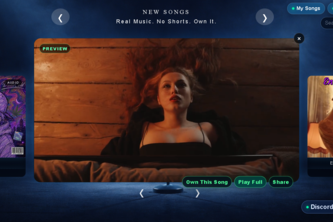
The description states that SoulSynce is a music streaming and store platform built around:
- A "River" — a cinematic carousel for discovering original songs and music videos
- Artist Worlds — spaces where artists can publish albums, create versions, and connect with listeners
- Alternate versions of songs
- Comments on music
- Song pages
- Protected previews
- Analytics
- Installable PWA features
The platform allows listeners to preview songs, explore Artist Worlds, view alternate versions, comment, share individual song pages, and eventually purchase songs into their personal library.
Evidence The author's own write-up describes these features as part of the product. No independent verification or third-party confirmation is provided.
Positioning & Claim Evolution
The author states that SoulSynce was inspired by the idea that music discovery should be more than endless playlists or short clips, aiming to create a place where full songs, artist identity, alternate versions, conversation, and ownership can coexist.
The platform positions itself as:
- A custom streaming and store platform
- Focused on full-song discovery
- Emphasizing artist identity and ownership
- Building toward a complete music ecosystem
Evidence The author's own write-up describes the inspiration and positioning. No external validation or market positioning data is provided.
Target Customer & ICP
The description states that SoulSynce targets:
- Listeners who want to preview songs, explore Artist Worlds, view alternate versions, comment, share individual song pages, and eventually purchase songs into their personal library
- Artists who can upload music, create versions, publish albums, and connect directly with listeners
Evidence The author's own write-up describes these user types. No data on customer segments or ICP validation is provided.
Business Model & Pricing Evidence
The description states that:
- Listeners can eventually purchase songs into their personal library
- Artists can upload music, create versions, publish albums, and connect directly with listeners
- The platform plans to add artist payouts and live song sales
- Payments are being finished as part of the beta stage
Evidence The author's own write-up describes these elements. No pricing information, revenue model details, or monetization data is provided.
Technical & Delivery Signals
The platform was built with:
- Frontend: React, Vite, JavaScript, HTML5, CSS3, PWA
- Backend: Node.js, Express, REST APIs, JWT authentication
- Database: MongoDB, MongoDB Atlas
- Media storage: Backblaze B2, Cloudflare Stream, protected media storage
- Analytics and tools: OpenAI Codex, PayPal
The author notes that challenges included:
- Securing preview vs. full media access
- Guest access limitations
- Ownership verification from unverified browser responses
- Responsive carousel layouts, audio/video playback, search, SEO, analytics accuracy, authentication issues
Evidence The author's own write-up describes the tech stack and challenges. No independent confirmation of delivery quality or technical performance is provided.
Traction & Maturity Signals
The author states:
- The platform is approaching beta
- It has real songs, real visitors, registrations, and working listener behavior data
- It includes a custom discovery River, Artist Worlds, alternate versions, comments, albums, song pages, protected previews, artist tools, analytics, and installable app features
- The next stage is beta with payments, song ownership, artist payouts, live music sessions, and live song sales
Evidence The author's own write-up describes these elements. No independent data on user engagement, retention, or actual usage metrics is provided.
Competitive Context
The description does not provide any information about:
- Competitors
- Market positioning relative to existing platforms
- Differentiation from other music streaming services
Evidence Not evidenced. The author does not mention competitors or market context.
Open Questions & Risks
- Single-person team: The platform was built by one person (Will Nelson), which raises questions about scalability and long-term maintenance.
- Unverified claims: All traction, user data, and functionality are self-reported without independent verification.
- Technical complexity: The platform involves complex media handling, authentication, and ownership systems — all of which are described as challenges.
- Lack of revenue or monetization details: No evidence of monetization, pricing, or revenue generation is provided.
- Hackathon project: This was submitted to a hackathon, suggesting it may be in early development.
Evidence Inferences based on the author's own claims and the nature of a hackathon submission.
Questions the description leaves open
- What specific metrics define "real visitors" and "working listener behavior data"?
- How is user authentication and media ownership verified in practice?
- What are the actual technical challenges that remain unresolved before full launch?
- How does the platform plan to scale beyond a single developer?
- What is the current status of payments, song ownership, and artist payouts?
- Are there any existing partnerships or early adopters?
- How does the platform differentiate from existing music streaming services?
Overall Assessment
The description states that SoulSynce is approaching beta with real songs, real visitors, registrations, and working listener behavior data, but provides no verifiable evidence of these claims.
Confidence Low — based entirely on self-reported information without independent verification.
Assessment The platform appears to be an early-stage project built by a single developer, with ambitious goals around full-song discovery, artist identity, and ownership. However, there is no evidence of traction, revenue, or adoption beyond the author's claims. The lack of third-party validation, team size, and technical complexity raise significant concerns about scalability and viability. Further due diligence would require independent verification of user data, functionality, and business model feasibility.
Inference If the platform were to achieve meaningful traction, it could be positioned as a niche player in music discovery and ownership. However, current evidence does not support that conclusion.
User Stories BotA demo video on every pull request
Get a demo video on every new feature
GitHub App that watches your pull requests and records a narrated, captioned demo.
Save time on demo prep and make informed decisions faster with a video walkthrough of every new feature.
Source
Submitted to the OpenAI 2026 hackathon on Devpost. Project home on Devpost. Back to the full gallery on Devpost.
This competitive analysis was produced by top-founders.com (opens in a new tab)
Generated by a language model from this project's public Devpost page — its tagline, the author's own write-up and any built-with tags listed there — as captured in August 2026. Short quotations are the author's words. It is an opinion on the idea as a business, not on the people behind it, and it reflects the description as published then. If the project has moved on, request a correction below. The analysis is not independent research and contains no verified traction, revenue or customer data.
An independent guide by KFG International LLC — not affiliated with, endorsed by, or connected to Devpost or OpenAI.