

Archive position — measured, not model output
0 likes on Devpost
2,263 of the 7,850 archived projects have more likes, and 5,587 share exactly 0 — so this project's #6,798 place in the like-ranked listing is a tie-break inside that group, not a ranking.
Projects (log scale)
Likes on Devpost. ▲ marks this project's group.
Show the figures
| Likes | Projects | Share of archive |
|---|---|---|
| 0 | 5,587 | 71.2% |
| 1 | 1,758 | 22.4% |
| 2 | 284 | 3.6% |
| 3–4 | 132 | 1.7% |
| 5–9 | 75 | 1.0% |
| 10+ | 14 | 0.2% |
 User Stories BotA demo video on every pull request
Get a demo video on every new feature
GitHub App that watches your pull requests and records a narrated, captioned demo.
Save time on demo prep and make informed decisions faster with a video walkthrough of every new feature.
Executive Summary
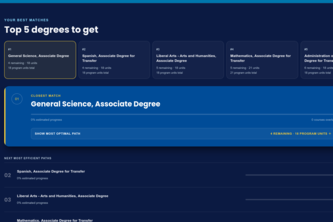
The description states that SMC Multidegree Solver is a web-based tool built by one developer to help Santa Monica College (SMC) students plan efficient paths for earning multiple degrees. It allows users to import transcripts locally in-browser, identifies overlapping courses and degree requirements, and offers both greedy and SAT/Z3-optimized planning modes. The author reports building it using Rust/Dioxus with Tailwind styling, and integrating AI tools like Codex and GPT-5.6 for development support.
The project appears to be a personal or hackathon effort focused on solving a specific problem within SMC’s academic ecosystem. It does not appear to have any commercial traction, revenue, or customer base beyond the author's own use case. The tool is described as privacy-first and designed to supplement rather than replace academic counseling.
The single most important open question
Is there evidence of any institutional adoption, user feedback from SMC students, or integration with official SMC systems that would indicate real-world utility or scalability?
What The Product Actually Is
The description states that SMC Multidegree Solver is a web application that:
- Allows users to import transcripts locally in-browser.
- Removes personally identifiable information (PII) such as names, student IDs, and birthdates.
- Uses completion status to:
- Rank the closest SMC degrees.
- Recognize awarded degrees, certificates, transfer credit, and GE certification.
- Build optimized multi-degree plans and show overlapping courses.
- Suggest semester-by-semester schedules respecting prerequisites and unit limits.
- Show popular degree paths based on the 2026 commencement program.
- Offer certificate pathways when selected programs support a Certificate of Achievement.
It is built as a Rust/Dioxus web app styled with Tailwind, and uses a structured DSL for degree requirements, a prerequisite DAG, and either greedy or SAT/Z3 optimization modes. Transcript parsing and planner state are handled client-side in the browser.
Inference The tool appears to be a single-developer project focused on solving an internal academic planning challenge at SMC, not a commercial product.
Positioning & Claim Evolution
The description states that the author was inspired by the number of students who earn multiple degrees and wanted to help them do so efficiently. It positions itself as a tool for students to visualize degree paths, overlapping courses, prerequisites, and GE requirements.
It claims to be:
- A privacy-first solution (transcripts parsed in-browser).
- A supplement to academic counseling, not a replacement.
- Capable of handling complex degree rules including transfer credit, prerequisites, and multiple program options.
- Designed with SMC-specific catalogs and degree structures in mind.
Inference The positioning is narrow and self-contained — focused on one college’s ecosystem. It does not claim broader market applicability or scalability beyond SMC.
Target Customer & ICP
The description states that the tool is for Santa Monica College (SMC) students, particularly those who are pursuing multiple degrees.
It is built to help users:
- Understand how to complete multiple degrees efficiently.
- Identify overlapping courses and shared requirements.
- Plan semester-by-semester schedules respecting prerequisites and unit limits.
- Navigate GE requirements, transfer credit, and certificate pathways.
Inference The ICP appears to be SMC students who are actively pursuing or considering multiple degrees. No evidence of broader targeting or institutional adoption is provided.
Business Model & Pricing Evidence
The description does not state any business model or pricing information.
It is described as a personal or hackathon project, with no mention of monetization, subscriptions, licensing, or paid features.
Inference There is no evidence of a commercial business model. The tool appears to be non-commercial in nature.
Technical & Delivery Signals
The description states that the tool was built using:
- Technology stack: Rust/Dioxus with Tailwind CSS.
- Data handling: Transcript parsing and planner state stored locally in-browser.
- Degree rules modeling: Structured DSL for degree requirements, prerequisite DAGs.
- Planning modes: Greedy overlap planner and optional SAT/Z3 optimizer.
- Development tools: Codex and GPT-5.6 used for development, debugging, testing, and communication.
It also mentions that the tool is designed to be responsive and handles complex constraints like prerequisites and unit limits.
Inference The technical approach is lightweight and client-side, with AI-assisted development. No evidence of enterprise-grade infrastructure or scalability beyond a single user or small group.
Traction & Maturity Signals
The description states that this was submitted as a project to the OpenAI 2026 hackathon, and that it was built by one developer (lolpro11).
There is no mention of:
- Users, customers, or adoption.
- Revenue or monetization.
- Product usage metrics.
- Institutional partnerships or integration with SMC systems.
- Any public deployment or live use beyond the author’s own testing.
Inference The project is at a very early stage — likely a prototype or proof-of-concept. No evidence of traction, user feedback, or institutional adoption.
Competitive Context
The description does not mention any competitors or existing solutions in this space.
It is described as a tool for SMC students to plan multi-degree paths, which could overlap with academic planning tools or systems used by colleges and universities, but no comparison or market positioning is given.
Inference No competitive landscape is evident from the description. The tool appears to be unique within its narrow scope (SMC-specific).
Open Questions & Risks
- No institutional adoption or user feedback: The tool is described as a personal project with no evidence of real-world use.
- Single developer effort: The team size is listed as one, suggesting limited scalability or long-term maintenance capacity.
- Limited scope: It is built for SMC only and does not appear to be designed for broader institutional or market use.
- No commercial viability: No pricing, monetization, or business model is described.
- AI dependency: Heavy reliance on AI tools (Codex, GPT-5.6) for development may raise questions about long-term maintainability or reproducibility.
Inference The project lacks commercial viability and institutional traction. It is likely a prototype with no clear path to product-market fit beyond its author’s use case.
Questions the description leaves open
- What is the actual adoption rate among SMC students? Have you received feedback from users or counselors?
- How does the tool handle edge cases in degree requirements, especially those involving transfer credit or articulation with external institutions?
- Is there any plan to expand beyond SMC, or is it intentionally limited to this one college?
- What are the limitations of the current SAT/Z3-based optimization? Have you tested how well it scales with larger course selections?
- How do you plan to maintain and update degree requirements as they change over time?
- Are there any institutional or legal constraints around using AI tools like GPT-5.6 for development, especially in a student-focused academic environment?
Overall Assessment
The description states that this is a project built by one developer for the OpenAI 2026 hackathon and does not indicate any commercial investment or partnership interest.
There is no evidence of:
- Revenue.
- Customers.
- Product-market fit.
- Institutional adoption.
- Scalability or long-term viability.
Inference This is not a viable candidate for investment or partnership at this stage. It is a personal or hackathon effort with no demonstrated traction, commercialization, or institutional integration.
User Stories BotA demo video on every pull request
Get a demo video on every new feature
GitHub App that watches your pull requests and records a narrated, captioned demo.
Save time on demo prep and make informed decisions faster with a video walkthrough of every new feature.
Source
Submitted to the OpenAI 2026 hackathon on Devpost. Project home on Devpost. Back to the full gallery on Devpost.
This competitive analysis was produced by top-founders.com (opens in a new tab)
Generated by a language model from this project's public Devpost page — its tagline, the author's own write-up and any built-with tags listed there — as captured in August 2026. Short quotations are the author's words. It is an opinion on the idea as a business, not on the people behind it, and it reflects the description as published then. If the project has moved on, request a correction below. The analysis is not independent research and contains no verified traction, revenue or customer data.
An independent guide by KFG International LLC — not affiliated with, endorsed by, or connected to Devpost or OpenAI.