

Archive position — measured, not model output
0 likes on Devpost
2,263 of the 7,850 archived projects have more likes, and 5,587 share exactly 0 — so this project's #6,779 place in the like-ranked listing is a tie-break inside that group, not a ranking.
Projects (log scale)
Likes on Devpost. ▲ marks this project's group.
Show the figures
| Likes | Projects | Share of archive |
|---|---|---|
| 0 | 5,587 | 71.2% |
| 1 | 1,758 | 22.4% |
| 2 | 284 | 3.6% |
| 3–4 | 132 | 1.7% |
| 5–9 | 75 | 1.0% |
| 10+ | 14 | 0.2% |
 User Stories BotA demo video on every pull request
Get a demo video on every new feature
GitHub App that watches your pull requests and records a narrated, captioned demo.
Save time on demo prep and make informed decisions faster with a video walkthrough of every new feature.
Executive Summary
Project: SMART Salice
Self-reported basis: The analysis is based entirely on the author's own description of the project, submitted to the OpenAI 2026 hackathon on Devpost. No independent verification or additional data sources are available.
What it appears to be: A self-described web-based system that connects existing business systems for a local Argentine business (Salice) and incorporates algorithmic recommendations.
Key change: The author states the project was built from scratch using AI tools, with a focus on functionality and ease of use.
Most important open question: Is there evidence of actual business adoption or traction beyond this hackathon prototype?
What The Product Actually Is
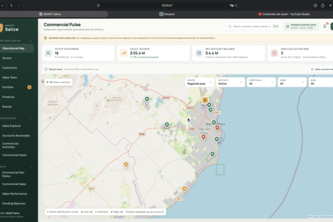
- The description states that SMART Salice is an "interactive and functional webpage" that connects most systems of the local business Salice.
- It includes algorithmic recommendations, as described by the author.
- The system is said to update daily via API (though the demo version does not).
- Built using: express.js, leaflet.js, node.js, react, sqlite, typescript, vite.
- The author claims it was built "from the ground up with GPT 5.6 Sol" — a self-reported development method.
Inference: The product is described as a web-based dashboard or interface that integrates existing systems and adds AI-driven recommendations. However, there is no evidence of actual deployment, live data integration, or user interaction beyond the hackathon demo.
Positioning & Claim Evolution
- The author positions SMART Salice as a system that makes the business "smarter" by connecting its systems and using algorithms.
- It is described as both functional and aesthetically pleasing.
- The project is framed as an improvement over the current workflow, which the author says lacks many features.
Inference: The positioning is self-described and focused on solving internal inefficiencies. There is no evidence of a broader market or competitive positioning beyond this one business use case.
Target Customer & ICP
- The target customer is described as "Salice", a local business in Mar del Plata, Argentina.
- No other customers or segments are mentioned.
- The author states that the system was built after talking with the boss of Salice, indicating a direct, single-client relationship.
Inference: The ICP appears to be a small, local business with existing systems needing integration and optimization. There is no evidence of scalability or broader market targeting.
Business Model & Pricing Evidence
- No pricing model or revenue streams are described.
- The author does not state whether the system will be sold, licensed, or offered as a service.
- The project is presented as a hackathon demo, not a commercial product.
Inference: There is no evidence of a business model or pricing structure. The system appears to be a prototype for one client only.
Technical & Delivery Signals
- Built with: express.js, leaflet.js, node.js, react, sqlite, typescript, vite.
- The author claims the code was generated by AI (GPT 5.6 Sol), while they planned the algorithms and priorities.
- The system is said to update daily via API.
- The demo version does not include live updates or full functionality due to privacy concerns.
Inference: Technical stack suggests a modern web application with backend and frontend components, but there is no evidence of production deployment or scalability. AI-assisted development is claimed, but not verified.
Traction & Maturity Signals
- The project was submitted as a hackathon entry.
- The author states that the demo version is not the final product — a plan for 10 new versions is in place.
- There is no evidence of actual users, revenue, or adoption beyond the prototype.
Inference: No traction or maturity signals are evident. The project is described as a work-in-progress with no live implementation.
Competitive Context
- No competitors or market context are mentioned.
- The author does not reference similar tools or platforms in the marketplace.
- The focus appears to be on solving one specific local business problem, rather than addressing a broader market need.
Inference: There is no evidence of competitive analysis or positioning within an existing market. The project seems isolated to this single use case.
Open Questions & Risks
- The system is described as a hackathon demo with no live implementation.
- No evidence of actual business adoption, revenue, or customer feedback.
- The author claims AI-generated code but does not provide verification or examples.
- The project lacks any commercial or market traction indicators.
- The stated plan for 10 versions suggests an unproven development path.
Inference: The main risk is that the project remains a prototype with no evidence of real-world viability or scalability. The lack of independent verification raises concerns about feasibility and execution.
Questions the description leaves open
- What is the actual business workflow at Salice, and how does SMART Salice improve it?
- Is there an agreement or contract in place for the development or use of this system?
- How much of the AI-generated code has been reviewed or validated by the founder?
- What are the specific algorithmic recommendations, and how were they designed?
- Are there any plans to monetize or scale this solution beyond this one business?
Overall Assessment
- The project is described as a hackathon prototype with no evidence of traction, revenue, or adoption.
- It is not evident whether the system has been implemented in production or tested with real users.
- There is no indication of scalability, market demand, or commercial viability beyond one local business.
Inference: Based on the self-reported description alone, there is insufficient evidence to support a commercial due-diligence read. The project appears to be an early-stage idea or prototype, not a developed product or business.
User Stories BotA demo video on every pull request
Get a demo video on every new feature
GitHub App that watches your pull requests and records a narrated, captioned demo.
Save time on demo prep and make informed decisions faster with a video walkthrough of every new feature.
Source
Submitted to the OpenAI 2026 hackathon on Devpost. Project home on Devpost. Back to the full gallery on Devpost.
This competitive analysis was produced by top-founders.com (opens in a new tab)
Generated by a language model from this project's public Devpost page — its tagline, the author's own write-up and any built-with tags listed there — as captured in August 2026. Short quotations are the author's words. It is an opinion on the idea as a business, not on the people behind it, and it reflects the description as published then. If the project has moved on, request a correction below. The analysis is not independent research and contains no verified traction, revenue or customer data.
An independent guide by KFG International LLC — not affiliated with, endorsed by, or connected to Devpost or OpenAI.