

Archive position — measured, not model output
1 like on Devpost
505 of the 7,850 archived projects have more likes, and 1,758 share exactly 1 — so this project's #1,948 place in the like-ranked listing is a tie-break inside that group, not a ranking.
Projects (log scale)
Likes on Devpost. ▲ marks this project's group.
Show the figures
| Likes | Projects | Share of archive |
|---|---|---|
| 0 | 5,587 | 71.2% |
| 1 | 1,758 | 22.4% |
| 2 | 284 | 3.6% |
| 3–4 | 132 | 1.7% |
| 5–9 | 75 | 1.0% |
| 10+ | 14 | 0.2% |
 User Stories BotA demo video on every pull request
Get a demo video on every new feature
GitHub App that watches your pull requests and records a narrated, captioned demo.
Save time on demo prep and make informed decisions faster with a video walkthrough of every new feature.
Executive Summary
What the company appears to be
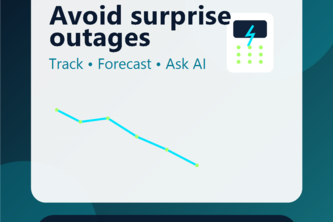
The project described by the caller is a self-reported prototype called Smart Home Utility Optimizer, intended for households using prepaid electricity meters. It is presented as an advisory dashboard that tracks meter readings, forecasts depletion risk, and provides AI-assisted guidance on usage behavior.
What changed
This is a single-developer hackathon project submitted to the OpenAI 2026 hackathon. The author states it was built using Codex CLI with GPT-5.6 and GPT-5.5, and deployed via Google Cloud Run. It includes a React frontend, FastAPI backend, and PostgreSQL persistence.
Single most important open question
Is there any evidence of real-world usage or traction beyond the prototype?
What The Product Actually Is
The description states that Smart Home Utility Optimizer is a web-based advisory dashboard for prepaid electricity users. It allows households to:
- Connect a meter profile
- Enter confirmed meter readings
- View current balance and reserve status
- See consumption trends
- Estimate depletion window
- Receive low-balance alerts
- Get AI explanations grounded in their own data
The system uses a deterministic forecasting engine and a bounded AI advisor, which is constrained to advisory behavior only. It does not interact with utility providers, execute payments, or control devices.
It was built using:
- Cloud Run
- FastAPI
- Google Cloud SQL (PostgreSQL)
- React frontend
- GPT-5.6 and GPT-5.5 for development via Codex CLI
The MVP includes:
- Mobile-optimized dashboard
- Anonymous session identity
- Idempotent meter setup flow
- Trend and forecast APIs
- ADK-based advisory agent using household-scoped context
Confidence Low — all claims are self-reported, unverified, and lack evidence of real-world deployment or adoption.
Positioning & Claim Evolution
The author states that the product is an advisory prototype focused on helping households understand usage trends, forecast depletion risk, and receive AI-assisted guidance before outages occur. It is positioned to address a planning gap for prepaid electricity users who often only learn they are running low on credit too late.
There is no indication of a shift in positioning from the initial idea or pitch. The product remains focused on usage tracking and forecasting, not on selling electricity, automating payments, or integrating with smart home devices.
Inference The positioning appears static and narrowly defined by the author’s stated problem space.
Target Customer & ICP
The description states that the target user is a household using prepaid electricity meters. These users are characterized as:
- Managing shared budgets
- Changing appliance usage
- Experiencing variable occupancy
- Dealing with inconsistent top-up habits
The product is designed for households, not individual consumers or utility providers.
Confidence Low — no evidence of customer interviews, personas, or market validation beyond the author’s self-description.
Business Model & Pricing Evidence
There is no evidence in the description of a business model or pricing structure. The project is described as an advisory prototype, not a commercial product. It does not attempt to vend electricity, execute payments, or automate utility-provider channels.
The MVP includes:
- Anonymous session identity
- Public origin for frontend and backend requests
- No mention of monetization
Inference The business model remains undefined and untested.
Technical & Delivery Signals
The system is built using:
- Cloud Run
- FastAPI
- React
- Google Cloud SQL (PostgreSQL)
- GPT-5.6 and GPT-5.5 via Codex CLI
- GitHub Actions CI/CD with GCP Workload Identity Federation
The MVP includes:
- Single public origin for frontend and backend
- Idempotent meter setup flow
- Trend and forecast APIs
- ADK-based advisory agent
- Low-balance alert generation
The system is described as deterministic code computing household state and forecasts, with AI advisor explaining results and suggesting safe behavioral actions.
Confidence Medium — the technical stack and architecture are detailed, but no evidence of production deployment or scalability.
Traction & Maturity Signals
There is no evidence of traction, revenue, customers, or adoption beyond the prototype. The project was submitted to a hackathon and deployed as a live service on Cloud Run, but there is no indication of user engagement, usage metrics, or feedback loops.
The author states:
- It is an MVP
- It does not attempt to vend electricity or automate utility channels
- It is a prototype for demonstration purposes
Confidence Very low — no traction data or adoption signals are present.
Competitive Context
There is no evidence of competitive analysis or awareness of existing solutions in the prepaid electricity or smart home utility space. The author does not reference competitors, similar products, or market positioning.
The product is described as addressing a specific gap for households using prepaid meters, but no context is given about how it compares to or fits into existing tools or platforms.
Confidence Low — no competitive signals are evident.
Open Questions & Risks
- No traction or adoption evidence: The project is presented as a prototype with no real-world usage.
- Unverified claims: All features, functionality, and design decisions are self-reported without external validation.
- Limited scope: It does not attempt to integrate with utility providers or automate payments — this may limit commercial viability.
- AI safety constraints: While the AI advisor is constrained, there is no evidence of how it was tested or validated in practice.
- Single developer: The team size is listed as one, which raises questions about scalability and long-term development capacity.
Confidence Medium to high — these are clear risks based on the lack of evidence for real-world use or product-market fit.
Questions the description leaves open
- What was the actual problem you were trying to solve, and how did you validate that it mattered?
- How many households have used this prototype? Have they provided feedback?
- Are there any plans to monetize this product or integrate with utility providers?
- How does the AI advisor handle uncertainty in sparse data?
- What are the technical limitations of the current MVP, and how would you scale it?
- Is there a plan for user onboarding or retention beyond the prototype?
Overall Assessment
Not evidenced — There is no evidence to support a commercial investment or partnership case. The project is described as an advisory prototype, not a product with traction, revenue, or customer validation.
The author states that it was built for a hackathon and deployed as a live service, but there is no indication of real-world usage or adoption. The product is narrowly scoped and lacks evidence of market demand or business model viability.
Confidence Very low — the project does not demonstrate any commercial readiness or traction.
User Stories BotA demo video on every pull request
Get a demo video on every new feature
GitHub App that watches your pull requests and records a narrated, captioned demo.
Save time on demo prep and make informed decisions faster with a video walkthrough of every new feature.
Source
Submitted to the OpenAI 2026 hackathon on Devpost. Project home on Devpost. Back to the full gallery on Devpost.
This competitive analysis was produced by top-founders.com (opens in a new tab)
Generated by a language model from this project's public Devpost page — its tagline, the author's own write-up and any built-with tags listed there — as captured in August 2026. Short quotations are the author's words. It is an opinion on the idea as a business, not on the people behind it, and it reflects the description as published then. If the project has moved on, request a correction below. The analysis is not independent research and contains no verified traction, revenue or customer data.
An independent guide by KFG International LLC — not affiliated with, endorsed by, or connected to Devpost or OpenAI.