

Archive position — measured, not model output
1 like on Devpost
505 of the 7,850 archived projects have more likes, and 1,758 share exactly 1 — so this project's #1,947 place in the like-ranked listing is a tie-break inside that group, not a ranking.
Projects (log scale)
Likes on Devpost. ▲ marks this project's group.
Show the figures
| Likes | Projects | Share of archive |
|---|---|---|
| 0 | 5,587 | 71.2% |
| 1 | 1,758 | 22.4% |
| 2 | 284 | 3.6% |
| 3–4 | 132 | 1.7% |
| 5–9 | 75 | 1.0% |
| 10+ | 14 | 0.2% |
 User Stories BotA demo video on every pull request
Get a demo video on every new feature
GitHub App that watches your pull requests and records a narrated, captioned demo.
Save time on demo prep and make informed decisions faster with a video walkthrough of every new feature.
Executive Summary
What the company appears to be
Smart Dining Hub is a self-reported unified restaurant platform designed for QR ordering, merchant operations, rewards, promotions, table management, formula-based wait estimates, and secure smart pickup. It was built by one individual over more than a year and includes both customer-facing and merchant-facing interfaces.
What changed
The author states that the project evolved from a simple ordering system into a full-featured platform integrating multiple restaurant operation workflows, including visual menu presentation, order tracking, and a QR-based smart pickup verification system. The system also supports formula-based waiting-time estimation and is designed for future hardware integration (e.g., smart pickup lockers).
The single most important open question
Is there any evidence of real-world usage or merchant adoption beyond the author’s own development and testing?
What The Product Actually Is
The description states that Smart Dining Hub is a platform combining:
- QR-code ordering
- Dine-in, takeaway, and scheduled ordering flows
- Order and table management
- Merchant administration
- Membership and customer accounts
- Discount codes and promotional campaigns
- Formula-based waiting-time estimation
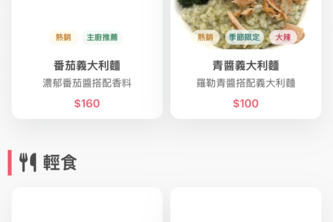
- Visual menu presentation
- QR-token-based pickup verification
- Multi-merchant data and permission separation
It is described as a modular full-stack system with:
- A RESTful backend API
- A relational database
- Role-based access control
- Order-status update workflows
- Responsive customer and merchant interfaces
- Docker-based deployment
- QR-code generation and verification
- Formula-based waiting-time estimation
- Software integration path for future smart pickup hardware
The author notes that the system was built using CSS, Docker, FastAPI, HTML, JavaScript, JWT, Linux, Nginx, PostgreSQL, Python, QRCode, REST API, and WebSockets.
Inference The platform is a self-contained software solution intended to streamline restaurant operations and customer experience through digital tools. It is not described as a SaaS product with recurring revenue or a marketplace.
Positioning & Claim Evolution
The author states that the project began as an attempt to solve inconvenient ordering processes in restaurants, particularly around usability and lack of wait-time clarity.
It evolved into a “unified restaurant operations and customer engagement platform,” integrating multiple workflows including:
- Customer-facing features (ordering, menu browsing, promotions)
- Merchant-facing features (dashboard, order management, promotions)
- Wait-time estimation using formula-based calculations
- Secure pickup via QR token verification
The author claims the system is designed to support future smart pickup locker integration and includes modular architecture for future feature additions like multilingual menus or AI-assisted recommendations.
Inference The positioning appears to be a self-contained platform for small-to-medium restaurants aiming to digitize operations, improve customer experience, and reduce friction in ordering and pickup.
Target Customer & ICP
The description states that the system is designed for:
- Customers who want an intuitive ordering experience with visual menus and wait-time estimates
- Merchants who need a dashboard to manage orders, promotions, seating, and customers
- Restaurants operating in dine-in, takeaway, or scheduled order models
It supports multiple merchant data and permission separation, implying it targets multi-restaurant environments.
Inference The ICP appears to be small-to-medium restaurants seeking digital tools for customer engagement and operational efficiency. However, no evidence of actual customers or merchants is provided.
Business Model & Pricing Evidence
The description does not state any pricing model, revenue streams, or monetization strategy.
It mentions that the system includes features like promotions, discounts, and membership services but does not indicate how these would generate revenue.
Inference No evidence of a business model or pricing structure is provided. The project is described as a self-developed prototype with no commercial traction.
Technical & Delivery Signals
The author reports:
- Modular full-stack architecture
- RESTful backend API
- Relational database (PostgreSQL)
- Role-based access control
- Docker-based deployment
- QR-code generation and verification
- Formula-based waiting-time estimation
- Software integration path for future smart pickup hardware
The system was built using Python, FastAPI, HTML, CSS, JavaScript, JWT, Nginx, Linux, and WebSockets.
Inference The technical stack suggests a developer-built prototype with potential for scalability. However, no evidence of production deployment or performance data is provided.
Traction & Maturity Signals
The author states that the system was built over more than one year by one person and includes:
- A working prototype
- Code review and refactoring during OpenAI Build Week
- Use of AI tools (Codex, GPT-5.6) for development
- Modular design for future expansion
There is no mention of:
- Customers or users
- Revenue or monetization
- Production deployment
- Real-world testing or feedback from merchants
- Market traction or adoption
Inference The system is at a prototype stage with no evidence of real-world usage or commercial traction.
Competitive Context
The description does not mention any direct competitors. It does note that existing restaurant systems are functional but not intuitive for customers or staff, and that some lack visual guidance or clear wait-time estimation.
Inference The competitive landscape is unclear. The author implies a gap in the market for more user-friendly ordering systems, but no evidence of existing solutions or competitive positioning is provided.
Open Questions & Risks
- No commercial traction: No customers, revenue, or adoption data are reported.
- Single-person development: The system was built by one individual with no team or external validation.
- Unproven wait-time model: The formula-based estimation is not described as calibrated or validated with real restaurant data.
- Security concerns: The author notes that security review is ongoing, suggesting potential vulnerabilities.
- AI dependency: Heavy reliance on AI tools for development raises questions about final control and quality assurance.
- No monetization strategy: No evidence of a business model or pricing structure.
Inference The project is a prototype with no commercial viability or market validation. It lacks the signals of a mature product or scalable business.
Questions the description leaves open
- Has the system been tested in real restaurants or with real customers?
- What specific feedback have you received from restaurant owners or staff?
- How is the formula-based wait-time estimation validated or calibrated?
- Are there any plans to integrate with existing restaurant systems (e.g., POS)?
- What are the key assumptions behind the business model, and how do you plan to monetize it?
- Have you considered security and compliance requirements for handling customer data?
- How do you plan to scale beyond a single developer’s capacity?
Overall Assessment
Not evidenced: There is no evidence of revenue, customers, or commercial traction.
Inference At this stage, Smart Dining Hub appears to be an ambitious prototype with potential features but no demonstrated market fit or business model. It would require significant validation and development before any investment or partnership consideration. The project lacks the signals of a viable product or scalable business.
User Stories BotA demo video on every pull request
Get a demo video on every new feature
GitHub App that watches your pull requests and records a narrated, captioned demo.
Save time on demo prep and make informed decisions faster with a video walkthrough of every new feature.
Source
Submitted to the OpenAI 2026 hackathon on Devpost. Project home on Devpost. Back to the full gallery on Devpost.
This competitive analysis was produced by top-founders.com (opens in a new tab)
Generated by a language model from this project's public Devpost page — its tagline, the author's own write-up and any built-with tags listed there — as captured in August 2026. Short quotations are the author's words. It is an opinion on the idea as a business, not on the people behind it, and it reflects the description as published then. If the project has moved on, request a correction below. The analysis is not independent research and contains no verified traction, revenue or customer data.
An independent guide by KFG International LLC — not affiliated with, endorsed by, or connected to Devpost or OpenAI.