

Archive position — measured, not model output
1 like on Devpost
505 of the 7,850 archived projects have more likes, and 1,758 share exactly 1 — so this project's #1,928 place in the like-ranked listing is a tie-break inside that group, not a ranking.
Projects (log scale)
Likes on Devpost. ▲ marks this project's group.
Show the figures
| Likes | Projects | Share of archive |
|---|---|---|
| 0 | 5,587 | 71.2% |
| 1 | 1,758 | 22.4% |
| 2 | 284 | 3.6% |
| 3–4 | 132 | 1.7% |
| 5–9 | 75 | 1.0% |
| 10+ | 14 | 0.2% |
 User Stories BotA demo video on every pull request
Get a demo video on every new feature
GitHub App that watches your pull requests and records a narrated, captioned demo.
Save time on demo prep and make informed decisions faster with a video walkthrough of every new feature.
Executive Summary
What the company appears to be
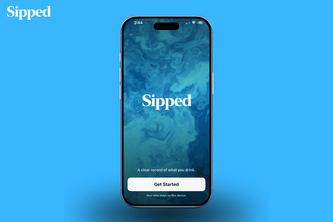
Sipped is an iPhone app for logging drinks, built as a native iOS application using Swift and SwiftUI. The author describes it as a tool that records fluid, caffeine, sugar, and alcohol intake without coaching, reminders, or recommendations. It allows users to log drinks by selecting from a library of drinks and containers, with the app calculating totals based on standard regional units (e.g., Australia, US, UK, Canada). The app stores all data locally and does not sync or connect to external services.
What changed
The project is presented as an original product built for the OpenAI 2026 hackathon. It reflects a personal development effort by one individual (Rishi Singhal) with no evidence of prior traction, funding, or team expansion beyond that single member.
Single most important open question
Is there any evidence of user adoption, revenue, or product-market fit beyond the author’s own description and self-reported build process?
What The Product Actually Is
The description states:
- Sipped is an iPhone app for recording drinks.
- It allows users to select a drink, container type, and amount.
- It calculates totals for fluid, caffeine, sugar, and alcohol intake.
- It supports regional standards for alcohol calculations (Australia, US, UK, Canada).
- The app stores all data locally on the device.
- It includes a “Today” view showing daily entries and a “History” view for past seven days.
- Users can save frequently used drinks and search drink/container libraries.
- There are no reminders, streaks, scores, or advice features.
Inference The app is a personal tracking tool focused on logging without gamification or behavioral nudges. It is designed to be minimal and non-intrusive.
Positioning & Claim Evolution
The description states:
- The inspiration was to avoid “drink diary coaching” — the idea that tracking apps must offer advice or reminders.
- Sipped aims to keep an “honest record” of what you drank, then “get out of the way.”
- It is positioned as a calm, visual, deliberate logging tool.
Inference The positioning reflects a reaction against popular health and wellness apps that use gamification or coaching. The app is framed as a neutral, data-driven tool rather than an interventionist one.
Target Customer & ICP
The description states:
- The app is for people who want to track what they drink — fluid, caffeine, sugar, and alcohol intake.
- It supports regional standards for alcohol tracking (Australia, US, UK, Canada), suggesting a global audience.
- It is designed for iOS users.
Inference The target customer likely includes health-conscious individuals or those monitoring their consumption habits, particularly around caffeine and alcohol. The app may appeal to people in regions where alcohol units are standardized.
Business Model & Pricing Evidence
The description states:
- Everything stays on the phone — no syncing or cloud services.
- No mention of pricing, subscriptions, or monetization.
- No indication of paid features or freemium model.
Inference There is no evidence of a business model or pricing structure. The app appears to be a personal project with no commercial intent described.
Technical & Delivery Signals
The description states:
- Built as a native iOS app using Swift and SwiftUI.
- Uses Codex for product modeling, visual language, and calculation logic.
- Includes tests for calculations, saved records, catalogue behavior, accessibility, and main flows.
- The author notes challenges in balancing container representation and interaction design.
Inference The technical stack is standard for iOS development. The inclusion of tests suggests a structured approach to building the app. The focus on visual consistency and interaction design indicates attention to UX quality.
Traction & Maturity Signals
The description states:
- Submitted to the OpenAI 2026 hackathon.
- Built by one person (Rishi Singhal).
- No evidence of revenue, users, or adoption beyond the author’s own account.
- No mention of app store presence or downloads.
Inference There is no evidence of traction or product-market fit. The project is described as a hackathon submission and personal build, with no indication of ongoing development or user engagement.
Competitive Context
The description states:
- The inspiration was to avoid “drink diary coaching” — implying a contrast with apps that offer advice or reminders.
- No mention of competitors or market analysis.
Inference There is no evidence of competitive positioning or awareness of existing apps in the health and wellness tracking space. The app appears to be a standalone effort without reference to the broader ecosystem.
Open Questions & Risks
The description states:
- Built by one person (Rishi Singhal).
- No revenue, customers, or traction.
- Submitted to a hackathon — not a commercial product.
- No mention of monetization, scalability, or long-term vision.
Inference Key risks include lack of team, no evidence of user adoption, and unclear path to growth or monetization. The project is self-reported as a personal effort with no commercial traction.
Questions the description leaves open
- What is the intended user base beyond the author’s own use case?
- Are there any plans for monetization or product expansion beyond the current scope?
- How does the app handle data privacy and local storage, especially if users want to review or export their logs?
- Has the app been tested with real users outside of the author's own experience?
- What are the long-term goals for Sipped — is it intended as a personal tool or a scalable product?
Overall Assessment
The description states:
- The project is a hackathon submission by one individual.
- No evidence of revenue, customers, or traction.
- No indication of commercial intent beyond the author’s own use case.
Inference There is no evidence to support an investment or partnership opportunity at this stage. The project appears to be a personal build with no commercial viability or scalability demonstrated.
User Stories BotA demo video on every pull request
Get a demo video on every new feature
GitHub App that watches your pull requests and records a narrated, captioned demo.
Save time on demo prep and make informed decisions faster with a video walkthrough of every new feature.
Source
Submitted to the OpenAI 2026 hackathon on Devpost. Project home on Devpost. Back to the full gallery on Devpost.
This competitive analysis was produced by top-founders.com (opens in a new tab)
Generated by a language model from this project's public Devpost page — its tagline, the author's own write-up and any built-with tags listed there — as captured in August 2026. Short quotations are the author's words. It is an opinion on the idea as a business, not on the people behind it, and it reflects the description as published then. If the project has moved on, request a correction below. The analysis is not independent research and contains no verified traction, revenue or customer data.
An independent guide by KFG International LLC — not affiliated with, endorsed by, or connected to Devpost or OpenAI.