

Archive position — measured, not model output
0 likes on Devpost
2,263 of the 7,850 archived projects have more likes, and 5,587 share exactly 0 — so this project's #6,626 place in the like-ranked listing is a tie-break inside that group, not a ranking.
Projects (log scale)
Likes on Devpost. ▲ marks this project's group.
Show the figures
| Likes | Projects | Share of archive |
|---|---|---|
| 0 | 5,587 | 71.2% |
| 1 | 1,758 | 22.4% |
| 2 | 284 | 3.6% |
| 3–4 | 132 | 1.7% |
| 5–9 | 75 | 1.0% |
| 10+ | 14 | 0.2% |
 User Stories BotA demo video on every pull request
Get a demo video on every new feature
GitHub App that watches your pull requests and records a narrated, captioned demo.
Save time on demo prep and make informed decisions faster with a video walkthrough of every new feature.
Executive Summary
Project: Sentinel.dev
Self-reported basis: The description is entirely from the author’s own submission to the OpenAI 2026 hackathon on Devpost. No external verification or historical data is available.
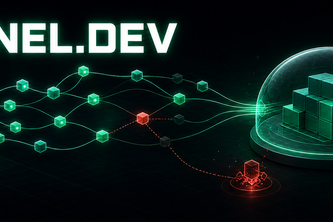
Commercial due-diligence read: Sentinel.dev appears to be a developer tool for identifying production-style bugs in code using AI-assisted chaos testing within isolated Docker environments. The project is in early-stage development, likely a prototype or proof-of-concept. It does not yet show evidence of traction, revenue, or customer adoption. The most important open question is whether the author’s approach to combining code graphing, AI agents and chaos engineering can scale into a viable product that integrates with CI/CD pipelines.
What The Product Actually Is
The description states that Sentinel.dev:
- Uses Graphify to map a codebase.
- Identifies affected dependency areas.
- Runs focused chaos tests inside isolated Docker containers.
- Applies remediation strategies selected by AI agents.
- Verifies fixes by rerunning the same probe in Docker.
Inferred from the write-up, it is a tool for detecting race conditions, memory pressure, and ReDoS-style risks in code before deployment. It operates as a CLI and includes a React dashboard for telemetry and logs.
Confidence: High (based on self-reported description only).
Evidence: The author’s own account of how the tool works.
Positioning & Claim Evolution
The author claims that:
- AI makes it faster to write code, but production failures still occur under concurrency or load.
- Sentinel.dev is built to catch those failures before deployment.
- It uses AI agents for probe and remediation selection.
- The system verifies fixes by rerunning the same Docker-based failure scenario.
This positioning suggests a shift from traditional unit testing toward AI-assisted chaos engineering in development workflows. It positions itself as a tool that bridges local test passes with real-world production risks.
Confidence: Medium (based on self-reported claims, no external validation).
Evidence: The author’s own description of the problem and solution.
Target Customer & ICP
The description does not state:
- Who the target customer is.
- What specific developer or team type uses this tool.
- Whether it targets individual developers, startups, enterprises, or DevOps teams.
Inferred from the write-up:
- The tool is aimed at developers or DevOps engineers working with codebases that may have concurrency or resource-related bugs.
- It likely appeals to teams using Python and Docker in CI/CD pipelines.
Confidence: Low (no explicit customer targeting).
Evidence: Not evidenced. Would require more information about user personas or use cases.
Business Model & Pricing Evidence
The description does not state:
- How the tool is monetized.
- Whether it is open-source, freemium, SaaS, or another model.
- What pricing structure, if any, exists.
Confidence: Very low (no business model or pricing data provided).
Evidence: Not evidenced.
Technical & Delivery Signals
The description states:
- Built with Python 3.12 CLI using uv.
- Uses Graphify for code relationship mapping.
- Integrates OpenAI SDK and Gemini-compatible APIs for AI agent orchestration.
- Docker SDK for isolated test execution.
- FastAPI demo targets for race conditions, memory pressure, and ReDoS-style risks.
- React dashboard for telemetry and logs.
Inferred:
- The tool is a prototype or hackathon project, not yet production-ready.
- It supports both deterministic demos and AI-assisted live demos.
- It integrates with local development environments and CI/CD workflows (inferred from future plans).
Confidence: Medium (based on self-reported tech stack).
Evidence: The author’s own account of the technical architecture.
Traction & Maturity Signals
The description does not state:
- Any revenue, customers, or user adoption.
- Whether it has been used in production by any team.
- How many users or teams are currently using it.
- Any product roadmap or release history.
Inferred:
- It is a hackathon project submitted to the OpenAI 2026 hackathon.
- The author mentions future plans, suggesting it is not yet mature or widely adopted.
Confidence: Very low (no traction data).
Evidence: Not evidenced.
Competitive Context
The description does not state:
- Who the competitors are.
- What similar tools already exist in the market.
- How Sentinel.dev differentiates from existing chaos engineering or testing platforms.
Inferred:
- It likely competes with tools in the DevSecOps, chaos engineering, and AI-assisted testing space.
- It may be positioned against tools like Chaos Monkey, Kubernetes chaos testing, or AI-powered code analysis platforms.
Confidence: Low (no competitive landscape data).
Evidence: Not evidenced.
Open Questions & Risks
Inferred from the description:
- The tool is a hackathon project with no evidence of product-market fit or commercial viability.
- It relies heavily on AI agents for probe and remediation selection, which may be unreliable or unsafe in production.
- The system’s reliance on Docker execution and sandboxing introduces potential instability or performance issues.
- It is unclear whether the tool can be integrated into existing CI/CD pipelines or if it is limited to demo use cases.
Confidence: Medium (based on self-reported limitations and lack of evidence).
Evidence: Inferred from the author’s own account of challenges faced.
Questions the description leaves open
- How does Sentinel.dev plan to scale its AI agent-based probe selection beyond a demo environment?
- What are the specific integration points with CI/CD pipelines, and how is it intended to be used in practice?
- Has any team or organization actually used this tool in production or near-production environments?
- What is the roadmap for expanding support to other frameworks or deployment targets?
- How does the system handle false positives or incorrect remediations from AI agents?
- Is there a plan for monetization, and what is the intended business model?
Overall Assessment
The description indicates that Sentinel.dev is a proof-of-concept or hackathon project with no evidence of traction, revenue, or customer adoption. It is positioned as a tool to bridge local testing and production reliability using AI and chaos engineering.
It is not yet ready for investment or partnership unless it demonstrates clear progress toward product-market fit, integration capabilities, and scalability beyond the demo environment.
Confidence: Very low (no evidence of commercial readiness).
Evidence: Self-reported description only.
User Stories BotA demo video on every pull request
Get a demo video on every new feature
GitHub App that watches your pull requests and records a narrated, captioned demo.
Save time on demo prep and make informed decisions faster with a video walkthrough of every new feature.
Source
Submitted to the OpenAI 2026 hackathon on Devpost. Project home on Devpost. Back to the full gallery on Devpost.
This competitive analysis was produced by top-founders.com (opens in a new tab)
Generated by a language model from this project's public Devpost page — its tagline, the author's own write-up and any built-with tags listed there — as captured in August 2026. Short quotations are the author's words. It is an opinion on the idea as a business, not on the people behind it, and it reflects the description as published then. If the project has moved on, request a correction below. The analysis is not independent research and contains no verified traction, revenue or customer data.
An independent guide by KFG International LLC — not affiliated with, endorsed by, or connected to Devpost or OpenAI.