

Archive position — measured, not model output
2 likes on Devpost
221 of the 7,850 archived projects have more likes, and 284 share exactly 2 — so this project's #457 place in the like-ranked listing is a tie-break inside that group, not a ranking.
Projects (log scale)
Likes on Devpost. ▲ marks this project's group.
Show the figures
| Likes | Projects | Share of archive |
|---|---|---|
| 0 | 5,587 | 71.2% |
| 1 | 1,758 | 22.4% |
| 2 | 284 | 3.6% |
| 3–4 | 132 | 1.7% |
| 5–9 | 75 | 1.0% |
| 10+ | 14 | 0.2% |
 User Stories BotA demo video on every pull request
Get a demo video on every new feature
GitHub App that watches your pull requests and records a narrated, captioned demo.
Save time on demo prep and make informed decisions faster with a video walkthrough of every new feature.
Executive Summary
What the company appears to be
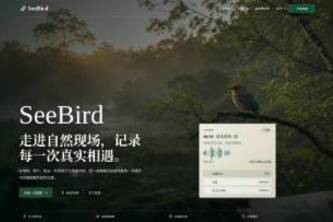
SeeBird is an AI-powered immersive nature observation platform focused on birdwatching. The author describes it as a prototype with a web-based field-lab experience, multimodal identification (vision, audio, LLMs), and a vision toward AR/VR nature exploration.
What changed
The project is presented as a hackathon submission that has evolved into a product direction with a scalable vision beyond birds to broader "See Nature" categories.
Single most important open question
Is there evidence of traction, revenue or early customer adoption that would validate the commercial viability of this platform?
Analysis basis
This report is based entirely on the self-reported project description provided by the author. No external verification or historical data are available. All claims are stated by the author and not independently confirmed.
What The Product Actually Is
The description states that SeeBird is an AI-powered immersive birdwatching and nature observation platform. It includes:
- An immersive field-lab web experience for bird observation
- A realistic map-based observation workspace
- Bird species cards with appearance, habitat, behavior, and sound information
- A visual identification assistant based on field traits
- Bird call playback and media evidence views
- Observation records, confidence status, privacy-aware location handling, and review workflow
- A long-term product direction toward AR/VR nature exploration
The prototype is built using React, TypeScript, Vite, Three.js, and map-based UI components. It is deployed on Vercel and designed for responsive web experience with future expansion to mobile apps, mini programs, and spatial computing devices.
Inference The author describes a product that combines AI identification (vision, audio, LLMs) with field observation tools. However, no evidence of actual user engagement or real-world usage is provided.
Positioning & Claim Evolution
The author positions SeeBird as an AI assistant that feels like a patient field researcher beside the user, helping them observe, identify, listen, and learn in an immersive way.
It began with the idea: “What if an AI assistant could feel like a patient field researcher beside you, helping you observe, identify, listen, and learn in a more immersive way?”
The broader vision is described as a “See Nature” platform including SeeBird, SeeFish, SeeFlower, SeeTree, and eventually SeeWorld.
Inference The positioning evolves from a simple bird identification tool to an AI-native nature exploration ecosystem. This evolution is claimed but not substantiated with evidence of traction or product-market fit.
Target Customer & ICP
The description states that birdwatching is accessible for people reconnecting with nature, and beginners often struggle with identifying birds. The platform targets users who want to observe and identify birds through appearance, sound, location, and behavior.
It also mentions a focus on balancing scientific credibility and beginner-friendly guidance.
Inference The target customer appears to be amateur birdwatchers or nature enthusiasts looking for educational tools. No specific ICP data or segmentation is provided.
Business Model & Pricing Evidence
No evidence of pricing, monetization strategy, or business model is presented in the description.
Not evidenced
Technical & Delivery Signals
The project is built with:
- Front-end: React, TypeScript, Vite, Three.js, webXR
- Back-end: FastAPI, PostgreSQL, Supabase
- AI components: GPT-4o, vision-AI, audio-AI, RAG, OpenAI API
- Deployment: Vercel
- Map integration: OpenStreetMap
The author mentions a focus on multimodal identification (vision, audio, LLMs, location) and retrieval-augmented knowledge base.
Inference The technical stack suggests a modern, scalable approach with AI integration. However, no evidence of production deployment or performance data is provided.
Traction & Maturity Signals
The description states that the prototype includes:
- An immersive homepage
- A field observation workspace
- Real-map interaction
- Species detail cards
- Bird sound playback
- Identification workflow
- Observation records and review states
It also mentions accomplishments such as feeling like a real product direction rather than just a demo screen.
Inference The prototype is described as functional but not validated with users or customers. No evidence of traction, adoption, or user engagement is provided.
Competitive Context
No competitive analysis or market positioning relative to existing birdwatching or nature observation tools is included in the description.
Not evidenced
Open Questions & Risks
- The project is described as a hackathon submission with no evidence of commercial traction.
- No revenue, customer data, or monetization model is presented.
- The vision of expanding to SeeFish, SeeFlower, etc., may be premature without proven demand for the core product.
- The AI components are described but not demonstrated in real-world use.
- The team size is listed as one person (Xin Tao), raising questions about execution capability.
Inference The lack of evidence for traction or commercial viability raises significant risk. The vision may be ambitious without a validated foundation.
Questions the description leaves open
- What specific user feedback or testing has been conducted on the prototype?
- How is the AI identification accuracy measured and validated?
- Are there any early adopters or pilot users of the platform?
- What is the plan for monetization and scaling beyond the hackathon prototype?
- How does the team intend to build out the broader "See Nature" ecosystem given a single-person team?
- What are the key technical challenges in moving from web to AR/VR, and how are they being addressed?
Overall Assessment
Not evidenced
The description provides no evidence of revenue, customers, or traction. It is a self-reported prototype with a strong vision but no validation. The single-person team raises execution concerns.
Confidence level Low. This is a product direction described by the author, not a validated business.
User Stories BotA demo video on every pull request
Get a demo video on every new feature
GitHub App that watches your pull requests and records a narrated, captioned demo.
Save time on demo prep and make informed decisions faster with a video walkthrough of every new feature.
Source
Submitted to the OpenAI 2026 hackathon on Devpost. Project home on Devpost. Back to the full gallery on Devpost.
This competitive analysis was produced by top-founders.com (opens in a new tab)
Generated by a language model from this project's public Devpost page — its tagline, the author's own write-up and any built-with tags listed there — as captured in August 2026. Short quotations are the author's words. It is an opinion on the idea as a business, not on the people behind it, and it reflects the description as published then. If the project has moved on, request a correction below. The analysis is not independent research and contains no verified traction, revenue or customer data.
An independent guide by KFG International LLC — not affiliated with, endorsed by, or connected to Devpost or OpenAI.