

Archive position — measured, not model output
1 like on Devpost
505 of the 7,850 archived projects have more likes, and 1,758 share exactly 1 — so this project's #1,870 place in the like-ranked listing is a tie-break inside that group, not a ranking.
Projects (log scale)
Likes on Devpost. ▲ marks this project's group.
Show the figures
| Likes | Projects | Share of archive |
|---|---|---|
| 0 | 5,587 | 71.2% |
| 1 | 1,758 | 22.4% |
| 2 | 284 | 3.6% |
| 3–4 | 132 | 1.7% |
| 5–9 | 75 | 1.0% |
| 10+ | 14 | 0.2% |
 User Stories BotA demo video on every pull request
Get a demo video on every new feature
GitHub App that watches your pull requests and records a narrated, captioned demo.
Save time on demo prep and make informed decisions faster with a video walkthrough of every new feature.
Executive Summary
What the company appears to be
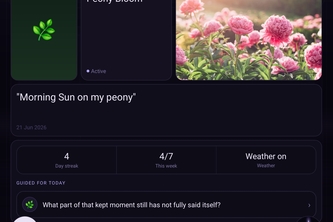
Scillia is a self-reported modular guided intelligent and interactive journaling platform with a niche community for garden lovers. The project was submitted as part of the OpenAI 2026 hackathon and is described by a single founder, Emmanuel Ekemeriere.
What changed
This is a self-reported product concept submitted to a hackathon; no evidence suggests any prior development or commercial activity beyond this submission.
The single most important open question
Is there any evidence of user engagement, revenue, or traction that would indicate viability beyond the initial idea?
Analysis basis: The entire analysis is based on the self-reported project description provided by the author. No independent verification, archived data, or third-party sources are available. All claims are unverified and should be treated as stated by the author only.
What The Product Actually Is
The description states that Scillia is a “modular guided intelligent and interactive journal” with a niche community for garden lovers. It is described as being inspired by the flower Scillia, which "always returns and multiplies."
- Product type: A guided journaling platform.
- Community focus: Garden lovers.
- Technology stack: api, jobs, node.js, pgbouncer, postgresql, python, react-native, redis.
Evidence: The author's own description. No independent verification or product demonstration is provided.
Positioning & Claim Evolution
The author claims Scillia is not just another journal but one that addresses a gap in existing journals — specifically, the lack of shared community and journey documentation. It contrasts with social media platforms driven by "likes" and instead aims to be a witness to personal growth and experiences.
- Core positioning: A guided journaling experience with a focus on personal journey and community.
- Differentiation claim: Unlike social media, Scillia emphasizes shared witnessing of life events rather than engagement metrics.
- Narrative evolution: The author frames this as solving an overlooked problem in the journaling space.
Evidence: Self-reported. No external validation or prior product iterations are mentioned.
Target Customer & ICP
The description states that Scillia is for “garden lovers,” and that it aims to build a niche community around this interest.
- Primary customer segment: Garden enthusiasts.
- ICP (Ideal Customer Profile): Not clearly defined beyond the niche interest in gardening.
Evidence: The author’s own account. No data or segmentation on gardeners, their behaviors, or demographics is provided.
Business Model & Pricing Evidence
There is no evidence of a business model or pricing structure in the description.
- Business model: Not evidenced.
- Pricing: Not evidenced.
Evidence: The author does not mention any monetization strategy or pricing.
Technical & Delivery Signals
The project was built using a specific tech stack, including React Native, Node.js, Python, PostgreSQL, Redis, and others. It is described as a hackathon submission.
- Tech stack: api, jobs, node.js, pgbouncer, postgresql, python, react-native, redis.
- Delivery method: Not specified beyond the fact that it was submitted to a hackathon.
- Modularity: Mentioned in the tagline and description but not elaborated on.
Evidence: Self-reported. No demonstration or delivery details beyond the tech stack are provided.
Traction & Maturity Signals
There is no evidence of traction, revenue, or user adoption.
- User base: Not evidenced.
- Revenue: Not evidenced.
- Maturity: Not evidenced.
Evidence: The project was submitted to a hackathon and has no further development history.
Competitive Context
No competitive analysis or market positioning is provided in the description.
- Competitive landscape: Not evidenced.
- Market context: Not evidenced.
Evidence: The author does not reference competitors or market dynamics.
Open Questions & Risks
Several key risks and open questions are present due to lack of evidence:
- No traction or revenue: The project is a hackathon submission with no signs of commercial activity.
- Unproven concept: No user engagement, adoption, or feedback.
- Single founder: Only one team member is listed.
- Lack of clarity on monetization: No indication of how the platform would generate value or income.
Evidence: Self-reported. No external validation or traction data.
Questions the description leaves open
- What specific problem in journaling does Scillia solve, and how is it different from existing tools?
- How did you identify garden lovers as your target audience? Is there any user research or feedback?
- What is the plan for monetization or revenue generation?
- Are there any early adopters or users who have engaged with the platform?
- What are the next steps in development beyond this hackathon submission?
Inference: These questions aim to uncover whether the idea has evolved into a viable product or if it remains conceptual.
Overall Assessment
There is no evidence of commercial viability, traction, or product-market fit. The project is described as a hackathon submission with no indication of prior development, user engagement, or revenue.
- Investment potential: Not evidenced.
- Partnership opportunity: Not evidenced.
Inference: Without any signs of traction or business model, the likelihood of this being a viable investment or partnership opportunity is low. The project remains in an early conceptual phase.
User Stories BotA demo video on every pull request
Get a demo video on every new feature
GitHub App that watches your pull requests and records a narrated, captioned demo.
Save time on demo prep and make informed decisions faster with a video walkthrough of every new feature.
Source
Submitted to the OpenAI 2026 hackathon on Devpost. Project home on Devpost. Back to the full gallery on Devpost.
This competitive analysis was produced by top-founders.com (opens in a new tab)
Generated by a language model from this project's public Devpost page — its tagline and any built-with tags listed there, since the author published no write-up — as captured in August 2026. Short quotations are the author's words. It is an opinion on the idea as a business, not on the people behind it, and it reflects the description as published then. If the project has moved on, request a correction below. The analysis is not independent research and contains no verified traction, revenue or customer data.
An independent guide by KFG International LLC — not affiliated with, endorsed by, or connected to Devpost or OpenAI.