

Archive position — measured, not model output
0 likes on Devpost
2,263 of the 7,850 archived projects have more likes, and 5,587 share exactly 0 — so this project's #6,568 place in the like-ranked listing is a tie-break inside that group, not a ranking.
Projects (log scale)
Likes on Devpost. ▲ marks this project's group.
Show the figures
| Likes | Projects | Share of archive |
|---|---|---|
| 0 | 5,587 | 71.2% |
| 1 | 1,758 | 22.4% |
| 2 | 284 | 3.6% |
| 3–4 | 132 | 1.7% |
| 5–9 | 75 | 1.0% |
| 10+ | 14 | 0.2% |
 User Stories BotA demo video on every pull request
Get a demo video on every new feature
GitHub App that watches your pull requests and records a narrated, captioned demo.
Save time on demo prep and make informed decisions faster with a video walkthrough of every new feature.
Executive Summary
What the company appears to be: Scilab IPCV is a self-described open-source image processing and computer vision toolbox for the Scilab numerical environment. The project was initiated in 2012 with an educational mission, aiming to provide students and institutions with a free alternative to expensive commercial software. It integrates Scilab macros with native C++ gateways backed by OpenCV.
What changed: In July 2026, the author revived the project using Codex and GPT-5.6, accelerating migration from OpenCV 4.5 to OpenCV 5.0 and expanding functionality from 196 to 477 active Scilab function files in a matter of weeks. This included major additions like 3D DICOM support, expanded video workflows, and interactive tools.
Single most important open question: Is there evidence that the project has achieved any commercial traction or adoption beyond its educational use case? The description states no revenue, customers, or adoption data are available.
What The Product Actually Is
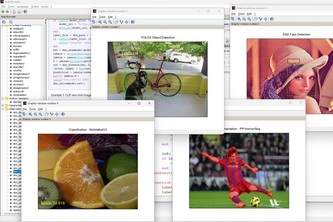
The description states that IPCV is an "Image Processing and Computer Vision toolbox for Scilab". It provides "Scilab macros and native gateways for image processing with OpenCV-backed workflows."
IPCV combines:
- Scilab macros
- Native C++ gateways
- OpenCV as the underlying engine
The toolbox contains hundreds of functions that allow users to perform image processing and computer vision tasks within the Scilab environment.
Positioning & Claim Evolution
The description states that IPCV was originally created with an educational mission: "to give students a genuine open-source option for learning image processing and computer vision." The author emphasizes that the goal was never simply to copy commercial products, but to help students understand what algorithms were doing.
Key claims:
- Started in 2012 as an open-source alternative to expensive commercial software
- Designed specifically for educational use (students, lecturers, researchers)
- Maintained open-source status despite opportunities to make it proprietary
- Focus on making mathematics, code, and visible results stay connected
The positioning has evolved from a local university project to an international open-source tool with over 340,000 downloads.
Target Customer & ICP
The description states that IPCV targets:
- Students
- Lecturers
- Researchers
- Engineers
It was originally designed for educational use, particularly students and universities who needed access to image processing tools without expensive software licenses. The author notes that the project grew from local students and universities to become an international project.
Business Model & Pricing Evidence
Not evidenced. The description does not contain any information about pricing, revenue models, or commercial arrangements.
Technical & Delivery Signals
The description states that IPCV:
- Combines Scilab macros with native C++ gateways backed by OpenCV
- Has moved through several generations (1.x, 2.0, 4.1, 4.5, 5.0)
- Uses C++, Codex, ONNX, OpenCV, OpenCV-ZOO, and Scilab technologies
- Contains 477 active Scilab function files in current development
- Includes interactive tools like imtool, OpenCV Zoo browser, and volshow
- Supports Windows, Linux, and macOS platforms
- Has a stability suite that reports 35 checks passed
Traction & Maturity Signals
The description states:
- IPCV 1.0 was officially released as open-source software on 17 March 2017
- The Scilab ATOMS repository has recorded more than 340,000 downloads across IPCV releases
- In July 2026, the project was revived using Codex and GPT-5.6
- Function count increased from 196 to 477 active Scilab function files in a few weeks
- The current Windows stability suite reports 35 checks passed
However, no revenue, customer adoption, or commercial traction data is provided.
Competitive Context
Not evidenced. The description does not contain any information about competitors or market positioning relative to other image processing and computer vision tools.
Open Questions & Risks
- The project appears to be maintained by a single individual (Chin Luh Tan) with occasional contributions from others
- The author states that time was a challenge, particularly from 2022 onward when updates were infrequent
- The project has been dependent on other developers (Stéphane Mottelet and Vincent Couvert) for compatibility maintenance between 2022 and 2026
- No commercial traction or revenue data is available to indicate market demand
- The entire project appears to be self-reported and unverified, with no independent corroboration
Questions the description leaves open
- What specific educational institutions or users are currently using IPCV?
- How many active users does the project have beyond the educational community?
- Are there any commercial partnerships or licensing arrangements in place?
- What is the long-term sustainability plan for maintaining compatibility with Scilab and OpenCV updates?
- How do you plan to monetize or generate revenue from this open-source tool?
- What are the specific technical challenges that remain unresolved in cross-platform compatibility?
- How does the project handle security vulnerabilities and bug fixes?
Overall Assessment
Not evidenced. The description provides no information about financials, valuation, funding rounds, or any commercial arrangements that would be relevant for investment or partnership decisions. The project appears to be entirely self-funded and maintained by a single individual with no evidence of commercial traction or market validation.
User Stories BotA demo video on every pull request
Get a demo video on every new feature
GitHub App that watches your pull requests and records a narrated, captioned demo.
Save time on demo prep and make informed decisions faster with a video walkthrough of every new feature.
Source
Submitted to the OpenAI 2026 hackathon on Devpost. Project home on Devpost. Back to the full gallery on Devpost.
This competitive analysis was produced by top-founders.com (opens in a new tab)
Generated by a language model from this project's public Devpost page — its tagline, the author's own write-up and any built-with tags listed there — as captured in August 2026. Short quotations are the author's words. It is an opinion on the idea as a business, not on the people behind it, and it reflects the description as published then. If the project has moved on, request a correction below. The analysis is not independent research and contains no verified traction, revenue or customer data.
An independent guide by KFG International LLC — not affiliated with, endorsed by, or connected to Devpost or OpenAI.