

Archive position — measured, not model output
0 likes on Devpost
2,263 of the 7,850 archived projects have more likes, and 5,587 share exactly 0 — so this project's #2,644 place in the like-ranked listing is a tie-break inside that group, not a ranking.
Projects (log scale)
Likes on Devpost. ▲ marks this project's group.
Show the figures
| Likes | Projects | Share of archive |
|---|---|---|
| 0 | 5,587 | 71.2% |
| 1 | 1,758 | 22.4% |
| 2 | 284 | 3.6% |
| 3–4 | 132 | 1.7% |
| 5–9 | 75 | 1.0% |
| 10+ | 14 | 0.2% |
 User Stories BotA demo video on every pull request
Get a demo video on every new feature
GitHub App that watches your pull requests and records a narrated, captioned demo.
Save time on demo prep and make informed decisions faster with a video walkthrough of every new feature.
Executive Summary
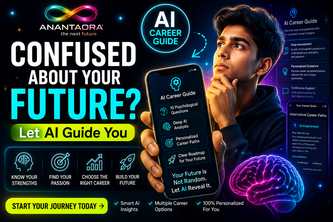
What the company appears to be: ANANTAORA AI Career Guide is a self-reported AI-powered tool designed to help students identify suitable career paths using personalized guidance. The author describes it as an intelligent mentor that helps students understand their interests, strengths, and motivations to make informed career decisions.
What changed: The project evolved from an idea sparked by observing student confusion about career choices into a working prototype built with limited resources and AI tools. It was submitted to the OpenAI 2026 hackathon.
Single most important open question: Is there evidence of actual student adoption or usage beyond the author's claim that "than 500 students have used the tool"? The description states no revenue, customer data, or traction metrics beyond self-reported numbers.
The analysis is based entirely on the author's own description — no independent verification or external data. This is a self-reported project with no demonstrated commercial traction or market validation.
What The Product Actually Is
- The description states that ANANTAORA AI Career Guide "helps students make choices about their careers" using intelligence to give personalized advice
- It uses artificial intelligence models to understand what people are saying and provide career guidance
- The tool asks students questions to understand their interests, abilities, and goals
- It provides:
- A suggested career fit
- Two alternative career options
- Ideas about student's strengths and motivations
- A plan for achieving goals
- Practical steps students can take immediately
- The tool is described as having a simple interface that makes it easy to use
- It was built using AI technologies including GPT-5, OpenAI, and Firebase
- The author describes it as "like a mentor that helps students figure out what they want to do and how to get there"
Positioning & Claim Evolution
- The description states the tool is positioned as "a guide to help you make good choices about your career"
- It claims to be "like having a guide to help you make good choices about your career"
- The author frames it as an affordable alternative to expensive career guidance, specifically targeting students from government schools or families with limited financial resources
- The positioning evolved from a personal observation about student confusion to a solution that uses AI to democratize career guidance
- The tool is described as "like a mentor" and aims to help students "find their passion from potential to propose build your future"
- The author states the tool helps students understand what they are good at and what they want to do
- The project's evolution shows a shift from idea to prototype, with claims of building "a working prototype of the tool even though we had resources"
Target Customer & ICP
- The description states that the target customer is "students" specifically noting that many students "did not know what they wanted to do"
- It mentions students who are "talented and worked hard" but "did not know what they wanted to do"
- The author identifies a specific group: "students who go to government schools or come from families that do not have a lot of money"
- The tool is described as helping students in 10th grade who are interested in starting their own business
- The target audience includes students who are "spending years doing things that they were not good at or that they did not like"
- The author states the tool is designed to be "easy to use, affordable and accessible to all students"
- The description mentions students from "government schools" as a key demographic
Business Model & Pricing Evidence
- Not evidenced
- The description does not contain any information about pricing, revenue streams, or business model
- No mention of subscription fees, one-time purchases, or monetization strategies
- No indication of whether the tool will be free, paid, or offered through partnerships
- No evidence of customer acquisition costs or unit economics
Technical & Delivery Signals
- The tool uses artificial intelligence models that can understand what people are saying
- It uses special questions to help understand student interests
- It employs AI workflows to give students a plan
- Built with Firebase, React, JavaScript, HTML5, CSS3, and other web technologies
- Uses OpenAI and GPT-5 specifically
- The tool is described as having "a simple interface that makes it easy for students to use"
- The author mentions using "some tools that let us build the prototype using just our phones and some other simple tools"
- It was built with "no-code" approaches
- The tool is described as being able to have conversations with students
- Future plans include voice interaction, multilingual support, and downloadable reports
Traction & Maturity Signals
- The description states that "Than 500 students have used the tool and given us feedback"
- Students have told the author that "the tool has helped them understand what they are good at and what they want to do"
- The project is described as having a "working prototype of the tool even though we had resources"
- The author mentions building the tool with limited resources and equipment
- The tool was submitted to the OpenAI 2026 hackathon
- The description states that "we showed that it is possible to give students personalized career guidance even if they cannot afford it"
- The project has moved from idea to prototype, but no evidence of sustained user engagement or adoption beyond the author's claims
Competitive Context
- Not evidenced
- No information provided about existing competitors in the career guidance space
- No mention of similar tools or platforms that provide career advice to students
- No indication of market size or competitive landscape
- No evidence of differentiation from other educational or career guidance solutions
Open Questions & Risks
- The description states "the problem was not that they were not able to do things. It was that they did not know what they wanted to do" - this is a claim about student behavior that lacks supporting data
- The author mentions that "the challenges we faced were not technical. They were personal" and "we thought about giving up" - suggesting potential instability in execution capability
- No evidence of revenue, customers, or market traction beyond self-reported numbers
- The project was built with limited resources ("we had resources") and "no money or the right equipment"
- The tool is described as a prototype that has not yet been scaled for mass use
- The author states "we turned an idea into a real tool" but provides no evidence of sustained user engagement or adoption
- The description contains some grammatical errors ("Than 500 students have used the tool") which may indicate lack of professional polish
Questions the description leaves open
- What specific metrics do you use to measure whether students are actually helped by the tool?
- How many students have used the tool in the past month, and what is your retention rate?
- What is your customer acquisition cost and how do you plan to scale it?
- Can you provide evidence of student feedback beyond what's described in the write-up?
- What are the specific technical limitations of the current prototype that prevent broader deployment?
- How do you plan to monetize this tool at scale?
- What is your go-to-market strategy for reaching students in government schools?
- How do you ensure the AI recommendations remain accurate and relevant over time?
- What is your timeline for moving from prototype to full product launch?
- How do you plan to handle privacy and data protection concerns with student information?
Overall Assessment
- Not evidenced
- No information provided about investment readiness, partnership potential, or commercial viability
- The project remains in early prototype stage with no demonstrated traction or revenue
- The description lacks any evidence of market validation, customer feedback, or business metrics
- No indication of scalability, competitive advantages, or sustainable business model
- The author's claims about impact and adoption are unverified and lack supporting data
User Stories BotA demo video on every pull request
Get a demo video on every new feature
GitHub App that watches your pull requests and records a narrated, captioned demo.
Save time on demo prep and make informed decisions faster with a video walkthrough of every new feature.
Source
Submitted to the OpenAI 2026 hackathon on Devpost. Project home on Devpost. Back to the full gallery on Devpost.
This competitive analysis was produced by top-founders.com (opens in a new tab)
Generated by a language model from this project's public Devpost page — its tagline, the author's own write-up and any built-with tags listed there — as captured in August 2026. Short quotations are the author's words. It is an opinion on the idea as a business, not on the people behind it, and it reflects the description as published then. If the project has moved on, request a correction below. The analysis is not independent research and contains no verified traction, revenue or customer data.
An independent guide by KFG International LLC — not affiliated with, endorsed by, or connected to Devpost or OpenAI.