

Archive position — measured, not model output
2 likes on Devpost
221 of the 7,850 archived projects have more likes, and 284 share exactly 2 — so this project's #453 place in the like-ranked listing is a tie-break inside that group, not a ranking.
Projects (log scale)
Likes on Devpost. ▲ marks this project's group.
Show the figures
| Likes | Projects | Share of archive |
|---|---|---|
| 0 | 5,587 | 71.2% |
| 1 | 1,758 | 22.4% |
| 2 | 284 | 3.6% |
| 3–4 | 132 | 1.7% |
| 5–9 | 75 | 1.0% |
| 10+ | 14 | 0.2% |
 User Stories BotA demo video on every pull request
Get a demo video on every new feature
GitHub App that watches your pull requests and records a narrated, captioned demo.
Save time on demo prep and make informed decisions faster with a video walkthrough of every new feature.
Executive Summary
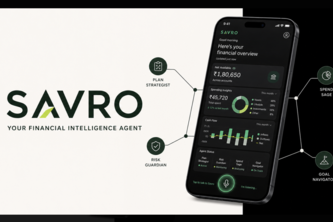
What the company appears to be: Savro is a self-reported personal financial intelligence agent built as a prototype for the OpenAI 2026 hackathon. The description states it uses a multi-agent architecture powered by LangGraph, with specialist AI agents for different financial tasks (e.g., offer scouting, cashflow forecasting, fraud detection). It claims to provide conversational guidance through natural voice and text, and to coordinate multiple AI specialists to answer user questions.
What changed: The project was submitted as a hackathon prototype. No evidence of product-market fit, revenue, or customer traction is provided. The description indicates this is an early-stage build with synthetic data and no real financial account access.
The single most important open question: Is there any evidence that Savro has moved beyond the prototype stage, or that it has begun to generate any form of commercial traction or user engagement?
What The Product Actually Is
The description states that Savro is a personal financial intelligence agent. It claims to convert transaction history into practical, conversational guidance using a graph-based multi-agent architecture powered by LangGraph.
It uses specialist agents for:
- Offer Scout (finds savings)
- Investor Analyst Feed (connects market news with goals)
- Cashflow Pilot (forecasts balances and evaluates affordability)
- Fraud Shield (explains suspicious activity)
- Savro Orchestrator (coordinates specialists)
The system is designed to:
- Identify overspending
- Predict upcoming cash-flow pressure
- Calculate safe-to-spend amounts
- Build savings plans
- Find relevant offers
- Connect market news with user profiles
- Detect unusual transactions and unused subscriptions
- Answer questions through natural text and voice conversations
- Create a personalized animated advisor avatar
Evidence: The author states that Savro uses LangGraph for orchestration, and that it processes requests through an explicit workflow involving intent classification, evidence retrieval, specialist agent use, and grounded research.
Inference: The system is described as a multi-agent architecture with a shared financial state, but no evidence of actual deployment or production use is provided.
Positioning & Claim Evolution
The description states that Savro was built to "make financial guidance personal, proactive, explainable, and easy to understand."
It positions itself as an alternative to traditional banking apps that only show what already happened, rather than helping users decide what to do next.
The author claims:
- Savro learns from spending behavior
- Anticipates upcoming financial pressure
- Brings the right AI specialist into the conversation
- Uses a hybrid predictive-analysis layer built from synthetic data and behavioral features
Evidence: The description states these claims directly, but no evidence of actual user adoption or performance metrics is provided.
Inference: The positioning suggests a shift from reactive to proactive financial management, but this is not substantiated by any real-world usage or results.
Target Customer & ICP
The description does not explicitly define the target customer or ideal customer profile (ICP). It states that Savro aims to help people who:
- Realize they have overspent only after the money is gone
- Miss card offers that match their lifestyle
- Continue paying for unused subscriptions
- Make financial decisions without understanding consequences
Evidence: These are described as user pain points, but no specific demographic or persona is defined.
Inference: The target appears to be general consumers with personal finance needs, but there is no evidence of segmentation or targeting strategy.
Business Model & Pricing Evidence
There is no evidence in the description of a business model or pricing structure. The author does not state how Savro would generate revenue or what customers would pay for its services.
Evidence: Not evidenced.
Inference: Since this is a hackathon prototype, it’s possible that no commercial model has been developed yet.
Technical & Delivery Signals
The description states that Savro uses:
- Agent orchestration: LangGraph StateGraph
- Reasoning model: GPT-5.6 Luna via OpenRouter
- Live research: OpenRouter web-search tools
- Avatar generation: Reference-image generation through OpenRouter
- Voice: ElevenLabs text-to-speech and browser speech recognition
- Frontend: HTML, CSS, JavaScript, Three.js, MediaDevices API, Web Speech API
- Backend: Node.js
- Deployment: Render
It also mentions:
- Codex was used for development assistance
- GPT-5.6 Luna was used for customer-facing reasoning
- The system uses a hybrid predictive-analysis layer built from synthetic data and behavioral features
Evidence: These are self-reported technical details, but no evidence of production systems or scalability is provided.
Inference: The prototype appears to be built with modern AI and web technologies, but there is no indication of how it would scale or be deployed in a real-world environment.
Traction & Maturity Signals
The description states that Savro is a prototype submitted to the OpenAI 2026 hackathon. It uses synthetic transaction data representing one fictional customer's activity over 60 days, and does not access real bank accounts or execute financial transactions.
It also notes:
- Prototype notice: "Savro currently uses a synthetic dataset"
- No real financial account access
- No execution of financial transactions
Evidence: The description explicitly states that this is a prototype with no real-world usage or traction.
Inference: There is no evidence of any commercial traction, user base, or revenue generation.
Competitive Context
The description does not provide any information about competitors or the competitive landscape. It does not mention existing financial AI tools or platforms in the market.
Evidence: Not evidenced.
Inference: Without a competitive analysis, it's unclear how Savro differentiates itself from other financial guidance tools or AI assistants.
Open Questions & Risks
- Prototype-only: The system is described as a hackathon prototype with no real-world deployment or traction.
- No commercial model: No evidence of a business model or pricing structure.
- Synthetic data only: The system uses synthetic data, not real financial behavior.
- No real financial transactions: It does not connect to actual bank accounts or execute payments.
- Unverified claims: All claims are self-reported and unverified.
- Single founder team: Only one team member is listed.
Evidence: These are all stated in the description.
Questions the description leaves open
- What is the plan to move from a prototype to a production-ready product?
- How will real financial data be integrated, and what are the compliance and security considerations?
- Has any user testing or feedback been conducted beyond the prototype stage?
- What is the long-term vision for monetization and customer acquisition?
- Are there any plans to partner with banks or financial institutions?
- What are the technical limitations of the current architecture that would prevent scaling?
Overall Assessment
Not evidenced.
The description states that this is a hackathon prototype, using synthetic data, and does not access real bank accounts or execute transactions. There is no evidence of revenue, customers, traction, or any commercial viability beyond the initial build.
This project appears to be an early-stage idea with no demonstrated product-market fit or commercial traction. Any investment or partnership would require further evidence of progress beyond this prototype stage.
Confidence: Low. The entire analysis is based on a self-reported, unverified description.
User Stories BotA demo video on every pull request
Get a demo video on every new feature
GitHub App that watches your pull requests and records a narrated, captioned demo.
Save time on demo prep and make informed decisions faster with a video walkthrough of every new feature.
Source
Submitted to the OpenAI 2026 hackathon on Devpost. Project home on Devpost. Back to the full gallery on Devpost.
This competitive analysis was produced by top-founders.com (opens in a new tab)
Generated by a language model from this project's public Devpost page — its tagline, the author's own write-up and any built-with tags listed there — as captured in August 2026. Short quotations are the author's words. It is an opinion on the idea as a business, not on the people behind it, and it reflects the description as published then. If the project has moved on, request a correction below. The analysis is not independent research and contains no verified traction, revenue or customer data.
An independent guide by KFG International LLC — not affiliated with, endorsed by, or connected to Devpost or OpenAI.