

Archive position — measured, not model output
0 likes on Devpost
2,263 of the 7,850 archived projects have more likes, and 5,587 share exactly 0 — so this project's #6,529 place in the like-ranked listing is a tie-break inside that group, not a ranking.
Projects (log scale)
Likes on Devpost. ▲ marks this project's group.
Show the figures
| Likes | Projects | Share of archive |
|---|---|---|
| 0 | 5,587 | 71.2% |
| 1 | 1,758 | 22.4% |
| 2 | 284 | 3.6% |
| 3–4 | 132 | 1.7% |
| 5–9 | 75 | 1.0% |
| 10+ | 14 | 0.2% |
 User Stories BotA demo video on every pull request
Get a demo video on every new feature
GitHub App that watches your pull requests and records a narrated, captioned demo.
Save time on demo prep and make informed decisions faster with a video walkthrough of every new feature.
Executive Summary
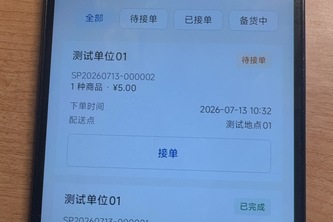
The company appears to be a solo developer project named SanGongXianPEI, an internal fresh food distribution platform for unit-based procurement and logistics. The author describes building a system that replaces traditional methods like WeChat groups or Excel spreadsheets with a structured digital workflow involving Android app, web portals, and backend services.
What changed: The project is presented as a technical solution to inefficiencies in traditional food procurement processes — specifically addressing issues around transparency, data consistency, and order tracking. It includes design elements for role-based access control, concurrency handling, and mobile reliability.
Single most important open question: Is there any evidence of real-world usage or adoption by sub-units or administrators? The description contains no mention of customers, revenue, or actual deployment beyond a developer's own testing environment.
This analysis is based entirely on the self-reported project description provided. No external verification, traction data, or third-party sources are available. All claims are attributed to the author’s own account and should be treated as unverified.
What The Product Actually Is
The description states that SanGongXianPEI is a collaborative system for application, stocking, distribution, and performance management of unit ingredients. It consists of:
- An Android App built with Kotlin and Jetpack Compose
- A FastAPI server
- Administrator Web background
- Sub-unit Web portal
The system aims to replace traditional tools such as WeChat groups, paper lists, and Excel tables in food procurement.
This is a self-reported product architecture. No evidence of actual customer use or production deployment exists beyond the author’s own development efforts.
Positioning & Claim Evolution
The description states that the project was motivated by problems in traditional food procurement processes, including:
- Information dispersion
- Non-transparent order status
- Untimely inventory updates
- Data confusion from multiple units
- Lack of unified records during distribution
It positions itself as a digital replacement for manual methods, aiming to create a complete business closed loop involving:
- Administrator setup (units, accounts, ingredients)
- Sub-unit order submission via app
- Admin processing and delivery photo upload
- Sub-unit tracking and confirmation of receipt
The author claims this system solves inefficiencies in procurement workflows but does not provide evidence of real-world adoption or validation.
Target Customer & ICP
The description identifies two main user types:
- Sub-units — who apply for ingredients, submit orders, and track status.
- Administrators — who manage inventory, prices, units, and orders.
It also mentions that the system supports multiple sub-units with data isolation, suggesting a multi-tenant structure where each unit operates independently.
The description does not state whether these are real organizations or hypothetical use cases. No evidence of actual customers or target accounts is provided.
Business Model & Pricing Evidence
There is no mention in the description of any pricing model, monetization strategy, or revenue streams.
The author focuses on technical implementation and system design rather than commercial aspects such as:
- Who pays for the service
- How many units are expected to use it
- Whether it’s sold as SaaS or deployed internally
Not evidenced. The business model remains unspecified.
Technical & Delivery Signals
Key technical details include:
- Frontend: Android App (Kotlin + Jetpack Compose), Web portals using HTML/CSS/JS templates
- Backend: FastAPI server with SQLite database
- Deployment: Docker Compose + Nginx
- Security features:
- Role-based access control
- Data isolation by unit_id
- Atomic updates to prevent concurrency issues
- Mobile reliability mechanisms:
- Handling network interruptions
- Login failure recovery
- Notification permission handling
- Testing:
- Stress tests with simulated users
- No HTTP 5xx errors or database locks during testing
These are self-reported technical features and implementation details. No evidence of production deployment or performance under real load.
Traction & Maturity Signals
The author claims to have completed:
- Stress tests (20–40 users over various durations)
- Database backup/recovery procedures
- Environmental protection mechanisms
However, there is no evidence of:
- Real-world usage
- Customer feedback or adoption
- Live deployment
- Any form of traction beyond personal development and testing
Not evidenced. No signs of product-market fit or real-world traction.
Competitive Context
There is no mention in the description of existing competitors or similar platforms. The author does not reference any marketplace, SaaS tool, or other solution addressing internal food distribution for organizations.
Not evidenced. No competitive landscape information provided.
Open Questions & Risks
Several potential risks emerge from the self-reported account:
- Solo developer project: Only one member listed (banple6 Tian), which raises concerns about scalability and long-term maintenance.
- No real-world usage or feedback: The entire system appears to be built in isolation without customer validation.
- Limited commercialization strategy: No pricing, monetization, or go-to-market plans are described.
- Unverified claims: All technical and functional assertions come from the author’s own account — no independent verification.
- No data on user retention or engagement: The system may not be used beyond initial testing.
These are inferred risks based on the lack of evidence for traction, commercial viability, or multi-user adoption.
Questions the description leaves open
- Has this platform been tested with real sub-units or administrators?
- What is the expected scale of users and units that will use this system?
- Are there any plans to monetize or deploy this beyond a prototype?
- How does the system handle edge cases like large-scale concurrent order submissions?
- Have you considered integrating with existing ERP or procurement systems?
- Is there any interest from potential clients or partners in using this platform?
These questions aim to uncover whether the project has moved beyond concept and into real-world application.
Overall Assessment
At this stage, SanGongXianPEI appears to be a solo developer hackathon project with strong technical execution but no evidence of commercial traction or market validation. It is not yet ready for investment or partnership discussions unless further development and proof-of-concept data are provided.
This is an unverified, self-reported project with no demonstrated revenue, customers, or real-world usage. The author has built a technically sound prototype, but there is no indication of product-market fit or scalability beyond personal testing.
User Stories BotA demo video on every pull request
Get a demo video on every new feature
GitHub App that watches your pull requests and records a narrated, captioned demo.
Save time on demo prep and make informed decisions faster with a video walkthrough of every new feature.
Source
Submitted to the OpenAI 2026 hackathon on Devpost. Project home on Devpost. Back to the full gallery on Devpost.
This competitive analysis was produced by top-founders.com (opens in a new tab)
Generated by a language model from this project's public Devpost page — its tagline, the author's own write-up and any built-with tags listed there — as captured in August 2026. Short quotations are the author's words. It is an opinion on the idea as a business, not on the people behind it, and it reflects the description as published then. If the project has moved on, request a correction below. The analysis is not independent research and contains no verified traction, revenue or customer data.
An independent guide by KFG International LLC — not affiliated with, endorsed by, or connected to Devpost or OpenAI.