

Archive position — measured, not model output
0 likes on Devpost
2,263 of the 7,850 archived projects have more likes, and 5,587 share exactly 0 — so this project's #6,463 place in the like-ranked listing is a tie-break inside that group, not a ranking.
Projects (log scale)
Likes on Devpost. ▲ marks this project's group.
Show the figures
| Likes | Projects | Share of archive |
|---|---|---|
| 0 | 5,587 | 71.2% |
| 1 | 1,758 | 22.4% |
| 2 | 284 | 3.6% |
| 3–4 | 132 | 1.7% |
| 5–9 | 75 | 1.0% |
| 10+ | 14 | 0.2% |
 User Stories BotA demo video on every pull request
Get a demo video on every new feature
GitHub App that watches your pull requests and records a narrated, captioned demo.
Save time on demo prep and make informed decisions faster with a video walkthrough of every new feature.
Executive Summary
What the company appears to be
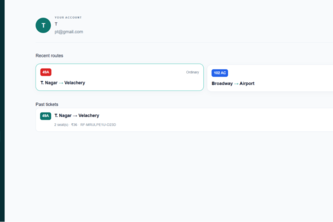
RouteFinder is a self-reported full-stack web application designed to help users find bus routes in Chennai by typing a route number. The app claims to offer features such as nearest place identification, stop-based searches, and integration of existing travel app functionalities.
What changed
This project was submitted as part of the OpenAI 2026 hackathon. It represents an early-stage prototype built from scratch by one developer (Persis Tafflin), with no evidence of prior traction or commercial deployment.
The single most important open question
Is there any evidence that RouteFinder has moved beyond a personal hackathon project into actual user adoption, revenue generation, or scalable product-market fit?
Note: This analysis is based solely on the self-reported description provided by the author. No independent verification, historical data, or external sources are available.
What The Product Actually Is
The description states that RouteFinder is a full-stack web application built using React for the frontend and Node.js with Express for the backend. It uses SQLite for local data storage and TailwindCSS for styling. The app allows users to search bus routes by number, identify nearby stops, and find the best closest route based on traffic conditions.
- Frontend: Built with React
- Backend: Built with Node.js + Express
- Database: Local SQLite
- UI Framework: TailwindCSS
- Development Tooling: Codex (used for code generation)
- Functionality:
- Bus route lookup by number
- Nearest place finder feature
- Stop-based search
- Traffic-aware suggestions (claimed but not demonstrated)
The description does not indicate whether the app is live, has users, or generates revenue.
Positioning & Claim Evolution
The author positions RouteFinder as a solution to a common problem in Chennai — confusion over bus routes and stop locations. It claims to go beyond existing travel apps by offering a unique "nearest place finder" feature that helps users determine the closest stop from their home or destination.
- Core Claim: Users can type a bus number and see all stops, plus get traffic-aware route suggestions.
- Differentiator: The inclusion of a "nearest place finder" to help identify nearby stops.
- Evolution: The app is described as evolving toward real-time tracking, GPS updates, ticket booking, multilingual support, and expansion to other cities.
This positioning is based on the author's own account. No external validation or market feedback is provided.
Target Customer & ICP
The description states that RouteFinder was inspired by personal experience traveling in Chennai, where users struggle with route confusion and stop locations. The target audience appears to be commuters in Chennai who rely on public transport.
- Primary User: Commuters in Chennai
- Problem Addressed: Difficulty identifying correct bus routes and nearest stops
- ICP Not Evidenced: No segmentation or targeting beyond the initial use case
There is no evidence of a defined ICP, customer personas, or market research beyond the author’s personal experience.
Business Model & Pricing Evidence
The description does not provide any information about pricing, monetization, or business model. It mentions future features like digital ticket booking and live tracking, but these are not yet implemented.
- Monetization Strategy: Not stated
- Pricing Model: Not stated
- Revenue Streams: Not stated
The business model remains unreported and speculative at this stage.
Technical & Delivery Signals
The project was built as a full-stack web application using modern technologies such as React, Node.js, Express, and SQLite. It includes custom logic for route data handling and uses Codex to assist in development.
- Tech Stack: React, Node.js, Express, JavaScript, SQLite, TailwindCSS
- Development Approach: Full-stack from scratch, with use of AI coding assistant (Codex)
- Delivery Status: Prototype built during a hackathon; no indication of deployment or scalability
No evidence of production-grade infrastructure, API integrations, or performance metrics.
Traction & Maturity Signals
The project is described as a hackathon submission and was built from scratch by one person. There is no evidence of user adoption, customer base, revenue, or product maturity beyond the initial prototype.
- User Adoption: Not evidenced
- Customer Base: Not evidenced
- Revenue: Not evidenced
- Product Maturity: Prototype level; no live deployment or scaling
The project shows early-stage development but lacks any traction indicators.
Competitive Context
The description notes that existing travel apps offer basic features like ticket booking, route finding, and tracking, but do not address the specific problem of identifying the nearest stop. RouteFinder claims to fill this gap with its unique feature set.
- Competitors: Existing travel apps in Chennai (not named)
- Differentiation: Unique "nearest place finder" functionality
- Market Gap: Lack of intuitive stop identification and traffic-aware routing
No competitive analysis or market positioning beyond the author’s own claims.
Open Questions & Risks
Several key risks and open questions emerge from the lack of evidence:
- No Revenue or Customers: The project is described as a hackathon prototype with no commercial traction.
- Single Developer Team: Only one member (Persis Tafflin) involved, raising concerns about scalability.
- Unproven Market Fit: No evidence of user feedback or market validation.
- Limited Scope: Features like real-time tracking and GPS updates are mentioned as future goals, not implemented yet.
- No Data Sources: Route data is stored locally; no mention of integration with MTC or public datasets.
These factors suggest a high risk of failure if the project does not gain traction or scale effectively.
Questions the description leaves open
- Has RouteFinder been tested with real users in Chennai?
- What specific data sources are used for bus routes and traffic information?
- Are there any plans to monetize the app, and how?
- How will the team handle scaling beyond a single developer?
- What is the timeline for implementing real-time tracking and GPS updates?
- Have you considered integrating with existing public transport APIs or MTC systems?
These questions aim to uncover gaps in the self-reported narrative.
Overall Assessment
At this stage, RouteFinder appears to be an early-stage hackathon prototype with no demonstrated traction, revenue, or customer base. While it addresses a real problem for commuters in Chennai and includes some unique features, there is insufficient evidence to support investment or partnership interest at this time.
- Investment Potential: Low — lacks commercial proof of concept
- Partnership Opportunity: Limited — no established product-market fit or scalability
- Next Steps: Further validation through user testing, data integration, and early-stage monetization
This is a speculative opportunity with high uncertainty. Any investment or partnership should be contingent on evidence of traction and product development beyond the prototype phase.
User Stories BotA demo video on every pull request
Get a demo video on every new feature
GitHub App that watches your pull requests and records a narrated, captioned demo.
Save time on demo prep and make informed decisions faster with a video walkthrough of every new feature.
Source
Submitted to the OpenAI 2026 hackathon on Devpost. Project home on Devpost. Back to the full gallery on Devpost.
This competitive analysis was produced by top-founders.com (opens in a new tab)
Generated by a language model from this project's public Devpost page — its tagline, the author's own write-up and any built-with tags listed there — as captured in August 2026. Short quotations are the author's words. It is an opinion on the idea as a business, not on the people behind it, and it reflects the description as published then. If the project has moved on, request a correction below. The analysis is not independent research and contains no verified traction, revenue or customer data.
An independent guide by KFG International LLC — not affiliated with, endorsed by, or connected to Devpost or OpenAI.