

Archive position — measured, not model output
1 like on Devpost
505 of the 7,850 archived projects have more likes, and 1,758 share exactly 1 — so this project's #1,770 place in the like-ranked listing is a tie-break inside that group, not a ranking.
Projects (log scale)
Likes on Devpost. ▲ marks this project's group.
Show the figures
| Likes | Projects | Share of archive |
|---|---|---|
| 0 | 5,587 | 71.2% |
| 1 | 1,758 | 22.4% |
| 2 | 284 | 3.6% |
| 3–4 | 132 | 1.7% |
| 5–9 | 75 | 1.0% |
| 10+ | 14 | 0.2% |
 User Stories BotA demo video on every pull request
Get a demo video on every new feature
GitHub App that watches your pull requests and records a narrated, captioned demo.
Save time on demo prep and make informed decisions faster with a video walkthrough of every new feature.
Executive Summary
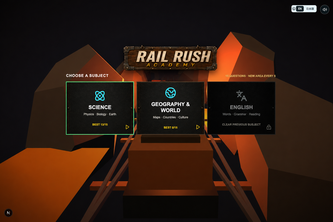
The company appears to be a single-person project submitted as a hackathon entry, named Rail Rush Academy. The author describes it as an educational game where players answer quizzes by choosing minecart routes to unlock new subjects. It was built using AI tools (including GPT-5.6), React, Three.js, and other web technologies.
The single most important open question is whether this project has any commercial traction or user adoption beyond the hackathon submission.
The description is entirely self-reported and unverified — no revenue, customers, or growth data are provided. The author states that the game turns quizzes into a playable adventure but does not indicate if it has been tested with real users or monetized.
Confidence in this analysis is low, as all evidence comes from one source, and there is no independent verification of claims made.
What The Product Actually Is
- The description states: “Answer questions by choosing minecart routes and unlock new subjects.”
- The author describes the product as a minecart-based quiz game.
- It uses AI tools (Codex with GPT-5.6), Three.js, React, and Next.js for development.
- The game is built using web technologies including JavaScript, TypeScript, CSS, and WebGL.
- It includes custom skills developed by the team.
Inference: Based on the description, this is a gamified educational platform where learning is embedded in gameplay mechanics. However, no evidence of actual gameplay, user interaction, or functionality beyond the hackathon prototype is provided.
Positioning & Claim Evolution
- The author states: “Make quizzes feel like a fast-paced game.”
- The project positions itself as an educational tool that leverages gamification to make learning more engaging.
- It claims to have transformed a traditional quiz format into a playable adventure.
- The author mentions: “We turned a quiz into a playable minecart adventure.”
Inference: This is a self-positioning of the product as an innovative, fun way to deliver educational content. No evidence exists that this positioning has been validated by users or market feedback.
Target Customer & ICP
- The description does not specify target customers.
- It implies the game is for learners, particularly those who might benefit from gamified learning experiences.
- The project mentions “unlock new subjects”, suggesting it targets a broad educational audience.
Not evidenced: No information on specific demographics, age groups, or educational institutions targeted. No evidence of customer segmentation or persona development.
Business Model & Pricing Evidence
- The description does not mention any business model, pricing strategy, or monetization approach.
- It is unclear whether the product will be offered as a freemium, subscription, or one-time purchase model.
- No evidence of revenue streams, user acquisition costs, or pricing tiers.
Not evidenced: No indication of how the project intends to generate revenue or sustain itself commercially.
Technical & Delivery Signals
- The project was built using:
- AI tools: Codex with GPT-5.6
- Frameworks: React, Next.js
- Libraries: Three.js, Lucide, WebGL
- Languages: JavaScript, TypeScript, CSS
- The author states: “Through repeated discussions with Codex, we improved the gameplay to make it clearer and more fun.”
- It is described as a web-based game.
Inference: The use of AI tools in development suggests an early-stage prototype or rapid iteration approach. No evidence of scalability, performance metrics, or production deployment.
Traction & Maturity Signals
- The project was submitted to the OpenAI 2026 hackathon, indicating it is a prototype.
- The author states: “We turned a quiz into a playable minecart adventure.”
- No evidence of:
- User adoption
- Customer feedback
- Product usage metrics
- Revenue or monetization
Not evidenced: There is no indication that the product has moved beyond the prototype stage or achieved any measurable traction.
Competitive Context
- The description does not mention competitors.
- It is unclear whether similar products exist in the market (e.g., gamified learning platforms, quiz games, educational apps).
- No evidence of competitive positioning or differentiation strategy.
Not evidenced: No information on existing players or market dynamics in the educational gaming space.
Open Questions & Risks
- The project is a single-person hackathon submission, with no team or business structure.
- It has no demonstrated traction or user base.
- The use of AI tools like GPT-5.6 may indicate a prototype or experimental approach, not a scalable product.
- No evidence of:
- Product-market fit
- Revenue model
- Customer validation
- Long-term roadmap
Inference: The lack of any commercial or user-facing data raises concerns about whether the project is ready for investment, partnership, or further development.
Questions the description leaves open
- What specific educational outcomes or learning objectives does the game aim to achieve?
- Has the game been tested with real users? If so, what feedback was received?
- How do you plan to monetize the product beyond the current prototype?
- Are there any existing competitors in this space, and how is your offering differentiated?
- What is the long-term vision for the product beyond the hackathon submission?
Overall Assessment
- The project is a single-person hackathon prototype with no evidence of traction, revenue, or user adoption.
- It is described as an educational game, but there is no indication that it has moved beyond the experimental stage.
- No business model, pricing strategy, or customer data are provided.
Assessment: Not ready for investment or partnership. The project lacks commercial evidence and maturity to justify further due diligence at this stage.
User Stories BotA demo video on every pull request
Get a demo video on every new feature
GitHub App that watches your pull requests and records a narrated, captioned demo.
Save time on demo prep and make informed decisions faster with a video walkthrough of every new feature.
Source
Submitted to the OpenAI 2026 hackathon on Devpost. Project home on Devpost. Back to the full gallery on Devpost.
This competitive analysis was produced by top-founders.com (opens in a new tab)
Generated by a language model from this project's public Devpost page — its tagline, the author's own write-up and any built-with tags listed there — as captured in August 2026. Short quotations are the author's words. It is an opinion on the idea as a business, not on the people behind it, and it reflects the description as published then. If the project has moved on, request a correction below. The analysis is not independent research and contains no verified traction, revenue or customer data.
An independent guide by KFG International LLC — not affiliated with, endorsed by, or connected to Devpost or OpenAI.