

Archive position — measured, not model output
1 like on Devpost
505 of the 7,850 archived projects have more likes, and 1,758 share exactly 1 — so this project's #1,745 place in the like-ranked listing is a tie-break inside that group, not a ranking.
Projects (log scale)
Likes on Devpost. ▲ marks this project's group.
Show the figures
| Likes | Projects | Share of archive |
|---|---|---|
| 0 | 5,587 | 71.2% |
| 1 | 1,758 | 22.4% |
| 2 | 284 | 3.6% |
| 3–4 | 132 | 1.7% |
| 5–9 | 75 | 1.0% |
| 10+ | 14 | 0.2% |
 User Stories BotA demo video on every pull request
Get a demo video on every new feature
GitHub App that watches your pull requests and records a narrated, captioned demo.
Save time on demo prep and make informed decisions faster with a video walkthrough of every new feature.
Executive Summary
What the company appears to be
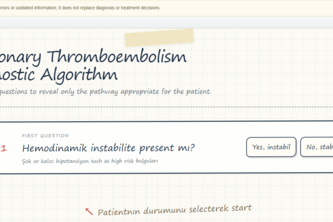
PulmoCalc is an AI-powered platform for pulmonologists, described as an intelligent workspace that combines pulmonary education, clinical decision support, and interactive medical calculators. It was built by a single physician-founder (Dr. Ömer BAYARAM) using OpenAI technologies.
What changed
The project emerged from a personal clinical challenge faced by the founder — the need for faster access to evidence-based pulmonary resources during patient care. The platform is described as evolving from an initial prototype into a practical tool through iterative AI-assisted development.
Single most important open question
Is there any evidence of actual use or adoption by physicians, and if so, what is the nature of that engagement?
What The Product Actually Is
The description states that PulmoCalc is:
- An AI-powered platform
- Designed for pulmonologists
- Combines pulmonary education, clinical decision support, and interactive medical calculators
- Includes features such as:
- Evidence-based pulmonary workflows
- Interactive clinical calculators
- Pneumonia severity assessment
- Pulmonary embolism evaluation
- Blood gas (ABG) interpretation
- Pulmonary function test guidance
- Sleep medicine tools
- Educational learning modules
- Rapid bedside clinical references
The platform is described as supporting physicians without replacing their clinical judgment.
Inference It appears to be a web-based application built using AI technologies, with a focus on integrating clinical knowledge and decision-making tools into one interface.
Positioning & Claim Evolution
The author states:
- The product was inspired by the need for faster access to clinical resources during patient care.
- It aims to reduce workflow interruptions and cognitive load.
- It is positioned as an intelligent workspace that consolidates multiple sources of information.
- The platform is described as supporting physicians—not replacing their clinical judgment.
Inference The positioning evolved from a personal problem-solving effort into a broader vision for AI-assisted healthcare education and decision-making. The claim has shifted from a single-use tool to a potential ecosystem for physician learning and practice.
Target Customer & ICP
The description states:
- The primary users are pulmonologists.
- It is designed for physicians who need quick access to evidence-based pulmonary resources.
- The platform supports clinical decision-making in real-time, during bedside care.
Inference The target customer is a specific subset of healthcare professionals — pulmonologists — with an emphasis on those working in clinical settings where time and accuracy are critical.
Business Model & Pricing Evidence
Not evidenced.
The description does not mention:
- Revenue streams
- Pricing models
- Monetization strategy
- Customer acquisition or retention tactics
Inference No evidence of a defined business model or pricing structure exists in the provided information.
Technical & Delivery Signals
The description states:
- PulmoCalc was built using OpenAI technologies including ChatGPT, GPT-5.6, Codex, and ChatGPT Sites.
- AI was involved throughout the development process—from brainstorming to debugging.
- The platform includes hundreds of iterative improvements.
- It is a web application.
Inference The technical stack relies heavily on AI tools, particularly OpenAI’s offerings. Development appears to have been iterative and AI-assisted, suggesting a rapid prototyping approach.
Traction & Maturity Signals
Not evidenced.
The description does not contain:
- Customer data or usage metrics
- Revenue figures
- Number of users or active physicians
- Product adoption rates
- Feedback from end-users
- Market traction indicators
Inference There is no indication of product maturity or traction beyond the initial prototype and development phase.
Competitive Context
Not evidenced.
The description does not mention:
- Competitors in the market
- Existing solutions for clinical decision support or pulmonary education
- Market share or competitive positioning
- Differentiation from other tools
Inference No evidence of competitive landscape analysis or awareness of existing players is present.
Open Questions & Risks
Key risks and open questions based on the description:
- Single-founder model: Only one team member (Dr. Ömer BAYARAM) is mentioned, raising questions about scalability and execution capacity.
- No revenue or traction evidence: The platform has not demonstrated any real-world usage or monetization.
- Unverified claims: All statements are self-reported and lack independent verification.
- AI dependency: Heavy reliance on OpenAI tools may pose risks related to availability, cost, or changes in API access.
- Clinical accuracy risk: Without clinical validation or user feedback, the safety and reliability of medical content cannot be assessed.
Inference The project lacks commercial viability signals and faces significant execution and trust risks due to its early-stage nature and lack of external validation.
Questions the description leaves open
- What specific clinical workflows or decisions does PulmoCalc support, and how are these validated?
- Have you conducted any usability testing with actual pulmonologists?
- How do you plan to ensure ongoing scientific accuracy of the content?
- Is there a roadmap for monetization or customer acquisition?
- What is your strategy for scaling beyond the current single-founder model?
- Are there any partnerships or pilot programs with hospitals or medical institutions?
Overall Assessment
Not evidenced.
The description does not provide:
- Financial data
- Market opportunity size
- Strategic fit for investors or partners
- Exit potential or long-term vision beyond the founder’s personal goals
Inference There is insufficient evidence to assess whether this project merits investment or partnership. The lack of traction, revenue, and external validation makes it difficult to evaluate commercial viability at this stage.
User Stories BotA demo video on every pull request
Get a demo video on every new feature
GitHub App that watches your pull requests and records a narrated, captioned demo.
Save time on demo prep and make informed decisions faster with a video walkthrough of every new feature.
Source
Submitted to the OpenAI 2026 hackathon on Devpost. Project home on Devpost. Back to the full gallery on Devpost.
This competitive analysis was produced by top-founders.com (opens in a new tab)
Generated by a language model from this project's public Devpost page — its tagline, the author's own write-up and any built-with tags listed there — as captured in August 2026. Short quotations are the author's words. It is an opinion on the idea as a business, not on the people behind it, and it reflects the description as published then. If the project has moved on, request a correction below. The analysis is not independent research and contains no verified traction, revenue or customer data.
An independent guide by KFG International LLC — not affiliated with, endorsed by, or connected to Devpost or OpenAI.