

Archive position — measured, not model output
0 likes on Devpost
2,263 of the 7,850 archived projects have more likes, and 5,587 share exactly 0 — so this project's #3,764 place in the like-ranked listing is a tie-break inside that group, not a ranking.
Projects (log scale)
Likes on Devpost. ▲ marks this project's group.
Show the figures
| Likes | Projects | Share of archive |
|---|---|---|
| 0 | 5,587 | 71.2% |
| 1 | 1,758 | 22.4% |
| 2 | 284 | 3.6% |
| 3–4 | 132 | 1.7% |
| 5–9 | 75 | 1.0% |
| 10+ | 14 | 0.2% |
 User Stories BotA demo video on every pull request
Get a demo video on every new feature
GitHub App that watches your pull requests and records a narrated, captioned demo.
Save time on demo prep and make informed decisions faster with a video walkthrough of every new feature.
Executive Summary
What the company appears to be
Do Already? is a self-reported personal productivity tool that integrates with Telegram to convert messages into actionable tasks using AI. The product is described as a mobile-first dashboard for managing tasks derived from private Telegram chats, with a playful penalty system and editable rewards.
What changed
The project was submitted as part of the OpenAI 2026 hackathon. It is presented as a proof-of-concept or prototype, not yet a commercial product or service.
Single most important open question
Is there any evidence of actual user adoption, revenue, or traction beyond the author’s personal use case and hackathon submission?
Analysis basis
Self-reported, unverified description provided by the author. No archived data, third-party sources, or independent verification available. All claims are treated as stated by the author, not confirmed.
What The Product Actually Is
- The description states that Do Already? is a tool that watches a private Telegram demo chat for messages from “The Wife.”
- GPT-5.6 Luna determines whether a message is a task.
- Clear tasks are added automatically; uncertain ones are sent as private approval cards.
- Tasks appear in a mobile-first dashboard where users can mark them done or missed.
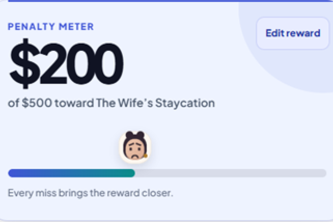
- Missed tasks trigger a $100 penalty meter, with rewards editable by the user (e.g., spa day).
- A single animated character reflects the mood based on the penalty meter.
Inference The product is described as a hybrid of Telegram bot, AI task extraction, and a mobile dashboard. It uses React, OpenAI’s API (GPT-5.6 Luna), Codex, and a small database for syncing tasks between platforms.
Not evidenced No information on actual user base, real-world usage, or product functionality beyond the demo.
Positioning & Claim Evolution
- The tagline: “Do Already? let's me keep my head, by converting my wife's instructions on Telegram into actionable tasks.” positions the tool as a personal productivity solution.
- The author claims it solves a daily problem — forgetting tasks sent via Telegram.
- It is described as a playful, non-shaming way to manage tasks.
- The project is presented as a hackathon submission with no commercial intent or traction.
Inference The positioning evolved from solving a personal issue (forgetting tasks) into a tool that could be extended for broader use cases.
Not evidenced No evidence of market validation, customer feedback, or product-market fit beyond the author’s own experience.
Target Customer & ICP
- The description states: “Do Already? watches a private Telegram demo chat for messages from 'The Wife.'”
- It is implied that the primary user is someone managing tasks from a spouse or close family member.
- The tool is described as being used in a personal, domestic context.
Inference The ICP appears to be individuals who receive task-like instructions via Telegram and want an automated way to manage them.
Not evidenced No evidence of broader customer segments, personas, or use cases beyond the author’s own situation.
Business Model & Pricing Evidence
- The description does not mention any pricing model or monetization strategy.
- It is implied that the tool is personal and self-contained, with no indication of a paid service or subscription.
- Rewards and penalties are described as customizable by the user — suggesting a DIY approach rather than a commercial offering.
Inference There is no evidence of a business model beyond personal use or a prototype.
Not evidenced No revenue streams, pricing tiers, or monetization plans are mentioned.
Technical & Delivery Signals
- Built with: React, Telegram bot, OpenAI’s API (GPT-5.6 Luna), Codex, and a small database.
- The system extracts tasks, timing, confidence, and follow-up messages.
- Tasks can be merged into existing ones if a follow-up message is detected.
- Mobile-first dashboard with visual feedback via an animated character.
Inference The tool uses AI for task extraction and integrates with Telegram and a web dashboard.
Not evidenced No evidence of scalability, infrastructure, or production-grade delivery beyond the hackathon prototype.
Traction & Maturity Signals
- The project was submitted to the OpenAI 2026 hackathon.
- It is described as a working prototype, not a commercial product.
- The author states: “A real Telegram-to-dashboard workflow, not just a mock-up.”
- No mention of users, customers, or adoption beyond the author’s personal use.
Inference The tool exists in prototype form and has been tested by the author.
Not evidenced No evidence of user engagement, revenue, or product maturity beyond the hackathon submission.
Competitive Context
- The description states: “Funny enough, the challenge I faced was when I attended OpenAI Build Week community event in Singapore and shared this idea with a table mate, he instantly said 'nice... but have you heard about OpenClaw?'”
- This implies that a competitor named OpenClaw already exists and does something similar.
Inference The author acknowledges the existence of a competing product.
Not evidenced No details on OpenClaw’s features, market position, or how Do Already? differentiates from it.
Open Questions & Risks
- The project is described as a hackathon submission with no commercial traction.
- The author explicitly states that OpenClaw already exists and does what this tool aims to do — raising questions about differentiation and market viability.
- No evidence of revenue, customers, or product-market fit.
- The tool is presented as personal-use only, with no indication of scalability or broader appeal.
Inference The risk lies in the lack of commercial traction and potential overlap with an existing solution.
Not evidenced No data on user retention, monetization, or competitive positioning beyond the author’s own account.
Questions the description leaves open
- What is the actual problem you're solving for users beyond your personal use case?
- How does Do Already? differ from existing tools like OpenClaw?
- Have you tested this with other users or in real-world settings outside of your own?
- Is there a plan to monetize or scale this beyond a prototype?
- What is the roadmap for moving from a demo to a production-ready product?
Overall Assessment
- The project is described as a hackathon submission with no commercial traction, revenue, or customer base.
- It is presented as a personal tool with limited scalability or market appeal.
- There is no evidence of product-market fit, monetization, or competitive advantage.
Inference At this stage, the project appears to be an experimental prototype, not a viable investment or partnership opportunity.
Not evidenced No data on financials, user growth, or strategic positioning.
User Stories BotA demo video on every pull request
Get a demo video on every new feature
GitHub App that watches your pull requests and records a narrated, captioned demo.
Save time on demo prep and make informed decisions faster with a video walkthrough of every new feature.
Source
Submitted to the OpenAI 2026 hackathon on Devpost. Project home on Devpost. Back to the full gallery on Devpost.
This competitive analysis was produced by top-founders.com (opens in a new tab)
Generated by a language model from this project's public Devpost page — its tagline, the author's own write-up and any built-with tags listed there — as captured in August 2026. Short quotations are the author's words. It is an opinion on the idea as a business, not on the people behind it, and it reflects the description as published then. If the project has moved on, request a correction below. The analysis is not independent research and contains no verified traction, revenue or customer data.
An independent guide by KFG International LLC — not affiliated with, endorsed by, or connected to Devpost or OpenAI.