

Archive position — measured, not model output
0 likes on Devpost
2,263 of the 7,850 archived projects have more likes, and 5,587 share exactly 0 — so this project's #7,690 place in the like-ranked listing is a tie-break inside that group, not a ranking.
Projects (log scale)
Likes on Devpost. ▲ marks this project's group.
Show the figures
| Likes | Projects | Share of archive |
|---|---|---|
| 0 | 5,587 | 71.2% |
| 1 | 1,758 | 22.4% |
| 2 | 284 | 3.6% |
| 3–4 | 132 | 1.7% |
| 5–9 | 75 | 1.0% |
| 10+ | 14 | 0.2% |
 User Stories BotA demo video on every pull request
Get a demo video on every new feature
GitHub App that watches your pull requests and records a narrated, captioned demo.
Save time on demo prep and make informed decisions faster with a video walkthrough of every new feature.
Executive Summary
What the company appears to be
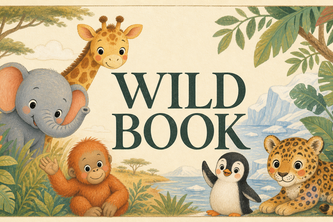
WildBook is a self-reported educational digital experience for children, built as a prototype for the OpenAI 2026 hackathon. It presents animal picture stories and interactive play experiences designed to support early childhood learning through play, with an emphasis on parent-child interaction and research-informed design goals.
What changed
The project is described as a prototype developed iteratively using GPT-5.6 for research and design input, built with React, Next.js, and TypeScript, and structured around animal chapters that combine picture stories with field-based activities.
Single most important open question
Is there evidence of traction or user adoption beyond the prototype stage? The description does not indicate any revenue, customers, or measurable impact on learning outcomes.
Note: This analysis is based entirely on the self-reported and unverified project description provided by the author. All claims are stated by the author and not independently verified.
What The Product Actually Is
The description states that WildBook is an English-language, touch-first animal picture-book library. It contains five completed animal worlds (Nia, Mara, Rimba, Pippa, Luma) with two main components:
- Wildbook Library: Each animal opens into a chapter with:
- A short picture story.
- Species-specific field activities based on real animal behaviors and adaptations.
- My Little Wild Zoo: An open-ended play space where children can place animals in ecologically appropriate habitats, interact with environmental changes, and explore animal needs and behaviors through play.
Each animal chapter combines narrative elements with interactive gameplay designed to support developmental goals such as visual discrimination, sequencing, spatial reasoning, and cause-and-effect thinking.
Inference: The product is described as a digital picture book with embedded educational play experiences. It uses React-based UI components and browser APIs for interaction design.
Positioning & Claim Evolution
The description states that WildBook began with two questions:
- How can children learn about real animals through play?
- How can that play create meaningful time with a parent or caregiver?
It positions itself as an educational tool rooted in early-learning research, aiming to support joint attention, vocabulary development, narrative memory, and scientific thinking through playful interaction.
The project does not claim measurable learning improvements or performance metrics. Instead, it describes its design goals as "research-informed" rather than validated outcomes.
Inference: The positioning is centered on play-based learning for young children, with a focus on parent-child engagement and developmental support, not commercial traction or measurable impact.
Target Customer & ICP
The description states that WildBook targets families with young children, particularly those interested in early childhood education through digital media. It emphasizes:
- Parent-child shared media experiences.
- Support for joint attention and listening comprehension.
- Use of picture stories and interactive play to teach about animals.
It does not specify age ranges or explicit target demographics beyond "families" and "children."
Inference: The ICP appears to be parents or caregivers of young children (likely ages 2–6), seeking educational digital content that supports learning through play and family interaction.
Business Model & Pricing Evidence
There is no evidence in the description of a business model, pricing strategy, monetization approach, or revenue streams. The project is described as a prototype submitted to a hackathon.
Not evidenced: No indication of how the product would be sold, licensed, or funded beyond its development phase.
Technical & Delivery Signals
The project was built using:
- Frontend: React 19, Next.js 16, TypeScript, Tailwind CSS, Vite, vinext
- Backend/Infrastructure: Cloudflare Workers, Node.js, local storage, browser Web APIs
- AI Tools: GPT-5.6 (used for research and design)
- Interaction Design: Pointer Events, browser-based drag-and-drop, state machines
The system supports multiple input methods including mouse, touchscreen, and iPad pointer.
Inference: The technical stack suggests a modern web-based prototype with responsive design and cross-platform compatibility. It uses AI tools in the development process but does not appear to rely on AI for core user-facing functionality.
Traction & Maturity Signals
The description states that this is a prototype built for a hackathon, and there is no evidence of:
- Revenue
- Customers
- User adoption
- Measurable learning outcomes
- Product maturity beyond the initial build
It also notes that the project does not yet claim measured improvements in children’s abilities.
Not evidenced: No traction data or signs of product-market fit beyond prototype development.
Competitive Context
The description does not mention any competitors or direct market comparisons. It focuses on the educational value and design philosophy rather than positioning within a competitive landscape.
Not evidenced: No information about existing products, markets, or competitive dynamics.
Open Questions & Risks
- No traction or revenue: The project is described as a prototype with no evidence of adoption or monetization.
- Unverified claims: All stated learning outcomes and design goals are based on research-informed intentions, not measured results.
- Limited scope: Only five animal worlds are implemented; no indication of scalability or expansion plans.
- Hackathon origin: The project was submitted to a hackathon, suggesting it may be early-stage and experimental.
Inference: Risk of misalignment between stated educational goals and actual impact without further testing or validation.
Questions the description leaves open
- What specific research sources informed the design of each animal interaction?
- How was the prototype tested with children, parents, or educators?
- Are there any plans to validate learning outcomes through formal studies?
- What is the roadmap for scaling beyond the current five animals?
- Is there a plan to monetize or distribute this product beyond the hackathon?
- How does the team intend to measure success or impact post-hackathon?
Overall Assessment
The description indicates that WildBook is an early-stage prototype developed for a hackathon, with no evidence of traction, revenue, or measurable learning outcomes.
Assessment: Not suitable for investment or partnership at this stage. The project lacks commercial viability indicators and has not demonstrated product-market fit or user adoption beyond its initial development phase.
User Stories BotA demo video on every pull request
Get a demo video on every new feature
GitHub App that watches your pull requests and records a narrated, captioned demo.
Save time on demo prep and make informed decisions faster with a video walkthrough of every new feature.
Source
Submitted to the OpenAI 2026 hackathon on Devpost. Project home on Devpost. Back to the full gallery on Devpost.
This competitive analysis was produced by top-founders.com (opens in a new tab)
Generated by a language model from this project's public Devpost page — its tagline, the author's own write-up and any built-with tags listed there — as captured in August 2026. Short quotations are the author's words. It is an opinion on the idea as a business, not on the people behind it, and it reflects the description as published then. If the project has moved on, request a correction below. The analysis is not independent research and contains no verified traction, revenue or customer data.
An independent guide by KFG International LLC — not affiliated with, endorsed by, or connected to Devpost or OpenAI.