

Archive position — measured, not model output
0 likes on Devpost
2,263 of the 7,850 archived projects have more likes, and 5,587 share exactly 0 — so this project's #5,960 place in the like-ranked listing is a tie-break inside that group, not a ranking.
Projects (log scale)
Likes on Devpost. ▲ marks this project's group.
Show the figures
| Likes | Projects | Share of archive |
|---|---|---|
| 0 | 5,587 | 71.2% |
| 1 | 1,758 | 22.4% |
| 2 | 284 | 3.6% |
| 3–4 | 132 | 1.7% |
| 5–9 | 75 | 1.0% |
| 10+ | 14 | 0.2% |
 User Stories BotA demo video on every pull request
Get a demo video on every new feature
GitHub App that watches your pull requests and records a narrated, captioned demo.
Save time on demo prep and make informed decisions faster with a video walkthrough of every new feature.
Executive Summary
What the company appears to be
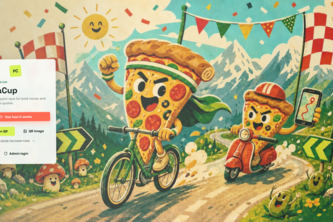
PizzaCup is a self-reported tool for organizing GPS checkpoint races, with an emphasis on making them easy to organize and fun to run, ending with pizza at the finish line.
What changed
The project was submitted to the OpenAI 2026 hackathon. No evidence of prior development or traction exists in the description.
The single most important open question
Is there any evidence of actual user adoption or revenue-generating activity beyond a hackathon submission?
What The Product Actually Is
The description states that PizzaCup is a tool for organizing GPS checkpoint races, with an emphasis on making them easy to organize and fun to run. It also mentions that the races are best enjoyed with pizza at the finish.
Evidence
- The author states: “PizzaCup makes GPS checkpoint races easy to organize, fun to run, and best enjoyed with pizza at the finish.”
- The project was built using technologies such as Next.js, React, Supabase, Leaflet.js, QRCode, and OpenStreetMap.
Inference
- Based on the tech stack (e.g., Leaflet.js, OpenStreetMap), it seems likely that the product involves mapping or geolocation functionality.
- The mention of “checkpoints” implies a race-tracking component.
Not evidenced
- No specific features or workflows are described beyond the tagline and tech stack.
- No evidence of actual use cases, user interaction, or live functionality is provided.
Positioning & Claim Evolution
The author positions PizzaCup as a solution for organizing GPS checkpoint races that are both easy to organize and fun to run, with a unique twist involving pizza at the finish line.
Evidence
- The tagline: “PizzaCup makes GPS checkpoint races easy to organize, fun to run, and best enjoyed with pizza at the finish.”
Inference
- The positioning appears to be niche, targeting event organizers of local or recreational GPS races.
- The inclusion of pizza may be a marketing hook or a unique value proposition.
Not evidenced
- No evidence of prior positioning, evolution of claims, or competitive differentiation is provided.
- No indication of whether this is a new idea or an iteration on existing tools.
Target Customer & ICP
The description does not clearly define the target customer or ideal customer profile (ICP).
Evidence
- The author states that PizzaCup helps organize GPS checkpoint races, but does not specify who organizes these races or who participates in them.
Inference
- Likely targets event organizers of local or recreational GPS races.
- Could also be aimed at participants looking for fun, community-based events.
Not evidenced
- No evidence of customer personas, user segments, or buyer profiles.
- No indication of whether the tool is B2B (organizers) or B2C (participants).
Business Model & Pricing Evidence
There is no evidence in the description of a business model or pricing structure.
Evidence
- The author does not state how PizzaCup generates revenue, if at all.
- No mention of subscriptions, one-time fees, or monetization strategies.
Inference
- If it's a hackathon project, it may be non-commercial or experimental in nature.
- It could potentially be monetized through event organizers or participants, but this is speculative.
Not evidenced
- No pricing data, revenue model, or monetization strategy is provided.
Technical & Delivery Signals
The project was built using a range of modern web technologies including Next.js, React, Supabase, Leaflet.js, and OpenStreetMap.
Evidence
- The author lists the following tools: codex, github-actions, gpt-5.6, javascript, jsqr, leaflet.js, next.js, openstreetmap, postgresql, qrcode, react, supabase, supabase-realtime, vinext, vite.
Inference
- The tech stack suggests a full-stack web application with geolocation and mapping capabilities.
- Use of Supabase and PostgreSQL implies backend data handling.
- Integration with OpenStreetMap and Leaflet.js indicates mapping functionality.
Not evidenced
- No evidence of deployment, scalability, or production readiness.
- No information on performance, reliability, or user experience.
Traction & Maturity Signals
There is no evidence of traction or maturity beyond a hackathon submission.
Evidence
- The project was submitted to the OpenAI 2026 hackathon.
- The author states that the team size is one (Don Miguel).
Inference
- This suggests a prototype or early-stage product, not a mature solution.
- No evidence of user feedback, adoption, or growth metrics.
Not evidenced
- No evidence of users, revenue, or product-market fit.
- No mention of any live deployment or usage data.
Competitive Context
There is no evidence of competitive analysis or market positioning in the description.
Evidence
- The author does not reference competitors or similar tools in the market.
Inference
- GPS checkpoint races are a known category, but no specific competitors are named.
- It’s possible that PizzaCup is either a new idea or an incremental improvement on existing tools.
Not evidenced
- No evidence of competitive landscape, pricing, or differentiation from other platforms.
Open Questions & Risks
Several risks and open questions emerge from the lack of evidence:
- No traction or revenue: The project appears to be a hackathon submission with no signs of real-world use.
- Limited team size: A single-member team may limit development velocity and scalability.
- Unverified claims: All statements are self-reported, with no external validation.
- Unclear monetization: No evidence of how the product will generate revenue.
- No user feedback or testing: No indication that the tool has been tested by users.
Inference
- The lack of a detailed write-up and user engagement suggests a very early-stage idea.
- If this is intended to be a commercial product, it lacks critical foundational elements.
Not evidenced
- No evidence of market validation or customer feedback.
- No indication of whether the tool has been tested in real-world conditions.
Questions the description leaves open
- What inspired the creation of PizzaCup?
- Have you tested this with actual users or event organizers?
- How do you plan to monetize the product?
- What is your roadmap for development beyond the hackathon?
- Are there any existing competitors in this space, and how does PizzaCup differentiate?
- What are the key features of the tool that make it easy to organize races?
- Have you considered scalability or performance issues with GPS tracking?
Overall Assessment
Not evidenced.
The description provides no information on whether PizzaCup has reached a stage where investment or partnership would be appropriate.
Inference
- Given the lack of traction, revenue, or user testing, it is unlikely to be at a stage suitable for investment or strategic partnership.
- If this is an early-stage idea, it may be worth exploring further if the founders can demonstrate progress or traction in the near term.
Not evidenced
- No evidence of product-market fit, financials, or strategic alignment.
User Stories BotA demo video on every pull request
Get a demo video on every new feature
GitHub App that watches your pull requests and records a narrated, captioned demo.
Save time on demo prep and make informed decisions faster with a video walkthrough of every new feature.
Source
Submitted to the OpenAI 2026 hackathon on Devpost. Project home on Devpost. Back to the full gallery on Devpost.
This competitive analysis was produced by top-founders.com (opens in a new tab)
Generated by a language model from this project's public Devpost page — its tagline and any built-with tags listed there, since the author published no write-up — as captured in August 2026. Short quotations are the author's words. It is an opinion on the idea as a business, not on the people behind it, and it reflects the description as published then. If the project has moved on, request a correction below. The analysis is not independent research and contains no verified traction, revenue or customer data.
An independent guide by KFG International LLC — not affiliated with, endorsed by, or connected to Devpost or OpenAI.