

Archive position — measured, not model output
0 likes on Devpost
2,263 of the 7,850 archived projects have more likes, and 5,587 share exactly 0 — so this project's #5,890 place in the like-ranked listing is a tie-break inside that group, not a ranking.
Projects (log scale)
Likes on Devpost. ▲ marks this project's group.
Show the figures
| Likes | Projects | Share of archive |
|---|---|---|
| 0 | 5,587 | 71.2% |
| 1 | 1,758 | 22.4% |
| 2 | 284 | 3.6% |
| 3–4 | 132 | 1.7% |
| 5–9 | 75 | 1.0% |
| 10+ | 14 | 0.2% |
 User Stories BotA demo video on every pull request
Get a demo video on every new feature
GitHub App that watches your pull requests and records a narrated, captioned demo.
Save time on demo prep and make informed decisions faster with a video walkthrough of every new feature.
Executive Summary
What the company appears to be
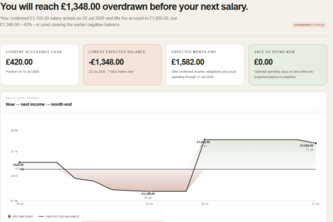
Personal CFO is a self-reported personal finance tool built as a hackathon project. The author states it combines a deterministic financial engine with GPT-5.6 to forecast balances, model spending and debt, and explain outcomes in plain English. It is described as local-first, with no data leaving the user's device.
What changed
The project was submitted to the OpenAI 2026 hackathon. The author describes a four-evening build process using Codex, Next.js, React, TypeScript, SQLite, and GPT-5.6. It includes a validation layer that ensures all AI-generated explanations are traceable to deterministic calculations.
The single most important open question
Is there any evidence of traction, revenue, or customer usage beyond the author’s own demonstration? The description does not include any data on actual users, adoption, or monetization — only a self-reported project description and technical build details.
What The Product Actually Is
The description states that Personal CFO is a personal finance tool that pairs a deterministic financial engine with GPT-5.6. It forecasts balances, models income, spending, and debt, and explains outcomes in plain English. The AI does not perform calculations; all figures come from deterministic code.
Evidence
- "Personal CFO pairs a deterministic financial engine with GPT-5.6."
- "The AI is never asked to do maths. Every figure comes from deterministic TypeScript code."
- "GPT-5.6 only explains results that have already been calculated and checked."
Inference It is a hybrid system where code handles logic and AI handles explanation, with a validation boundary ensuring traceability.
Positioning & Claim Evolution
The author positions Personal CFO as a local-first personal CFO that models real financial situations, finds routes out of overdraft or debt, and explains like a friend. It is described as being built for people who struggle to answer basic money questions.
Evidence
- "A local-first personal CFO that models your real month, finds a route out of overdraft and debt, and explains it like a friend."
- "Banking apps show balances. Budgeting apps record transactions. Very few explain the story behind the numbers."
- "I wanted something that felt like a friend who's good with money, sitting at your kitchen table — telling you the truth kindly and giving you a way out with real dates on it."
Inference The positioning is to offer a trustworthy, human-like explanation of personal finance, not just data.
Target Customer & ICP
The description does not state a specific customer segment or ideal customer profile (ICP). It implies the tool is for individuals struggling with money questions, but no explicit targeting or segmentation is described.
Evidence
- "For years I've watched people (myself included) struggle to answer surprisingly simple money questions."
- No mention of demographics, income levels, or financial behaviors.
Inference The target appears to be general consumers with personal finance challenges, but this is not confirmed.
Business Model & Pricing Evidence
There is no evidence in the description of a business model or pricing strategy. The project is described as a hackathon submission and does not mention monetization, subscriptions, or sales.
Evidence
- No mention of revenue, pricing, or monetization.
- "All financial information in the demonstration uses fictional data created solely for demonstration purposes."
Inference The tool is currently non-commercial, with no evidence of a path to revenue.
Technical & Delivery Signals
The project was built over four evenings using Codex, Next.js, React, TypeScript, SQLite, and GPT-5.6. It includes a validation layer that ensures all AI-generated text is traceable to deterministic calculations. The author mentions 63 automated tests.
Evidence
- "Built step by step with Codex over four evenings."
- "The deterministic engine does all the calculating: balance forecasts, matching up transfers, regular payments, comparing categories against a normal month..."
- "GPT-5.6 is handed a package of already-calculated facts, each with its own ID..."
- "63 automated tests on a four-evening build."
Inference The tool has a strong technical foundation and validation mechanism, but it is not yet deployed for public use.
Traction & Maturity Signals
There is no evidence of traction or maturity beyond the author’s own demonstration. No customers, usage data, or product adoption are mentioned.
Evidence
- "All financial information in the demonstration uses fictional data created solely for demonstration purposes."
- No mention of users, downloads, or engagement.
- The project is described as a hackathon submission.
Inference The tool is at an early stage and lacks any measurable traction or user feedback.
Competitive Context
The description does not provide information on competitors. It implies that existing tools like banking apps and budgeting apps do not explain the story behind numbers, but no specific competitors are named.
Evidence
- "Banking apps show balances. Budgeting apps record transactions. Very few explain the story behind the numbers."
Inference It positions itself as a differentiator in a crowded personal finance space, but without competitive data or market analysis.
Open Questions & Risks
Key risks include lack of traction, unclear monetization strategy, and no evidence of customer validation. The tool is described as local-first and not yet deployed for public use.
Evidence
- No revenue, customers, or usage metrics.
- Not yet available to the public; only a demo exists.
- No mention of scalability or long-term product vision.
Inference The project is in an early prototype phase with no commercial viability demonstrated.
Questions the description leaves open
- What is the path from this prototype to a commercial product?
- Are there any plans for monetization or customer acquisition?
- Has the validation layer been tested with real users or data?
- How does the team plan to scale beyond a single developer?
- What are the technical and legal implications of local-first design?
Overall Assessment
Not evidenced.
The description provides no evidence of revenue, customers, traction, or commercial viability. It is a self-reported hackathon project with no indication of market readiness or business model. The tool is described as a prototype with a strong technical foundation but no clear path to monetization or adoption.
Confidence Low. This analysis is based entirely on the author’s own description and lacks any independent verification or evidence of traction, revenue, or customer data.
User Stories BotA demo video on every pull request
Get a demo video on every new feature
GitHub App that watches your pull requests and records a narrated, captioned demo.
Save time on demo prep and make informed decisions faster with a video walkthrough of every new feature.
Source
Submitted to the OpenAI 2026 hackathon on Devpost. Project home on Devpost. Back to the full gallery on Devpost.
This competitive analysis was produced by top-founders.com (opens in a new tab)
Generated by a language model from this project's public Devpost page — its tagline, the author's own write-up and any built-with tags listed there — as captured in August 2026. Short quotations are the author's words. It is an opinion on the idea as a business, not on the people behind it, and it reflects the description as published then. If the project has moved on, request a correction below. The analysis is not independent research and contains no verified traction, revenue or customer data.
An independent guide by KFG International LLC — not affiliated with, endorsed by, or connected to Devpost or OpenAI.