

Archive position — measured, not model output
0 likes on Devpost
2,263 of the 7,850 archived projects have more likes, and 5,587 share exactly 0 — so this project's #5,891 place in the like-ranked listing is a tie-break inside that group, not a ranking.
Projects (log scale)
Likes on Devpost. ▲ marks this project's group.
Show the figures
| Likes | Projects | Share of archive |
|---|---|---|
| 0 | 5,587 | 71.2% |
| 1 | 1,758 | 22.4% |
| 2 | 284 | 3.6% |
| 3–4 | 132 | 1.7% |
| 5–9 | 75 | 1.0% |
| 10+ | 14 | 0.2% |
 User Stories BotA demo video on every pull request
Get a demo video on every new feature
GitHub App that watches your pull requests and records a narrated, captioned demo.
Save time on demo prep and make informed decisions faster with a video walkthrough of every new feature.
Executive Summary
What the company appears to be
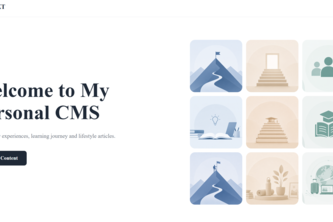
The description states that Personal CMS is a full-stack personal content management system built with GPT-5.6 and Codex. It is described as a platform for creating, managing, and publishing personal content, with an admin dashboard and public-facing website. The author claims it was developed over three years of study, with the current version being completed during the OpenAI Build Week Challenge.
What changed
The project description indicates that this is the third attempt at building a CMS, with prior attempts abandoned halfway. During the OpenAI Build Week Challenge (13–22 July), the author focused on bringing the application to a production-ready state, including completing backend security, adding analytics dashboards, integrating Cloudinary and Google Analytics, and deploying frontend and backend to production.
Single most important open question
Is there any evidence of external adoption or usage beyond the author's personal use? The description does not provide any data on users, customers, revenue, or traction beyond the author’s own account.
What The Product Actually Is
The description states that Personal CMS is a full-stack web application for creating, managing, and publishing content. It includes:
- An admin dashboard with features like draft saving, publishing, soft delete/restore, image upload via Cloudinary, and analytics using Google Analytics.
- A public-facing website where visitors can browse content, search/filter, view related articles, and access external references.
- Integration of technologies such as React, ASP.NET Core, PostgreSQL, Docker, and Supabase for hosting.
The author notes that the application was built iteratively with ChatGPT and Codex to plan, inspect, and implement features. It was deployed using Render and Supabase during the hackathon period.
Evidence
- Full-stack web app
- Admin dashboard with content management workflows
- Public-facing website with browsing experience
- Use of React, ASP.NET Core, PostgreSQL, Docker, Cloudinary, Google Analytics
Inference The product is a personal CMS designed for individual use, not commercial or enterprise.
Positioning & Claim Evolution
The author positions Personal CMS as more than just a project—it represents the culmination of their IT education and a platform to document experiences and learning journey. The project evolved from an unfinished attempt into a deployed full-stack application during the OpenAI Build Week Challenge.
Claims made by the author
- It reflects personal growth and learning throughout their diploma.
- It was built iteratively with AI tools (ChatGPT, Codex).
- It is intended to grow alongside the author’s learning journey.
Evidence
- The project started as a personal endeavor during studies.
- The author mentions using ChatGPT and Codex for planning and implementation.
- Deployment happened during a hackathon.
Inference The positioning is self-driven, focused on personal development rather than market traction or commercial viability.
Target Customer & ICP
The description does not clearly define a target customer or ideal customer profile (ICP). The author describes the platform as being for personal use and documentation of their own experiences. There is no indication that it targets other users or organizations.
Evidence
- Built for the author’s own use.
- No mention of external users or personas.
Inference The ICP appears to be undefined, possibly limited to the creator alone.
Business Model & Pricing Evidence
There is no evidence in the description of a business model or pricing strategy. The platform is described as a personal tool used by the author for documenting their journey.
Evidence
- No mention of monetization.
- No indication of paid features or subscriptions.
- No customer base or revenue streams mentioned.
Inference No commercial business model is evident from the description.
Technical & Delivery Signals
The project was built using:
- Frontend: React, TypeScript
- Backend: ASP.NET Core, C#, Entity Framework Core
- Database: PostgreSQL
- Hosting: Render, Supabase
- Tools: ChatGPT (planning), Codex (code inspection), CI/CD pipelines, Swagger, JWT authentication
The author reports that during the hackathon:
- Security was hardened.
- Unit/integration tests were added.
- Image upload workflow was refactored.
- Analytics dashboards were implemented.
- Deployment to production was completed.
Evidence
- Use of modern full-stack technologies.
- CI/CD integration.
- Deployment on Render and Supabase.
- Integration of Cloudinary and Google Analytics.
Inference The technical stack suggests a mature development approach, but there is no evidence of scalability or performance metrics beyond the author’s own use case.
Traction & Maturity Signals
There is no evidence of traction or adoption beyond the author's personal use. The description states that this is the third attempt at building a CMS and that prior versions were abandoned. No data on users, engagement, or usage is provided.
Evidence
- No mention of active users.
- No customer base or revenue.
- No public metrics or analytics from actual users.
Inference The platform lacks measurable traction or user engagement.
Competitive Context
There is no evidence in the description of competitors or market positioning. The author does not reference other CMS platforms or describe how this product compares to them.
Evidence
- No mention of existing CMS solutions.
- No competitive analysis or differentiation strategy.
Inference No competitive context is evident from the provided information.
Open Questions & Risks
Key risks and open questions based on the description:
- Lack of external validation: The platform has no evidence of real-world usage or adoption.
- Self-reported nature: All claims are unverified; there is no third-party confirmation.
- No commercial model: No indication of monetization or customer acquisition strategy.
- Limited scope: Designed for personal use, not scalable or market-ready.
- Unproven scalability: No evidence of performance or infrastructure scaling.
Evidence
- No external users or customers.
- No revenue or pricing data.
- No mention of commercial intent or growth plans.
Inference This is a personal project with no demonstrated commercial viability or traction.
Questions the description leaves open
- What specific problems does the platform solve for its users?
- Are there any external users or feedback from people who have used it?
- How do you plan to monetize or scale this beyond personal use?
- What are your long-term goals for the platform, and how do they align with market needs?
- Can you provide examples of how AI tools like ChatGPT and Codex were integrated into actual development decisions?
Overall Assessment
Not evidenced.
The description provides no information on financials, traction, or commercial potential. The platform is described as a personal project with no evidence of external adoption, revenue, or scalability.
Confidence level Low This analysis is based solely on self-reported claims and lacks any verifiable data on users, customers, or business outcomes. Any conclusion about investment or partnership viability must be treated as speculative due to the absence of measurable indicators of success or market fit.
User Stories BotA demo video on every pull request
Get a demo video on every new feature
GitHub App that watches your pull requests and records a narrated, captioned demo.
Save time on demo prep and make informed decisions faster with a video walkthrough of every new feature.
Source
Submitted to the OpenAI 2026 hackathon on Devpost. Project home on Devpost. Back to the full gallery on Devpost.
This competitive analysis was produced by top-founders.com (opens in a new tab)
Generated by a language model from this project's public Devpost page — its tagline, the author's own write-up and any built-with tags listed there — as captured in August 2026. Short quotations are the author's words. It is an opinion on the idea as a business, not on the people behind it, and it reflects the description as published then. If the project has moved on, request a correction below. The analysis is not independent research and contains no verified traction, revenue or customer data.
An independent guide by KFG International LLC — not affiliated with, endorsed by, or connected to Devpost or OpenAI.