

Archive position — measured, not model output
0 likes on Devpost
2,263 of the 7,850 archived projects have more likes, and 5,587 share exactly 0 — so this project's #6,849 place in the like-ranked listing is a tie-break inside that group, not a ranking.
Projects (log scale)
Likes on Devpost. ▲ marks this project's group.
Show the figures
| Likes | Projects | Share of archive |
|---|---|---|
| 0 | 5,587 | 71.2% |
| 1 | 1,758 | 22.4% |
| 2 | 284 | 3.6% |
| 3–4 | 132 | 1.7% |
| 5–9 | 75 | 1.0% |
| 10+ | 14 | 0.2% |
 User Stories BotA demo video on every pull request
Get a demo video on every new feature
GitHub App that watches your pull requests and records a narrated, captioned demo.
Save time on demo prep and make informed decisions faster with a video walkthrough of every new feature.
Executive Summary
Project: Solum
Self-reported basis: The description is entirely from the author’s own submission to a hackathon on Devpost. No independent verification, revenue, customer data, or traction evidence is provided.
Commercial due-diligence read: This is an early-stage, self-built prototype with no demonstrated product-market fit, revenue, or customer traction. It is positioned as a personal assistant leveraging Rust and Tauri for offline-first functionality, but lacks clarity on its core value proposition, target audience, or business model.
What The Product Actually Is
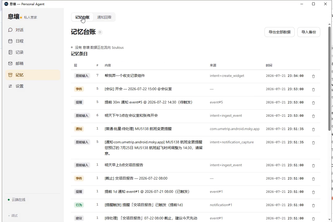
The description states that Solum is a "private Rust+Tauri 2 agent for desktop & Android." It parses language into events, prioritizes reminders, logs habits, and grows a local memory ledger—offline-first.
Inference: Based on the author's own words, it appears to be a personal assistant tool built with Rust and Tauri that operates offline and stores user data locally.
Evidence strength: Self-reported only; no functional prototype or demonstration provided.
Positioning & Claim Evolution
The author states:
- “Inspiration: the shortcoming of openclaw and hermes”
- “What it does: improve productive of life”
- “What's next for Personal Assistant: improve and i will prompt IMT in this”
Inference: The project is positioned as an evolution or improvement over existing tools (openclaw, hermes), with a focus on personal productivity. However, the claim lacks specificity or differentiation from similar tools.
Evidence strength: Self-reported; no clear positioning or value proposition beyond vague references to prior work.
Target Customer & ICP
Not evidenced. The description does not identify a specific customer segment or ideal customer profile (ICP). It is unclear who would use this tool, or what problem it solves for them.
Business Model & Pricing Evidence
Not evidenced. No information on pricing, monetization strategy, or business model is provided in the self-reported description.
Technical & Delivery Signals
The author states:
- Built with Rust and Tauri
- Uses ClaudeCode and ChatGPT for development
- “IMT is not real mature” — a challenge encountered
- “I have built a initial sharp” — an accomplishment
Inference: The tool is built using modern, lightweight technologies (Rust + Tauri), suggesting a focus on performance and portability. However, the use of AI tools like ClaudeCode and ChatGPT for development indicates a reliance on external assistance rather than internal engineering depth.
Evidence strength: Self-reported; no demonstration or delivery evidence.
Traction & Maturity Signals
Not evidenced. There is no mention of users, adoption, revenue, or product maturity beyond the initial prototype stage.
Competitive Context
The author references “openclaw and hermes” as inspirations, but does not elaborate on how Solum differs from them or what its competitive advantage might be.
Inference: It appears to be in a crowded space of personal assistant tools, but lacks clarity on differentiation.
Evidence strength: Self-reported; no competitive analysis or positioning relative to existing products.
Open Questions & Risks
- No traction or revenue: The project is described as an early prototype with no evidence of adoption or monetization.
- Unclear value proposition: The author states the tool aims to “improve productive of life,” which is vague and non-specific.
- Reliance on external tools: Development was done using AI tools like ClaudeCode and ChatGPT, suggesting limited in-house engineering capability.
- Lack of clarity on functionality: The description does not clearly explain how the tool works or what it delivers to users.
- No team or structure: Only one member is listed (hanzy tanner), with no indication of a broader team or support structure.
Questions the description leaves open
- What specific personal productivity problems does Solum solve, and for whom?
- How does it differ from existing tools like openclaw or hermes?
- What is the intended business model or monetization strategy?
- Can you demonstrate how the tool works in practice?
- What are the key technical challenges that remain unresolved?
- Is there any user feedback or early testing data?
Overall Assessment
Not evidenced. The project is described as an early-stage prototype with no demonstrated traction, revenue, or customer base. It lacks clarity on its value proposition, target market, and business model.
Confidence level: Low. This is a self-reported, unverified description of a very early-stage idea — not a product or business ready for investment or partnership consideration.
User Stories BotA demo video on every pull request
Get a demo video on every new feature
GitHub App that watches your pull requests and records a narrated, captioned demo.
Save time on demo prep and make informed decisions faster with a video walkthrough of every new feature.
Source
Submitted to the OpenAI 2026 hackathon on Devpost. Project home on Devpost. Back to the full gallery on Devpost.
This competitive analysis was produced by top-founders.com (opens in a new tab)
Generated by a language model from this project's public Devpost page — its tagline, the author's own write-up and any built-with tags listed there — as captured in August 2026. Short quotations are the author's words. It is an opinion on the idea as a business, not on the people behind it, and it reflects the description as published then. If the project has moved on, request a correction below. The analysis is not independent research and contains no verified traction, revenue or customer data.
An independent guide by KFG International LLC — not affiliated with, endorsed by, or connected to Devpost or OpenAI.