

Archive position — measured, not model output
1 like on Devpost
505 of the 7,850 archived projects have more likes, and 1,758 share exactly 1 — so this project's #962 place in the like-ranked listing is a tie-break inside that group, not a ranking.
Projects (log scale)
Likes on Devpost. ▲ marks this project's group.
Show the figures
| Likes | Projects | Share of archive |
|---|---|---|
| 0 | 5,587 | 71.2% |
| 1 | 1,758 | 22.4% |
| 2 | 284 | 3.6% |
| 3–4 | 132 | 1.7% |
| 5–9 | 75 | 1.0% |
| 10+ | 14 | 0.2% |
 User Stories BotA demo video on every pull request
Get a demo video on every new feature
GitHub App that watches your pull requests and records a narrated, captioned demo.
Save time on demo prep and make informed decisions faster with a video walkthrough of every new feature.
Executive Summary
What the company appears to be
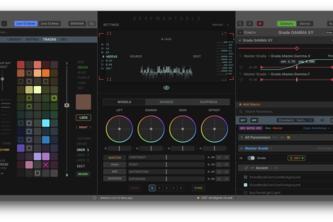
DMT (DeafManTools) is a self-reported tool for editing themes in Ableton Live — a digital audio workstation. The product claims to replace a 20-year-old XML editing workflow with interactive semantic editing, professional colour processing and direct in-situ parameter retrieval.
What changed
The author states that DMT was built over approximately three years of research and six months of implementation by one developer, using OpenAI Codex as an engineering collaborator. It is presented as a solution to the long-standing difficulty of creating production-grade themes in Ableton Live without an API.
Single most important open question
Is there any evidence of real-world usage or adoption beyond the author’s own development?
Note: This analysis is based entirely on the self-reported, unverified description provided by the author. No third-party verification, traction data, revenue figures, customer names or product usage metrics are available.
What The Product Actually Is
The description states that DMT is a "Semantic Theme Editor for Ableton Live". It claims to:
- Replace manual XML editing of themes in Ableton Live.
- Allow interactive editing by retrieving parameters directly from the running application interface.
- Use colour-picking and system appearance switching (light/dark mode) to trigger interface refreshes, as Ableton provides no API for theme editing.
- Apply VFX-style colour processing concepts such as semantic groups, non-destructive operators, LGGO-based grading, OKLCH and HLS modes.
- Include features like AutoSetup, Macro system, DMT::Tracks, Typography support, and a publishing pipeline.
Inference: The tool appears to be a desktop application built for macOS, using Swift and SwiftUI. It integrates with Ableton Live through indirect methods (e.g., system appearance toggling) rather than official APIs.
Claim: DMT is a theme editor for Ableton Live.
Evidence: Yes — from the project description.
Inference: DMT uses OpenAI Codex during development.
Evidence: Yes — described as an engineering collaborator in architecture, implementation, debugging, etc.
Positioning & Claim Evolution
The author positions DMT as a modern alternative to a 20-year-old workflow. Key claims include:
- Replacing manual XML editing with interactive semantic editing.
- Eliminating the need for UI model maintenance by working directly on the running app.
- Applying professional VFX colour processing techniques to interface design.
- Making theme creation accessible through semantic controls, even for novice users.
Inference: DMT is positioned as a niche but high-value tool for Ableton Live users who want more sophisticated and less error-prone theme customization than current options allow.
Claim: DMT replaces a 20-year-old XML editing workflow.
Evidence: Yes — stated in the problem section.
Claim: DMT applies VFX-style colour processing to interface design.
Evidence: Yes — described as including LGGO-based grading, OKLCH and HLS modes.
Target Customer & ICP
The description does not name specific customers or personas. However, it implies:
- Users of Ableton Live who create or modify themes.
- Those who find manual XML editing tedious or error-prone.
- Creative professionals working in music production environments where visual interface customization matters.
Inference: The target is likely niche — users within the Ableton ecosystem who are technically inclined and value workflow efficiency.
Claim: DMT targets Ableton Live users.
Evidence: Yes — stated as a theme editor for Ableton Live.
Claim: Users include those who find manual XML editing tedious.
Evidence: Yes — implied in the problem statement.
Business Model & Pricing Evidence
There is no mention of pricing, licensing, or monetization strategy in the description. The project is presented as a personal development effort with no indication of commercial intent or revenue streams.
Claim: DMT has a business model.
Evidence: Not evidenced — no pricing, subscription, or monetization details provided.
Technical & Delivery Signals
The author reports:
- Development took ~3 years of research and ~6 months of coding.
- Built by one developer with assistance from OpenAI Codex.
- Implemented in Swift/SwiftUI for macOS.
- Uses system appearance toggling to interact with Ableton Live’s interface.
- Integrates with XML-based themes, but avoids maintaining UI models manually.
Inference: The tool is technically complex and relies on reverse-engineering or indirect interaction methods due to lack of official APIs.
Claim: DMT was built by one developer.
Evidence: Yes — stated in the development section.
Claim: DMT uses OpenAI Codex for development.
Evidence: Yes — described as collaborator in multiple phases.
Claim: DMT works without an API.
Evidence: Yes — stated explicitly as exploiting Follow System appearance preference.
Traction & Maturity Signals
No evidence of traction, adoption, or user feedback is provided. The project was submitted to a hackathon and described as a personal effort with no mention of:
- Customers
- Revenue
- Usage statistics
- Market validation
- Product roadmap beyond current scope
Claim: DMT has traction.
Evidence: Not evidenced — no data on usage or adoption.
Competitive Context
The description does not reference existing competitors. It only notes that:
- Existing editors manually recreate the interface, leading to incomplete coverage and maintenance burden.
- No API exists for theme editing in Ableton Live.
Inference: DMT operates in a space with limited competition, possibly because of the lack of official tools or APIs for this kind of work.
Claim: There are competitors.
Evidence: Not evidenced — no mention of other tools or platforms.
Open Questions & Risks
- Single Developer Dependency: The entire project was built by one person. If that developer leaves, the tool may become unsupported.
- No API Access: Reliance on system-level tricks (appearance switching) could break with updates to Ableton Live or macOS.
- Unproven Market Demand: No evidence of real-world usage or demand beyond the author’s own development.
- Lack of Commercialization Strategy: No pricing, monetization, or go-to-market plan is evident.
Inference: The tool may be unstable or fragile due to its reliance on undocumented system behaviors.
Evidence: Yes — described as exploiting appearance toggling instead of using APIs.
Questions the description leaves open
- What is the actual usage or feedback from Ableton Live users?
- How does DMT handle updates to Ableton Live or macOS that might break its interface interaction methods?
- Is there any plan for monetization or commercial distribution?
- Are there any known technical limitations or edge cases in how it interacts with different versions of Ableton Live?
- What is the long-term vision beyond Ableton Live — will it generalize to other software?
Overall Assessment
Not evidenced: There is no evidence of traction, revenue, customers, or a clear path to monetization. The project appears to be a personal development effort with no commercial validation.
Claim: DMT is ready for investment or partnership.
Evidence: Not evidenced — no data on market fit, scalability, or business model.
Inference: Given the lack of real-world usage and no indication of commercialization, early-stage interest may be warranted only if the founder plans to build a broader platform or product line.
Evidence: Inferred from absence of any commercial signals.
User Stories BotA demo video on every pull request
Get a demo video on every new feature
GitHub App that watches your pull requests and records a narrated, captioned demo.
Save time on demo prep and make informed decisions faster with a video walkthrough of every new feature.
Source
Submitted to the OpenAI 2026 hackathon on Devpost. Project home on Devpost. Back to the full gallery on Devpost.
This competitive analysis was produced by top-founders.com (opens in a new tab)
Generated by a language model from this project's public Devpost page — its tagline, the author's own write-up and any built-with tags listed there — as captured in August 2026. Short quotations are the author's words. It is an opinion on the idea as a business, not on the people behind it, and it reflects the description as published then. If the project has moved on, request a correction below. The analysis is not independent research and contains no verified traction, revenue or customer data.
An independent guide by KFG International LLC — not affiliated with, endorsed by, or connected to Devpost or OpenAI.