

Archive position — measured, not model output
0 likes on Devpost
2,263 of the 7,850 archived projects have more likes, and 5,587 share exactly 0 — so this project's #5,791 place in the like-ranked listing is a tie-break inside that group, not a ranking.
Projects (log scale)
Likes on Devpost. ▲ marks this project's group.
Show the figures
| Likes | Projects | Share of archive |
|---|---|---|
| 0 | 5,587 | 71.2% |
| 1 | 1,758 | 22.4% |
| 2 | 284 | 3.6% |
| 3–4 | 132 | 1.7% |
| 5–9 | 75 | 1.0% |
| 10+ | 14 | 0.2% |
 User Stories BotA demo video on every pull request
Get a demo video on every new feature
GitHub App that watches your pull requests and records a narrated, captioned demo.
Save time on demo prep and make informed decisions faster with a video walkthrough of every new feature.
Executive Summary
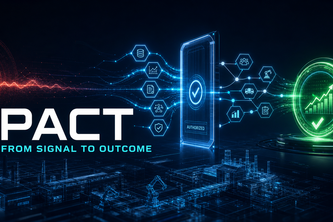
What the company appears to be: PACT is an enterprise outcome operating system that claims to connect critical business signals to verified evidence, governed decisions, authorized cross-team action, and measurable outcomes. It is described as a synthetic demonstration built for the OpenAI 2026 hackathon, using AI agents and deterministic logic to model how an AI system might manage a supply chain disruption scenario.
What changed: The project was submitted as part of a hackathon; no prior version or evolution is evidenced. The description states that it is a synthetic, fictional demonstration with no real-world integration or production use.
Single most important open question: Is there any evidence that PACT has moved beyond the hackathon stage, or that it has been tested in real enterprise environments?
Note: This analysis is based solely on the self-reported project description provided by the author. No external verification, traction data, revenue figures, customer names, or historical context are available.
What The Product Actually Is
The description states that PACT is an “Enterprise Outcome Operating System” designed to close a gap between AI insights and actionable outcomes in enterprise settings. It includes:
- A Proofline that removes non-usable inventory and validates facts.
- An Outcome Ledger that tracks the full signal-to-outcome chain.
- A two-agent architecture: one for synthesizing strategies, another for auditing them.
- A deterministic workflow involving human authorization and tooling.
- A synthetic scenario (Operation Northstar) modeling a supply chain disruption.
The system is built using React, TypeScript, Zod schemas, OpenAI Agents SDK, and Node.js. It uses GPT-5.6 for judgment tasks but not for execution or decision-making authority.
Inference: The product appears to be a conceptual framework or prototype built for demonstration purposes, not a production-ready system.
Positioning & Claim Evolution
The description states that PACT aims to make AI accountable for results—not just answers. It positions itself as an alternative to enterprise AI that ends at recommendations or task lists, by introducing:
- Verified evidence
- Independent challenge
- Human authorization
- Coordinated action
- Measurable outcomes
It also claims to be a “governed outcome operating system,” suggesting it is not just a tool but a structured approach to managing business outcomes through AI.
Inference: The positioning reflects an attempt to differentiate from generic AI tools by emphasizing governance, accountability, and structured workflows. However, the claim of real-world application or adoption is not evidenced.
Target Customer & ICP
The description implies that PACT targets enterprise organizations dealing with complex, cross-functional business outcomes. It is described as an “Enterprise Outcome Operating System,” suggesting it is built for large-scale, regulated environments.
It references:
- ERP systems
- Manufacturing and supply chain disruptions
- Strategic customers
- Cross-functional teams (Procurement, Quality, Finance, etc.)
Inference: The ICP appears to be enterprise organizations with complex, multi-team workflows and a need for accountability in AI-driven decision-making. However, no specific customer segments or personas are named.
Business Model & Pricing Evidence
No business model or pricing information is provided in the description.
Not evidenced
Technical & Delivery Signals
The system is built using:
- Frontend: React, TypeScript
- Backend: Node.js
- AI Tools: OpenAI Agents SDK, GPT-5.6
- Validation: Zod schemas
- Workflow Logic: Deterministic code for policy enforcement
- Tooling: Synthetic MCP server with narrow-scoped tools
- Architecture: Two-agent separation-of-duties model (Outcome Lead + Auditor)
- Safety Mechanisms: Checkpoints, trace IDs, fail-closed states
Inference: The architecture is described as intentional and secure, with a focus on deterministic logic and human-in-the-loop controls. However, no evidence of deployment, scalability, or integration into real systems.
Traction & Maturity Signals
The project is described as a synthetic, fictional demonstration built for the OpenAI 2026 hackathon. It explicitly states:
- All data, tools, and outcomes are synthetic.
- No real-world integration or production use.
- No external communications or causal impact claimed.
Not evidenced: There is no evidence of traction, revenue, customers, or adoption beyond the hackathon submission.
Competitive Context
The description does not name specific competitors. However, it positions PACT as a response to:
- Generic AI tools that end at recommendations
- KPI dashboards
- AI systems without accountability or governance
It implies a space where enterprise AI is used for decision-making but lacks structured outcomes and human oversight.
Inference: PACT appears to be positioned in the emerging market of “trustworthy AI” or “governed AI,” which may overlap with AI governance platforms, workflow automation tools, or enterprise AI platforms. No direct competitors are named.
Open Questions & Risks
- No real-world use: The system is entirely synthetic and not connected to any production systems.
- Unproven scalability: No evidence of deployment beyond a hackathon.
- Unclear transition path: The description ends with “what’s next” but does not show progress toward real-world implementation.
- Limited team size: Only one team member is listed, raising questions about execution capacity.
- No commercial viability: No pricing, business model or revenue data.
Inference: The project is at a very early stage and lacks evidence of commercial readiness or traction.
Questions the description leaves open
- What is the transition plan from this hackathon prototype to a real enterprise product?
- Has there been any testing with actual enterprise users or teams?
- How does PACT handle data privacy, governance, and compliance in real-world settings?
- Are there any plans for integrating with existing ERP or business systems?
- What are the key assumptions about AI behavior that PACT relies on, and how are they validated?
- Is there a roadmap for moving beyond synthetic scenarios to real-world use cases?
Overall Assessment
The description indicates that PACT is a conceptual prototype built for a hackathon. It is not evidenced to have moved beyond the demonstration stage or to be in production.
Confidence Level: Low
Assessment: Not ready for investment or partnership at this time. The project shows strong conceptual thinking and architectural design, but lacks evidence of traction, real-world testing, or commercial viability.
User Stories BotA demo video on every pull request
Get a demo video on every new feature
GitHub App that watches your pull requests and records a narrated, captioned demo.
Save time on demo prep and make informed decisions faster with a video walkthrough of every new feature.
Source
Submitted to the OpenAI 2026 hackathon on Devpost. Project home on Devpost. Back to the full gallery on Devpost.
This competitive analysis was produced by top-founders.com (opens in a new tab)
Generated by a language model from this project's public Devpost page — its tagline, the author's own write-up and any built-with tags listed there — as captured in August 2026. Short quotations are the author's words. It is an opinion on the idea as a business, not on the people behind it, and it reflects the description as published then. If the project has moved on, request a correction below. The analysis is not independent research and contains no verified traction, revenue or customer data.
An independent guide by KFG International LLC — not affiliated with, endorsed by, or connected to Devpost or OpenAI.