

Archive position — measured, not model output
1 like on Devpost
505 of the 7,850 archived projects have more likes, and 1,758 share exactly 1 — so this project's #1,593 place in the like-ranked listing is a tie-break inside that group, not a ranking.
Projects (log scale)
Likes on Devpost. ▲ marks this project's group.
Show the figures
| Likes | Projects | Share of archive |
|---|---|---|
| 0 | 5,587 | 71.2% |
| 1 | 1,758 | 22.4% |
| 2 | 284 | 3.6% |
| 3–4 | 132 | 1.7% |
| 5–9 | 75 | 1.0% |
| 10+ | 14 | 0.2% |
 User Stories BotA demo video on every pull request
Get a demo video on every new feature
GitHub App that watches your pull requests and records a narrated, captioned demo.
Save time on demo prep and make informed decisions faster with a video walkthrough of every new feature.
Executive Summary
What the company appears to be
Oplanner is a self-reported clinic-management platform built for traveling dental specialists. The author states it was developed to help his wife, an endodontist, manage patient records, appointments, payments, and invoicing across multiple clinics using a digital system instead of paper notes.
What changed
The project began as a personal solution to a problem faced by the founder’s wife. It evolved into a potential platform for mobile healthcare professionals beyond dentistry, according to the author's own account.
Single most important open question — the commercial due-diligence read
Is there evidence of real-world adoption or traction from users outside the founder's immediate circle? The description contains no data on customers, revenue, usage metrics, or product-market fit beyond the founder’s personal experience and narrative.
What The Product Actually Is
The description states that Oplanner is a clinic-management platform designed for traveling dental specialists. It includes features such as:
- Patient records and treatment history
- Dental appointments and follow-ups
- Multiple clinic locations
- Digital odontograms
- Payment tracking
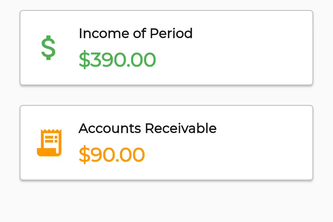
- Income reports by clinic and date
- Accounts receivable
- Google Calendar synchronization
- Appointment reminders
- Ecuadorian electronic invoicing
It is built with Flutter and Dart for cross-platform support, and uses Firebase for authentication and data storage. A TypeScript backend hosted on Vercel handles Ecuadorian electronic invoicing.
Inference The product appears to be a single-developer MVP focused on solving specific administrative challenges in dental practices, particularly those involving mobility across multiple clinics.
Positioning & Claim Evolution
The author claims Oplanner was built after observing his wife’s struggle with paper-based systems. It evolved from a personal tool into a broader solution for mobile healthcare professionals.
Claim
The platform aims to make repetitive administrative tasks feel more human through small UI enhancements like animations and sound effects.
Inference The positioning is rooted in empathy-driven development rather than market research or competitive analysis. The evolution toward a general-purpose platform for mobile health workers suggests a vision of scalability, but no evidence supports this beyond the author’s narrative.
Target Customer & ICP
The description states that Oplanner was initially built for traveling dental specialists — specifically endodontists who work across multiple clinics and cities.
Claim
The target customer is someone who moves between locations and needs to track patients, appointments, payments, and financial reporting in a centralized way.
Inference The initial ICP appears to be a niche segment within the dental industry. The author later expands the scope to include other mobile healthcare professionals (doctors, veterinarians, therapists), but no evidence supports adoption or validation of this broader market.
Business Model & Pricing Evidence
There is no mention of pricing models, monetization strategies, or business model details in the description.
Claim
The product is described as a tool for managing clinic operations digitally, but there is no indication of how it will be sold or whether it will charge users.
Inference No evidence exists to determine if Oplanner intends to operate as a SaaS platform, freemium service, or another model. Pricing and revenue streams are not described.
Technical & Delivery Signals
The project was built using:
- Frontend: Flutter and Dart
- Backend: Firebase (Cloud Firestore, Authentication), Vercel-hosted TypeScript backend
- Features: Calendar sync, financial dashboards, electronic invoicing for Ecuador
- Development approach: Single developer with no formal software engineering background
Claim
The author emphasizes learning practical development skills through building the app and improving it over time.
Inference Technical delivery shows a strong focus on functionality and usability for a specific use case. However, there is no evidence of scalability planning, performance testing, or production hardening beyond what the developer has personally experienced.
Traction & Maturity Signals
The description does not provide any data on:
- Number of users
- Customer retention rates
- Revenue or monetization
- Product usage metrics
- Feedback from early adopters
Claim
The author says he is still learning every day and that the app continues to evolve.
Inference There is no evidence of traction, adoption, or maturity beyond the founder’s own experience. No third-party validation or user feedback is included.
Competitive Context
There is no mention of competitors or competitive landscape in the description.
Claim
The author notes that the problem isn’t unique to dentistry and could apply to other mobile professionals.
Inference While the idea may have broader applicability, there is no evidence of existing solutions in this space or how Oplanner differentiates from them. No competitive analysis or market positioning relative to others is provided.
Open Questions & Risks
- Single developer: The entire team consists of one person (Carlos Cardenas), which raises concerns about scalability and long-term maintenance.
- No commercial traction: No evidence of customers, revenue, or adoption beyond the founder’s wife.
- Unverified claims: All descriptions are self-reported and unverified; no external validation exists.
- Limited scope: The platform is currently focused on dental practices in Ecuador, with unclear plans for expansion.
- Lack of business model clarity: No indication of how the product will generate revenue or sustain itself.
Questions the description leaves open
- Who are your actual users beyond the founder’s wife? Have you spoken to other traveling healthcare professionals?
- How do you plan to scale beyond a single developer and personal development cycle?
- What is the current status of the Ecuadorian electronic invoicing integration? Is it live or still in testing?
- Are there any plans for monetization, licensing, or subscription models?
- What are the key technical challenges that remain unresolved or under-tested?
- How do you intend to validate demand outside of your own experience and network?
Overall Assessment
Not evidenced
There is no evidence of revenue, customer base, traction, or commercial viability beyond the founder’s personal account. The project appears to be a prototype built by one individual with limited external validation.
The author describes an empathetic, hands-on approach to solving a real-world problem, but this does not equate to market readiness or investment potential without further evidence of adoption, scalability, or business model clarity.
This is a self-reported, unverified narrative. Any commercial assessment must be based on additional data not present in the description provided.
User Stories BotA demo video on every pull request
Get a demo video on every new feature
GitHub App that watches your pull requests and records a narrated, captioned demo.
Save time on demo prep and make informed decisions faster with a video walkthrough of every new feature.
Source
Submitted to the OpenAI 2026 hackathon on Devpost. Project home on Devpost. Back to the full gallery on Devpost.
This competitive analysis was produced by top-founders.com (opens in a new tab)
Generated by a language model from this project's public Devpost page — its tagline, the author's own write-up and any built-with tags listed there — as captured in August 2026. Short quotations are the author's words. It is an opinion on the idea as a business, not on the people behind it, and it reflects the description as published then. If the project has moved on, request a correction below. The analysis is not independent research and contains no verified traction, revenue or customer data.
An independent guide by KFG International LLC — not affiliated with, endorsed by, or connected to Devpost or OpenAI.