

Archive position — measured, not model output
0 likes on Devpost
2,263 of the 7,850 archived projects have more likes, and 5,587 share exactly 0 — so this project's #5,678 place in the like-ranked listing is a tie-break inside that group, not a ranking.
Projects (log scale)
Likes on Devpost. ▲ marks this project's group.
Show the figures
| Likes | Projects | Share of archive |
|---|---|---|
| 0 | 5,587 | 71.2% |
| 1 | 1,758 | 22.4% |
| 2 | 284 | 3.6% |
| 3–4 | 132 | 1.7% |
| 5–9 | 75 | 1.0% |
| 10+ | 14 | 0.2% |
 User Stories BotA demo video on every pull request
Get a demo video on every new feature
GitHub App that watches your pull requests and records a narrated, captioned demo.
Save time on demo prep and make informed decisions faster with a video walkthrough of every new feature.
Executive Summary
What the company appears to be
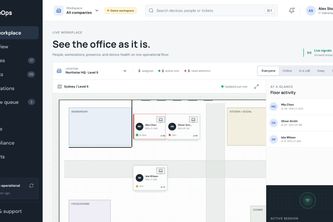
OneOps, as described by its author, is a local-first IT operations control plane for multi-company teams. It presents an interactive workplace map that unifies people, devices, tickets, compliance, and remote-support presence. The system aims to reduce manual reconstruction of operational data by offering a single interface for IT operators.
What changed
The project was built during the OpenAI 2026 hackathon. It includes a functional prototype with an interactive desktop and mobile map, multi-company scope switching, unified device records, global search, prioritized service desk queue, connector health monitoring, and deterministic reconciliation with source provenance.
Single most important open question
Is there evidence of traction or early adoption beyond the author’s own testing and development environment?
Note: This analysis is based entirely on self-reported information from the project description provided by the caller. No external verification or historical data is available. All claims are treated as stated by the author, not confirmed.
What The Product Actually Is
The description states that OneOps is a local-first IT operations control plane for multi-company teams. It presents an interactive desktop and mobile workplace map, where each desk shows employee details, computer status, live presence, session duration, compliance state, and risk.
It includes:
- An interactive desktop and mobile workplace map
- Multi-company scope switching
- Unified device records and global search
- A prioritized service desk queue
- Connector health, stale-data states, and manual refresh
- Microsoft Graph presence and ScreenConnect bridge adapters
- Deterministic reconciliation with source provenance
- A review workflow for ambiguous identity matches
Inference: The product appears to be a hybrid of operational dashboard and data unification tool, designed for IT teams managing distributed or multi-tenant environments.
Positioning & Claim Evolution
The author states that OneOps was inspired by the need to reduce manual reconstruction of support case data across multiple systems like ScreenConnect, Microsoft Intune, Entra, Atera, and internal inventories. The goal is to answer human questions such as “who is sitting where” and “does it need attention?”
It positions itself as a control plane that turns the office floor plan into an operational interface.
Claim: OneOps aims to unify fragmented IT data sources into one view without erasing underlying systems.
Inference: The positioning reflects a move toward reducing cognitive load for IT operators, though it does not claim to be a full enterprise solution or platform.
Target Customer & ICP
The description indicates that OneOps targets multi-company teams in IT environments. It is built for IT operators, workplace leads, and mobile service desk users who manage physical devices and remote support workflows.
Claim: The intended users are IT professionals working across multiple companies or tenants.
Inference: The target customer likely operates within complex, multi-tenant environments where visibility into device presence and compliance is critical but fragmented.
Business Model & Pricing Evidence
There is no evidence of pricing, revenue models, or monetization strategy in the description. The project is presented as a hackathon prototype with synthetic datasets and read-only connectors.
Not evidenced: No indication of how OneOps would generate value or income from its functionality.
Technical & Delivery Signals
The system uses:
- Frontend: React, TypeScript
- Backend: Express.js
- Tools: Codex (GPT-5.6), Docker, Microsoft Graph, ScreenConnect
- Features include:
- Shared in-flight requests
- TTL caching
- Stale-on-error fallback
- Sanitised diagnostics
- Explicit live/demo modes
- Deterministic reconciliation with source provenance
Inference: The architecture is designed for operational robustness and traceability, emphasizing safety over speed or scale.
Traction & Maturity Signals
The project includes:
- A complete spatial-to-incident journey (e.g., from desk A-04 to a BitLocker ticket)
- Seventeen automated tests
- Six user-testing rounds
- Responsive design for mobile viewport
- Public v1.1.1 release
- Docker production build
However, there is no evidence of:
- Real-world deployment
- Customer adoption
- Revenue or usage metrics
- Integration with real enterprise systems beyond the hackathon setup
Not evidenced: No signs of traction or product-market fit beyond internal testing.
Competitive Context
The author does not reference competitors directly. However, the described functionality overlaps with:
- IT asset management platforms
- Unified helpdesk tools
- Workplace experience platforms
- Remote support systems (e.g., ScreenConnect, Microsoft Intune)
Inference: OneOps may compete with or complement existing tools in the IT operations and remote support space, but no competitive positioning is stated.
Open Questions & Risks
Key risks include:
- The project is a hackathon prototype with synthetic data
- No real-world integration or customer feedback beyond user testing
- Limited team size (1 person)
- Read-only connectors and disabled write actions suggest early-stage development
- Lack of evidence for scalability, security, or audit capabilities
Open question: Absence of any commercial or operational traction raises questions about viability as a product.
Questions the description leaves open
- What real-world environments have you tested OneOps in?
- How do you plan to handle integration with non-Microsoft or non-ScreenConnect systems?
- Are there any known limitations in reconciliation accuracy or performance at scale?
- What is the path from prototype to production-ready deployment?
- Have you identified potential enterprise customers or use cases beyond the current scope?
Overall Assessment
Not evidenced: There is no evidence of revenue, customer base, traction, or market validation.
Assessment: As a hackathon prototype with synthetic data and no commercial activity, OneOps does not yet demonstrate product-market fit or scalability. It may be an interesting concept for further development but lacks the signals typically required for investment or partnership consideration at this stage.
User Stories BotA demo video on every pull request
Get a demo video on every new feature
GitHub App that watches your pull requests and records a narrated, captioned demo.
Save time on demo prep and make informed decisions faster with a video walkthrough of every new feature.
Source
Submitted to the OpenAI 2026 hackathon on Devpost. Project home on Devpost. Back to the full gallery on Devpost.
This competitive analysis was produced by top-founders.com (opens in a new tab)
Generated by a language model from this project's public Devpost page — its tagline, the author's own write-up and any built-with tags listed there — as captured in August 2026. Short quotations are the author's words. It is an opinion on the idea as a business, not on the people behind it, and it reflects the description as published then. If the project has moved on, request a correction below. The analysis is not independent research and contains no verified traction, revenue or customer data.
An independent guide by KFG International LLC — not affiliated with, endorsed by, or connected to Devpost or OpenAI.