

Archive position — measured, not model output
0 likes on Devpost
2,263 of the 7,850 archived projects have more likes, and 5,587 share exactly 0 — so this project's #5,675 place in the like-ranked listing is a tie-break inside that group, not a ranking.
Projects (log scale)
Likes on Devpost. ▲ marks this project's group.
Show the figures
| Likes | Projects | Share of archive |
|---|---|---|
| 0 | 5,587 | 71.2% |
| 1 | 1,758 | 22.4% |
| 2 | 284 | 3.6% |
| 3–4 | 132 | 1.7% |
| 5–9 | 75 | 1.0% |
| 10+ | 14 | 0.2% |
 User Stories BotA demo video on every pull request
Get a demo video on every new feature
GitHub App that watches your pull requests and records a narrated, captioned demo.
Save time on demo prep and make informed decisions faster with a video walkthrough of every new feature.
Executive Summary
What the company appears to be
OneDish is a self-reported personal meal recommendation tool built as a hackathon project. It claims to make one clear decision from a set of options based on user preferences and constraints, using deterministic logic and optional AI interpretation.
What changed
The author describes building an app that moves away from list-based recommendations toward a single-choice interface with transparency in its elimination process. It uses local data storage, deterministic algorithms, and optional AI for natural language interpretation.
The single most important open question
Is there any evidence of user adoption, revenue, or traction beyond the demo project? The description states no live integrations or customers exist yet.
What The Product Actually Is
- The description states OneDish is a meal recommendation tool.
- It filters a catalog of 90 demo dishes from ten fictional restaurants.
- It uses user inputs like budget, dietary restrictions, craving, and recent meals to make one decision.
- It shows the elimination process: what was removed, which constraints applied, and why the final dish won.
- The app stores preferences and history locally using IndexedDB through Dexie.js.
- It is a Progressive Web App (PWA) built with React, TypeScript, and Vite.
- It uses OpenAI's Responses API for interpreting natural language into structured fields but does not use AI to choose or rank dishes.
- The backend is optional, built with FastAPI and Pydantic, and can integrate with Foursquare and OpenStreetMap for location data.
- It includes a "Taste Orbit" feature that visualizes meal history as an interactive preference map.
- It has a privacy page showing where each type of data goes, what stays on the device, and what users can delete.
Confidence High — based on detailed self-reported technical and functional description.
Positioning & Claim Evolution
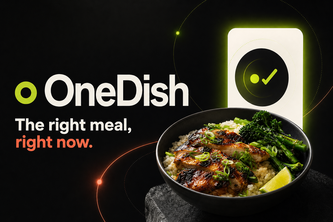
- The tagline is: “One decision. The right meal, right now.”
- The author states that most recommendation products respond to choice overload with another list.
- OneDish aims to offer the opposite: one dish with a clear explanation of why it survived.
- It positions itself as a tool that makes decisions transparent and deterministic rather than opaque or AI-driven.
- It emphasizes trust in single recommendations over lists, stating “A single recommendation requires more trust than a list.”
- The author claims that AI is most useful at the boundary between human language and structured software — interpreting ambiguous inputs like “comfort food, but lighter” — while deterministic code enforces strict rules such as allergen exclusions.
- It also positions itself on privacy by integrating explanations directly into the interface.
Confidence Medium — claims are self-reported and not independently verified; no evidence of market positioning or customer feedback.
Target Customer & ICP
- The description does not name specific target customers or personas.
- It implies a user base that is tired at 8 p.m., overwhelmed by choice, and looking for clarity in meal decisions.
- It targets individuals who value transparency in how recommendations are made.
- It may appeal to people with dietary restrictions or those seeking consistency in their food choices.
- The app supports offline use and local data storage, suggesting a focus on personal usage rather than enterprise or B2B.
Confidence Low — no evidence of defined customer segments or ICP beyond general user behavior assumptions.
Business Model & Pricing Evidence
- Not evidenced.
- No mention of pricing models, monetization strategies, or revenue streams in the description.
- The project is described as a demo with fictional restaurants and versioned menu data.
- It does not appear to have any live integrations or commercial partnerships.
Confidence Very low — no business model or pricing information provided.
Technical & Delivery Signals
- Built as a PWA using React, TypeScript, Vite.
- Stores user data locally in IndexedDB via Dexie.js.
- Uses deterministic logic for decision-making and explanations.
- Integrates OpenAI’s Responses API for natural language interpretation only — not for ranking or selecting dishes.
- Optional FastAPI backend with Pydantic validation.
- Can integrate with Foursquare and OpenStreetMap for location data.
- Includes animations to explain the elimination process without pretending to be AI thinking.
- Designed to work offline after first load.
- Supports mobile layout and bilingual content.
Confidence High — detailed technical architecture provided by the author.
Traction & Maturity Signals
- Not evidenced.
- The project is described as a hackathon submission (OpenAI 2026).
- It uses fictional restaurants and versioned menu data.
- No mention of live users, customer feedback, or adoption metrics.
- No evidence of revenue, funding rounds, headcount, or product maturity beyond the demo.
Confidence Very low — no traction or maturity indicators available.
Competitive Context
- Not evidenced.
- The description does not reference competitors or market positioning.
- It does not describe how it compares to existing meal recommendation apps or services.
- No mention of competitive advantages or differentiation strategies.
Confidence Very low — no competitive context provided.
Open Questions & Risks
- No commercial traction or revenue: The project is a demo with fictional data and no live integrations.
- Single-person team: Only one member (Yanhao Chen) is listed, which raises questions about scalability and execution capacity.
- Limited scope: It currently works only with a fixed catalog of 90 dishes from ten fictional restaurants.
- Unproven AI integration: While it uses OpenAI’s API, it does not appear to use AI for core decision-making or ranking.
- Privacy as UI feature: This is an innovative approach but untested in real-world usage.
- Hackathon project: Not a product in development, but a prototype submitted for competition.
Confidence Medium — risks are inferred from lack of evidence and project nature.
Questions the description leaves open
- What is the plan to transition from demo mode with fictional data to live menu integrations?
- How do you intend to scale beyond a single developer?
- Have you tested this with real users or gathered feedback on usability?
- Are there any plans for monetization or revenue generation?
- What are your thoughts on privacy compliance and data handling in a production environment?
- Is there any intention to expand beyond meal recommendations into related lifestyle or health domains?
Confidence Medium — these questions are based on the absence of evidence around traction, scalability, and business model.
Overall Assessment
- Not evidenced.
- The project is described as a hackathon submission with no commercial activity or traction.
- It lacks any indication of revenue, customers, or product-market fit.
- There is no evidence of funding, partnerships, or team expansion beyond one person.
- The author states the goal will stay the same: “stop browsing and eat one good meal,” which suggests a narrow focus without clear growth potential.
Confidence Very low — no basis for investment or partnership assessment due to lack of commercial evidence.
User Stories BotA demo video on every pull request
Get a demo video on every new feature
GitHub App that watches your pull requests and records a narrated, captioned demo.
Save time on demo prep and make informed decisions faster with a video walkthrough of every new feature.
Source
Submitted to the OpenAI 2026 hackathon on Devpost. Project home on Devpost. Back to the full gallery on Devpost.
This competitive analysis was produced by top-founders.com (opens in a new tab)
Generated by a language model from this project's public Devpost page — its tagline, the author's own write-up and any built-with tags listed there — as captured in August 2026. Short quotations are the author's words. It is an opinion on the idea as a business, not on the people behind it, and it reflects the description as published then. If the project has moved on, request a correction below. The analysis is not independent research and contains no verified traction, revenue or customer data.
An independent guide by KFG International LLC — not affiliated with, endorsed by, or connected to Devpost or OpenAI.