

Archive position — measured, not model output
0 likes on Devpost
2,263 of the 7,850 archived projects have more likes, and 5,587 share exactly 0 — so this project's #5,570 place in the like-ranked listing is a tie-break inside that group, not a ranking.
Projects (log scale)
Likes on Devpost. ▲ marks this project's group.
Show the figures
| Likes | Projects | Share of archive |
|---|---|---|
| 0 | 5,587 | 71.2% |
| 1 | 1,758 | 22.4% |
| 2 | 284 | 3.6% |
| 3–4 | 132 | 1.7% |
| 5–9 | 75 | 1.0% |
| 10+ | 14 | 0.2% |
 User Stories BotA demo video on every pull request
Get a demo video on every new feature
GitHub App that watches your pull requests and records a narrated, captioned demo.
Save time on demo prep and make informed decisions faster with a video walkthrough of every new feature.
Executive Summary
What the company appears to be
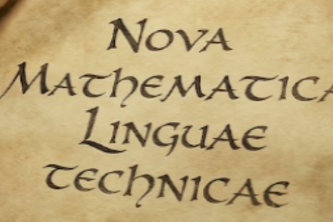
NMLT (Nova Mathematica · Linguae · Technicae) is a self-reported research project that describes itself as an investigation into new mathematical foundations, formal languages, and techniques for trustworthy computation. It is presented as a repository and verification engine for formal systems, built using tools like Lean 4, Rust, Python, and TLA+.
What changed
The author states this project was developed in partnership with GPT-5.6 inside the OpenAI Codex CLI, using only an MSI Katana laptop. It is described as a proof-of-concept or pre-alpha research effort focused on building a formal language environment for verifiable AI systems.
Single most important open question
Is there any evidence of traction, revenue, or adoption beyond the author’s own description and self-reported development process?
Note: This analysis is based entirely on the self-reported project description provided by the caller. No external corroboration, funding data, customer names, or performance metrics are available.
What The Product Actually Is
The description states that NMLT is a research repository investigating candidate mathematical foundations, developing formal languages, and testing evidence-directed techniques. It builds an end-to-end laboratory and verification engine for trustworthy computation.
Key components mentioned include:
- A lossless parser, syntax tree recovery, formatter, resolver, typed HIR, explicit core, and command-line interface.
- Deterministic finite-state model checking with reproducible witnesses.
- Temporal, fairness, stuttering, hiding, refinement, and runtime-journal experiments.
- Evidence artifacts bound to exact sources, tools, limits, and certificates.
- Independent checking paths that reject stale or forged results.
- Open-system composition with assumptions, guarantees, synchronous wiring, affine capabilities, resources, grades, and invariant transport.
- A bounded dependency-free Rust validation kernel translated into Lean 4 via Charon/Aeneas.
- Comparison models in TLA+, Quint, and P.
The system is described as being built using a direct pair-programming approach with GPT-5.6 inside the OpenAI Codex CLI.
Inference: The product appears to be an experimental formal verification platform aimed at creating provably trustworthy computation environments for AI systems. It is not a commercial tool but rather a research prototype.
Positioning & Claim Evolution
The author positions NMLT as a response to limitations in current formal languages and frameworks, particularly those used in AI development. The project claims to address the need for "new mathematics, new languages, and new techniques" to support autonomous agentic fleets and superintelligent systems.
It frames its goal as:
- Building behavior-first, evidence-carrying foundations.
- Turning raw AI generation into provably trustworthy computation.
- Creating a system that goes beyond legacy tools or probabilistic guessing.
The project also emphasizes:
- Mechanized proof extraction from Rust to Lean 4.
- Unified CI pipeline for cross-verification across multiple formal systems.
- Honest reporting of verification limits (bounded model checking, unknown claims).
Claim: NMLT is positioned as a foundational research effort toward trustworthy AI computation.
Not evidenced: No indication of market positioning beyond self-description or prior use cases.
Target Customer & ICP
The description does not identify specific target customers or personas. However, the author implies that the intended audience includes:
- Researchers working in formal verification.
- Developers building AI systems requiring high levels of trust and reproducibility.
- Teams interested in advancing mathematical foundations for AI reliability.
There is no mention of end-users, enterprise clients, or product-market fit beyond the author’s own use case.
Inference: The ICP likely includes academic researchers, formal verification engineers, and early-stage AI developers focused on safety.
Not evidenced: No explicit customer segments, personas, or buyer journeys are described.
Business Model & Pricing Evidence
There is no evidence of a business model or pricing structure in the description. The project is described as a research repository with no indication of monetization, licensing, or commercial offerings.
Not evidenced: No revenue streams, pricing plans, or commercial strategies are mentioned.
Technical & Delivery Signals
The project uses:
- Rust for core validation kernels.
- Lean 4 for mechanized proofs.
- Python for verification readback scripts and JSON Schema validators.
- TLA+, Quint, and P for model checking.
- gnuplot, makefile, shell for build infrastructure.
It includes:
- A lossless compiler and core engine.
- A deterministic finite-state BFS model checker with reproducible counterexamples.
- Cross-verified formal models across multiple systems.
- CI pipeline integrating Rust, Lean 4, Python, TLC, and P.
The author reports:
- Successful extraction of Rust execution paths to Lean 4 via Charon/Aeneas.
- Zero-trust access control theorems proven in Lean 4.
- Unified CI pipeline achieving 100% clean passing tests across all components.
Inference: The technical stack suggests a strong focus on formal methods, reproducibility, and cross-system verification.
Not evidenced: No evidence of production deployment, scalability, or integration with existing platforms.
Traction & Maturity Signals
The project is described as:
- Pre-alpha research.
- Built in partnership with GPT-5.6 inside Codex CLI.
- Developed using only an MSI Katana laptop.
- Not yet integrated into any live systems or workflows.
It includes:
- A working prototype of a formal language environment.
- Mechanized proofs and model checking capabilities.
- Honest reporting of verification boundaries (bounded model checking).
Not evidenced: No evidence of user adoption, customer feedback, revenue, or product-market fit.
Absence of evidence: No mention of users, customers, or real-world applications.
Competitive Context
The author references:
- TLA+ and other formal languages.
- Existing frameworks for AI reliability.
- The need to move beyond legacy tools.
It is implied that NMLT aims to improve upon current approaches in formal verification and trustworthy computation. However, there is no explicit comparison with competitors or market positioning.
Inference: NMLT operates in the space of formal verification and trustworthiness for AI systems, potentially competing with tools like TLA+, P, or Quint.
Not evidenced: No competitive analysis, benchmarking, or differentiation from existing tools.
Open Questions & Risks
- Unproven commercial viability: The project is described as pre-alpha research with no evidence of traction or monetization.
- Highly technical and niche domain: Formal verification and mathematical foundations are not mainstream, limiting potential user base.
- Dependency on proprietary AI tools: Reliance on GPT-5.6 inside Codex CLI may limit scalability or reproducibility outside the author’s environment.
- No evidence of real-world application: The project is described as a proof-of-concept, with no indication of integration into live systems.
- Single-person team: With only one member listed, there are concerns about long-term sustainability and execution capacity.
Inference: Risk of misalignment between research goals and commercial demand.
Not evidenced: No evidence of risks being mitigated or addressed.
Questions the description leaves open
- What specific problems in AI trustworthiness or formal verification are you trying to solve, and how do you plan to validate that solution?
- How does NMLT differ from existing tools like TLA+, P, or Quint?
- Are there any early adopters or partners who have expressed interest in using this system?
- What is the roadmap for transitioning from research to a productized offering?
- How do you plan to scale beyond the current single-developer model?
- What are the key assumptions behind your thesis on "new mathematics, languages, and techniques"?
- Have you considered how this system might be integrated into real-world AI agent workflows?
Overall Assessment
The project is described as a pre-alpha research effort focused on formal verification for trustworthy computation. It is not evidenced to have any commercial traction, revenue, or customer base.
Assessment: Not suitable for investment or partnership at this stage.
Confidence level: Low — based entirely on self-reported description with no external validation or evidence of adoption or monetization.
User Stories BotA demo video on every pull request
Get a demo video on every new feature
GitHub App that watches your pull requests and records a narrated, captioned demo.
Save time on demo prep and make informed decisions faster with a video walkthrough of every new feature.
Source
Submitted to the OpenAI 2026 hackathon on Devpost. Project home on Devpost. Back to the full gallery on Devpost.
This competitive analysis was produced by top-founders.com (opens in a new tab)
Generated by a language model from this project's public Devpost page — its tagline, the author's own write-up and any built-with tags listed there — as captured in August 2026. Short quotations are the author's words. It is an opinion on the idea as a business, not on the people behind it, and it reflects the description as published then. If the project has moved on, request a correction below. The analysis is not independent research and contains no verified traction, revenue or customer data.
An independent guide by KFG International LLC — not affiliated with, endorsed by, or connected to Devpost or OpenAI.