

Archive position — measured, not model output
0 likes on Devpost
2,263 of the 7,850 archived projects have more likes, and 5,587 share exactly 0 — so this project's #5,566 place in the like-ranked listing is a tie-break inside that group, not a ranking.
Projects (log scale)
Likes on Devpost. ▲ marks this project's group.
Show the figures
| Likes | Projects | Share of archive |
|---|---|---|
| 0 | 5,587 | 71.2% |
| 1 | 1,758 | 22.4% |
| 2 | 284 | 3.6% |
| 3–4 | 132 | 1.7% |
| 5–9 | 75 | 1.0% |
| 10+ | 14 | 0.2% |
 User Stories BotA demo video on every pull request
Get a demo video on every new feature
GitHub App that watches your pull requests and records a narrated, captioned demo.
Save time on demo prep and make informed decisions faster with a video walkthrough of every new feature.
Executive Summary
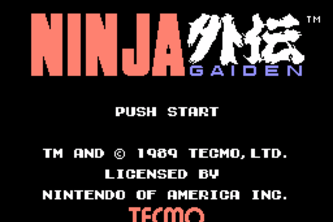
The company appears to be a single-person project recreating the classic NES game Ninja Gaiden using Python and Pygame. The author states this is a ROM-accurate remake with modern controls, aiming to preserve the original's feel while making it easier to study and extend. It was submitted to the OpenAI 2026 hackathon.
What changed
The project is a self-contained recreation of an existing game, not a new product or service. The author describes it as a "remake" that focuses on technical accuracy and modern presentation.
The single most important open question
Is this project intended to be a commercial product, or is it purely a hobbyist/educational effort? The description does not indicate any monetization strategy, revenue, or customer base beyond the author's own development.
This analysis is based entirely on the self-reported, unverified account provided by the author. No evidence of traction, customers, revenue, funding, or commercial activity is presented.
What The Product Actually Is
The description states:
- "Ninja Gaiden: The Dragon Sword of Destiny" is a remake of the original NES game Ninja Gaiden.
- It uses Python and Pygame, with hand-authored JSON level data, ripped sprite assets, decoded ROM information, and Mesen emulator verification.
- It recreates stages, enemies, cutscenes, physics, audio, collisions, sprite animation, and stage transitions from the original.
- It adds widescreen support and configurable controls.
- The project is described as a ROM-accurate recreation, with focused regression tests to match original behavior.
Inference: This is a technical recreation of an existing game, not a new product or service. It appears to be a hobbyist or educational effort rather than a commercial venture.
Positioning & Claim Evolution
The description states:
- The project aims to preserve the NES character of the original game.
- It seeks to make the systems easier to study and extend.
- It is described as a "faithful, near 1:1 recreation" with ROM-accurate combat, enemies, cutscenes, music, collisions, and modern controls.
Inference: The positioning is that of a technical recreation, not a commercial product. The author frames it as a way to study and extend the original game's systems, rather than to sell or monetize.
Target Customer & ICP
The description does not state who the target customer is.
- It is a single-person project.
- No customers, users, or personas are mentioned.
- The author states it was submitted to a hackathon, suggesting it may be for educational or demonstration purposes.
Not evidenced: No indication of target customer segment, user base, or commercial audience.
Business Model & Pricing Evidence
The description does not provide any evidence of:
- A business model
- Pricing strategy
- Revenue streams
- Monetization approach
Inference: The project is not described as a commercial product. It appears to be a hobbyist or educational effort, with no indication of monetization.
Technical & Delivery Signals
The description states:
- Built with Python and Pygame
- Uses hand-authored JSON level data
- Uses ripped sprite assets
- Uses decoded ROM information
- Uses Mesen emulator verification
- Focused regression tests compare movement, enemy spawning, collision, timing, and room transitions against the original NES behavior
Inference: The project is technically sophisticated for a single developer. It shows attention to detail in recreating original game systems.
Traction & Maturity Signals
The description does not provide evidence of:
- Revenue
- Customers
- Users
- Adoption
- Product-market fit
- Growth metrics
Not evidenced: No traction or maturity indicators are provided beyond the author's own account.
Competitive Context
The description does not mention:
- Competitors
- Market positioning
- Competitive advantages
- Industry context
Inference: The project is a remake, not a new product in a competitive market. It may be part of a broader category of retro game recreations, but no such category or competition is described.
Open Questions & Risks
The description does not indicate:
- Commercial viability
- Scalability
- Market demand
- Technical sustainability
- Legal risks (e.g., copyright)
Inference: The project is a single-person effort, likely without commercial intent. It may be at risk of being a one-off hobbyist project with no path to monetization or growth.
Questions the description leaves open
- Is this project intended to be commercialized, or is it purely educational/hobbyist?
- What are the legal implications of recreating copyrighted material (e.g., ROMs, sprites)?
- Are there any plans for monetization or distribution beyond the hackathon submission?
- How does the author intend to sustain development if this remains a solo effort?
- Is there any intention to expand beyond the original game, or is it strictly a recreation?
Overall Assessment
The description states:
- The project is a single-person effort.
- It was submitted to a hackathon.
- No evidence of revenue, customers, or commercial traction.
Inference: This is not a viable investment or partnership opportunity based on the provided information. It is a technical recreation, not a product with commercial potential or market traction. The author does not describe any intent to commercialize or scale the effort.
Not evidenced: No commercial strategy, revenue model, or growth plan are presented.
User Stories BotA demo video on every pull request
Get a demo video on every new feature
GitHub App that watches your pull requests and records a narrated, captioned demo.
Save time on demo prep and make informed decisions faster with a video walkthrough of every new feature.
Source
Submitted to the OpenAI 2026 hackathon on Devpost. Project home on Devpost. Back to the full gallery on Devpost.
This competitive analysis was produced by top-founders.com (opens in a new tab)
Generated by a language model from this project's public Devpost page — its tagline, the author's own write-up and any built-with tags listed there — as captured in August 2026. Short quotations are the author's words. It is an opinion on the idea as a business, not on the people behind it, and it reflects the description as published then. If the project has moved on, request a correction below. The analysis is not independent research and contains no verified traction, revenue or customer data.
An independent guide by KFG International LLC — not affiliated with, endorsed by, or connected to Devpost or OpenAI.