

Archive position — measured, not model output
0 likes on Devpost
2,263 of the 7,850 archived projects have more likes, and 5,587 share exactly 0 — so this project's #5,446 place in the like-ranked listing is a tie-break inside that group, not a ranking.
Projects (log scale)
Likes on Devpost. ▲ marks this project's group.
Show the figures
| Likes | Projects | Share of archive |
|---|---|---|
| 0 | 5,587 | 71.2% |
| 1 | 1,758 | 22.4% |
| 2 | 284 | 3.6% |
| 3–4 | 132 | 1.7% |
| 5–9 | 75 | 1.0% |
| 10+ | 14 | 0.2% |
 User Stories BotA demo video on every pull request
Get a demo video on every new feature
GitHub App that watches your pull requests and records a narrated, captioned demo.
Save time on demo prep and make informed decisions faster with a video walkthrough of every new feature.
Executive Summary
What the company appears to be
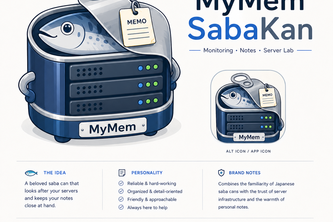
The description states that MyMem SabaKan is an AI-assisted WordPress operations control plane. It is described as a DevOps workspace that connects fragmented server operations into one traceable workflow, using AI (GPT-5.6) to guide tasks like monitoring, incident detection, SSH command execution, log analysis, and environment management.
What changed
This project was submitted to the OpenAI 2026 hackathon. It is a self-reported prototype or proof-of-concept built in a short timeframe, with no evidence of prior traction, revenue, or customer adoption.
Single most important open question
Is there any evidence that this tool has been used beyond the hackathon context, and if so, by whom? The description does not indicate whether it is being used operationally by teams or deployed in production environments.
What The Product Actually Is
The description states that MyMem SabaKan is an AI-assisted WordPress operations control plane. It is described as a DevOps workspace that:
- Monitors servers and WordPress environments
- Detects HTTP and service incidents
- Executes SSH commands across multiple servers
- Analyzes logs and command results with GPT-5.6
- Manages Incus environments and ZFS snapshots
- Preserves operational decisions and execution history in MyMem
The system is built using technologies such as TypeScript, React, Node.js, Incus, ZFS, SSH, nginx, PHP-FPM, MariaDB, WordPress, DuckDB, WebSocket, Cloudflare, and ConoHa VPS. Codex and GPT-5.6 are used for architecture, implementation, debugging, UI development, documentation, and operational knowledge generation.
Evidence
- The author states that MyMem SabaKan is an AI-guided DevOps workspace.
- It integrates with WordPress, Incus, ZFS, SSH, and other infrastructure components.
- It uses GPT-5.6 for interpreting status, proposing procedures, and analyzing results.
- The system stores operational decisions and execution history.
Inference This appears to be a prototype or hackathon project that attempts to streamline WordPress server operations using AI.
Positioning & Claim Evolution
The description states that MyMem SabaKan was inspired by the fragmentation of server operations across monitoring tools, terminals, documentation, and individual engineers' memories. It aims to connect these activities into one traceable workflow.
Evidence
- The author claims that server operations are fragmented.
- The product is positioned as an AI-assisted control plane for WordPress environments.
- It is described as a DevOps workspace that centralizes operational tasks.
Inference The positioning suggests a move toward automation and traceability in DevOps, but no evidence of prior market positioning or customer feedback is provided.
Target Customer & ICP
The description does not explicitly state the target customer or ideal customer profile (ICP). It mentions that it is for WordPress environments and server operations, but does not define who uses it or at what scale.
Evidence
- The system is built for WordPress environments.
- It supports monitoring, incident detection, SSH commands, and environment management.
- It is described as a control plane for DevOps teams managing WordPress deployments.
Inference It may target small to mid-sized WordPress hosting teams or DevOps engineers working with WordPress on virtualized infrastructure. However, no explicit customer segmentation or use case data is provided.
Business Model & Pricing Evidence
The description does not include any information about pricing, business model, or monetization strategy.
Evidence
- No mention of revenue streams, pricing tiers, or commercial licensing.
- The project was submitted to a hackathon and is described as a prototype.
Inference There is no evidence of a defined business model or pricing structure. It may be an open-source or internal tool, or one that has not yet reached commercialization.
Technical & Delivery Signals
The description states that the system uses:
- Technologies: TypeScript, React, Node.js, Incus, ZFS, SSH, nginx, PHP-FPM, MariaDB, WordPress, DuckDB, WebSocket, Cloudflare, ConoHa VPS
- AI tools: Codex and GPT-5.6
- Features: monitoring, incident detection, SSH execution, log analysis, snapshot management
Evidence
- The system integrates with Incus and ZFS for environment management.
- It uses GPT-5.6 to interpret status, propose actions, and analyze results.
- It supports multi-server SSH commands and log analysis.
Inference The project is technically ambitious and appears to be built on a stack that supports DevOps automation. However, no evidence of production deployment or scalability is provided.
Traction & Maturity Signals
The description states that the project was submitted to the OpenAI 2026 hackathon and that it reduced workflow time from three hours to thirty minutes. It also mentions future plans for approval controls, environment cloning, and shared playbooks.
Evidence
- The project is a hackathon submission.
- It claims to reduce task completion time by half.
- Future development plans are outlined.
Inference There is no evidence of real-world usage or adoption beyond the hackathon. No customer data, user feedback, or performance metrics in production are provided.
Competitive Context
The description does not mention any competitors or how MyMem SabaKan compares to existing tools in the DevOps or WordPress hosting space.
Evidence
- No reference to existing platforms or tools in this domain.
- No competitive differentiation is stated.
Inference It is unclear whether this project addresses a gap in the market or overlaps with existing solutions. No competitive analysis is provided.
Open Questions & Risks
- No traction or adoption: The product is described as a hackathon submission, with no evidence of real-world usage.
- Unproven AI integration: GPT-5.6 is used for operational tasks, but there is no demonstration of its reliability or accuracy in production contexts.
- Limited scope: It is focused on WordPress environments and Incus/ZFS, which may limit its broader applicability.
- No business model: There is no indication of how the product will be monetized or scaled.
Evidence
- The project is a hackathon submission.
- No revenue, customers, or commercial traction are mentioned.
- AI integration is described but not validated in practice.
Questions the description leaves open
- Has this tool been used operationally beyond the hackathon? If so, by whom and for how long?
- What specific operational tasks does it automate, and how does it ensure accuracy of AI-driven decisions?
- Are there any known limitations or edge cases in its current implementation?
- How is the system deployed — on-premises, cloud, or hybrid?
- What are the plans for scalability, security, and integration with other DevOps tools?
- Is there a plan to monetize this tool, and if so, what is the business model?
Overall Assessment
Not evidenced.
The description provides no evidence of revenue, customers, or traction beyond a hackathon submission. The project appears to be a prototype or proof-of-concept with no indication of commercial viability or market readiness.
Confidence Low This analysis is based entirely on self-reported information and lacks any external validation or data on adoption, performance, or business outcomes.
User Stories BotA demo video on every pull request
Get a demo video on every new feature
GitHub App that watches your pull requests and records a narrated, captioned demo.
Save time on demo prep and make informed decisions faster with a video walkthrough of every new feature.
Source
Submitted to the OpenAI 2026 hackathon on Devpost. Project home on Devpost. Back to the full gallery on Devpost.
This competitive analysis was produced by top-founders.com (opens in a new tab)
Generated by a language model from this project's public Devpost page — its tagline, the author's own write-up and any built-with tags listed there — as captured in August 2026. Short quotations are the author's words. It is an opinion on the idea as a business, not on the people behind it, and it reflects the description as published then. If the project has moved on, request a correction below. The analysis is not independent research and contains no verified traction, revenue or customer data.
An independent guide by KFG International LLC — not affiliated with, endorsed by, or connected to Devpost or OpenAI.