

Archive position — measured, not model output
2 likes on Devpost
221 of the 7,850 archived projects have more likes, and 284 share exactly 2 — so this project's #397 place in the like-ranked listing is a tie-break inside that group, not a ranking.
Projects (log scale)
Likes on Devpost. ▲ marks this project's group.
Show the figures
| Likes | Projects | Share of archive |
|---|---|---|
| 0 | 5,587 | 71.2% |
| 1 | 1,758 | 22.4% |
| 2 | 284 | 3.6% |
| 3–4 | 132 | 1.7% |
| 5–9 | 75 | 1.0% |
| 10+ | 14 | 0.2% |
 User Stories BotA demo video on every pull request
Get a demo video on every new feature
GitHub App that watches your pull requests and records a narrated, captioned demo.
Save time on demo prep and make informed decisions faster with a video walkthrough of every new feature.
Executive Summary
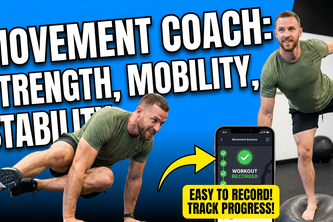
The company appears to be a solo-built, phone-first bodyweight training app named Movement Coach. The author states it aims to provide guided workouts, timers, progress logs, and AI-ready training history — with an eventual goal of integrating OpenAI-powered coaching. It is built as a progressive web app (PWA) using HTML/CSS/JS, Supabase, and Netlify Functions. The product is described as targeting beginners and home exercisers seeking strength, mobility, and stability through minimal equipment.
What changed
The project evolved from a personal workout logger into a more structured app with session tracking, authentication, and cloud sync capabilities, using AI tools like Codex and GPT-5.6 for development.
The single most important open question
Is there evidence of user adoption or engagement beyond the founder’s own use? The description does not indicate any traction, revenue, or customer base.
Note: This analysis is based solely on the self-reported project description provided by the author. No external verification or historical data exists for this project.
What The Product Actually Is
- The description states that Movement Coach is a "phone-first workout companion for guided bodyweight routines."
- It supports:
- Workout A/B routines with warmups, exercise cues, targets, and movement-specific tracking
- Timed exercises (e.g., dead hangs, planks)
- Rep-based set recording for various movements
- Rest timers, extra sets, quality notes, session summaries
- Local-first session storage
- It uses Supabase for authentication and database sync via Netlify Functions.
- The app is built as a PWA using HTML, CSS, JavaScript, deployed on Netlify.
- There is an AI-ready endpoint and database views designed to support future coaching.
Inference: The product is described as a lightweight fitness companion that logs workouts and prepares data for potential AI-driven coaching. It does not currently include AI features but plans to integrate them.
Positioning & Claim Evolution
- The author states the app started as a practical tool for returning to bodyweight training without needing a gym or complex workout plans.
- It is positioned to welcome:
- Beginners
- Home exercisers
- Park/gym users
- Anyone wanting to move better with minimal equipment
- The broader direction includes:
- Strength, mobility, and stability training
- Calisthenics as one lane, but not the only focus
- The app is described as sitting "in the middle" between generic and advanced fitness apps — simple enough for newcomers but structured enough to grow into calisthenics-style progressions.
- Future plans include:
- OpenAI-powered coaching
- Beginner onboarding
- Exercise categories by strength/mobility/stability
- Skill tracks (e.g., pull-up, L-sit progressions)
- An Expo mobile app sharing the same domain model
Claim: The product is positioned as a beginner-friendly, structured bodyweight training tool with future AI integration.
Target Customer & ICP
- The description states that Movement Coach targets:
- Beginners
- Home exercisers
- Park/gym users
- Anyone who wants to move better with minimal equipment
- It is described as welcoming people returning to exercise and those seeking strength, mobility, and stability.
- There is no mention of specific demographics or user segments beyond general fitness enthusiasts.
Not evidenced: No explicit ICP (Ideal Customer Profile) defined. No data on customer personas, usage patterns, or target market size.
Business Model & Pricing Evidence
- The description does not state any pricing model or monetization strategy.
- There is no mention of subscriptions, in-app purchases, or paid features.
- The app is described as a personal logger that may evolve into AI coaching — but no commercial structure is outlined.
Not evidenced: No evidence of business model or pricing.
Technical & Delivery Signals
- Built as a PWA using:
- HTML, CSS, JavaScript
- Supabase for authentication and Postgres-backed storage
- Netlify Functions for privileged logic
- The app uses Codex with GPT-5.6 for development.
- The author mentions a plan to build an Expo React Native App but decided against it due to time constraints.
- Data model is designed for AI coaching, including structured workout-context API and database views.
Inference: The technical stack suggests a lightweight, scalable approach using modern web technologies and cloud services. However, no production deployment or scalability data is provided.
Traction & Maturity Signals
- The app was built in the context of a hackathon (OpenAI 2026).
- It is described as a solo project by one developer (Dylan Punchihewa).
- No evidence of user adoption, retention, or usage metrics.
- No mention of customers, revenue, or product-market fit indicators.
Not evidenced: No traction, user base, or maturity signals beyond the initial build.
Competitive Context
- The description does not list competitors or reference existing players in the bodyweight or fitness app space.
- It positions itself as filling a gap between generic and advanced fitness apps.
- There is no mention of market size, competitive landscape, or differentiation strategy.
Not evidenced: No competitive analysis or positioning relative to other tools in the space.
Open Questions & Risks
- Solo-built product with no team or external validation.
- No evidence of user engagement or adoption.
- The app is described as a personal logger that may evolve into AI coaching — but no actual AI features are implemented yet.
- Time and resource constraints were noted during development, suggesting potential delays in execution.
- Lack of monetization strategy or business model clarity.
Inference: High risk due to lack of traction, unproven market demand, and reliance on future AI integration without current functionality.
Questions the description leaves open
- What is your evidence that users want this product? Have you tested it with real people?
- How do you plan to monetize the app beyond potential AI coaching?
- What are the specific features of the AI coach you're planning to build, and how will they be integrated?
- Do you have a roadmap for MVP to full product delivery?
- Are there any early adopters or beta users who have provided feedback?
- How do you plan to scale beyond a solo developer?
Overall Assessment
- Not evidenced: No financials, revenue, or customer data are available.
- The project is described as a solo-built hackathon prototype with no traction or commercial viability demonstrated.
- It has potential if the AI coaching component can be successfully implemented and validated with users.
- However, without evidence of adoption or product-market fit, it is not ready for investment or partnership consideration.
Assessment: Not ready for investment or partnership. Requires further validation of user demand and product-market fit before any commercial due diligence can proceed.
User Stories BotA demo video on every pull request
Get a demo video on every new feature
GitHub App that watches your pull requests and records a narrated, captioned demo.
Save time on demo prep and make informed decisions faster with a video walkthrough of every new feature.
Source
Submitted to the OpenAI 2026 hackathon on Devpost. Project home on Devpost. Back to the full gallery on Devpost.
This competitive analysis was produced by top-founders.com (opens in a new tab)
Generated by a language model from this project's public Devpost page — its tagline, the author's own write-up and any built-with tags listed there — as captured in August 2026. Short quotations are the author's words. It is an opinion on the idea as a business, not on the people behind it, and it reflects the description as published then. If the project has moved on, request a correction below. The analysis is not independent research and contains no verified traction, revenue or customer data.
An independent guide by KFG International LLC — not affiliated with, endorsed by, or connected to Devpost or OpenAI.