

Archive position — measured, not model output
0 likes on Devpost
2,263 of the 7,850 archived projects have more likes, and 5,587 share exactly 0 — so this project's #5,321 place in the like-ranked listing is a tie-break inside that group, not a ranking.
Projects (log scale)
Likes on Devpost. ▲ marks this project's group.
Show the figures
| Likes | Projects | Share of archive |
|---|---|---|
| 0 | 5,587 | 71.2% |
| 1 | 1,758 | 22.4% |
| 2 | 284 | 3.6% |
| 3–4 | 132 | 1.7% |
| 5–9 | 75 | 1.0% |
| 10+ | 14 | 0.2% |
 User Stories BotA demo video on every pull request
Get a demo video on every new feature
GitHub App that watches your pull requests and records a narrated, captioned demo.
Save time on demo prep and make informed decisions faster with a video walkthrough of every new feature.
Executive Summary
What the company appears to be
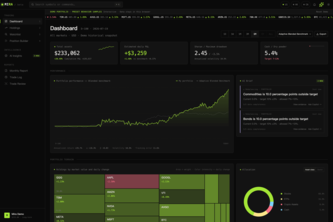
MIRA is a self-reported trading terminal with memory, built for individual investors across US, Hong Kong, China, and crypto markets. It is described as a product that brings together portfolio tracking, personal rules, trade history, and AI insights into one interface. The author states it is not a signal app or robo-advisor but rather a tool to help users make disciplined decisions by reviewing their own behavior and process.
What changed
The project evolved from a personal Codex skill that journaled the user’s emotional state during trades, into a full interactive demo with dashboard, position builder, AI insights, trade review, and monthly reports. It was built in a short timeframe (Build Week) using tools like Codex, GPT-5.6, React, Vite, Supabase, and various financial APIs.
Single most important open question
Is there evidence of real user adoption or traction beyond the author’s own use case? The description does not provide any data on actual users, revenue, or customer engagement — only a self-reported MVP built for demonstration purposes.
What The Product Actually Is
The description states that MIRA is:
- A trading terminal with memory
- Not a signal app, robo-advisor, or portfolio tracker
- Built for US, Hong Kong, China, and crypto markets
- Multilingual (English, Simplified Chinese, Japanese)
- Designed to help users make disciplined decisions by integrating:
- Portfolio data
- Personal rules
- Trade history
- Emotional state
- AI insights grounded in evidence
It includes features such as:
- A dashboard for net worth, performance, allocation, drawdown, and “trading temperature”
- Holdings, watchlists, and a trade log that records reasons behind actions
- A four-step Position Builder to formalize trade ideas before execution
- Personal rules and allocation targets that check decisions against them
- AI Insights and Copilot that point out risks, opportunities, rule breaks, and repeated behavior
- Trade review and monthly reports for learning from past performance
The product is described as never placing orders or telling users what to buy — the decision remains theirs.
Confidence Low. This is a self-reported feature list with no independent verification of functionality or completeness.
Positioning & Claim Evolution
The author claims MIRA:
- Is not just another portfolio tracker
- Is not a signal app or robo-advisor
- Focuses on helping users see themselves, not the market
- Treats personal rules, emotional state, and past behavior as data for AI
- Uses AI to check plans against evidence rather than predict markets
It positions itself as:
- A discipline loop: track → decide → reflect
- An investor’s mirror, showing internal patterns instead of external signals
- A tool that helps users stay responsible and in control
The evolution from a personal journaling skill to a full demo suggests an intent to scale beyond the author’s own use case, but no evidence is provided about how this transition was validated or tested.
Inference The positioning implies a shift from a niche personal tool toward a broader investor-facing product. However, this is inferred from the narrative and not substantiated by any external data.
Target Customer & ICP
The description states:
- MIRA targets individual investors
- Works across US, Hong Kong, China, and crypto markets
- Supports three languages: English, Simplified Chinese, Japanese
It is built for users who:
- Invest their own money
- Want to slow down before acting
- Are interested in learning from emotional patterns and repeated behaviors
- Value discipline over market timing or automation
There is no mention of institutional investors, brokers, or other segments.
Confidence Low. No segmentation data or customer personas are provided beyond the author’s personal experience.
Business Model & Pricing Evidence
The description does not state:
- Any pricing model
- Revenue streams
- Monetization strategy
- Subscription plans or fees
It says:
- MIRA is an MVP built for demonstration
- It uses preset sample data in demo mode
- No real brokerage connections are mentioned yet
- The author intends to add broker integrations and import options
Inference If MIRA moves beyond demo, it may adopt a freemium or subscription model, but this is speculative.
Technical & Delivery Signals
The description states:
- Built with React, Vite, Tailwind CSS, shadcn/ui, and JavaScript/Python backend
- Supports English, Simplified Chinese, Japanese
- Uses Tencent Finance, yfinance, CoinGecko for market data
- Employs Supabase for data handling
- AI layer powered by GPT-5.6 via OpenAI Responses API
- Uses Codex for UI design and product iteration during Build Week
It also mentions:
- Deterministic code checks portfolio, rules, allocation, and behavior before invoking AI
- AI only provides explanations backed by real evidence, never executes trades
- Demo data stays in browser and can be reset
Confidence Medium. The technical stack is detailed, but no information on scalability, security, or production readiness.
Traction & Maturity Signals
The description states:
- MIRA is an early MVP
- Built during a short Build Week hackathon
- Not yet tested for all paths or edge cases
- Still has bugs and data issues outside main flows
- No real brokerage account integration in demo
- No mention of users, customers, or revenue
Absence of evidence
There is no evidence of:
- Customer acquisition
- User retention
- Revenue
- Market traction
- Product-market fit validation
Competitive Context
The description does not provide:
- Names of competitors
- Market share data
- Competitive positioning
- Comparison to existing tools in the space
It implies MIRA is different from:
- Signal apps
- Robo-advisors
- Portfolio trackers
But it does not define its competitive landscape or how it stands out.
Absence of evidence
No competitive analysis, pricing comparisons, or market positioning relative to other platforms.
Open Questions & Risks
- No traction or user data: The product is described as an MVP built for a hackathon with no real-world testing.
- Unproven AI utility: While AI is central, there's no evidence that it adds value beyond what deterministic checks could provide.
- Single-founder build: Only one team member (Lydia Lee) is listed; no indication of scaling capability or team structure.
- Limited market reach: Currently supports only 3 languages and 4 markets — not a global solution yet.
- No monetization strategy: No pricing, revenue model, or business plan described.
- Demo-only functionality: The demo uses sample data; real-world integration is still in development.
Questions the description leaves open
- What specific user problems are you solving that current tools don’t?
- How do you plan to validate the effectiveness of AI insights with actual users?
- Are there any early adopters or beta testers using MIRA in real accounts?
- What is your path to monetization and long-term sustainability?
- How will you scale beyond the current 3 languages and 4 markets?
- What are the key assumptions about user behavior that underpin the product design?
- Have you considered how AI bias or overconfidence might affect decision-making?
- What are the technical challenges in moving from demo to production-grade data handling?
Overall Assessment
Not evidenced.
The description provides no information on:
- Revenue
- Customer base
- Market size
- Financials
- Team traction or prior experience
- Product-market fit metrics
This is a self-reported MVP, built in a hackathon setting, with no evidence of real user engagement or commercial viability.
Confidence Very low. This represents an early-stage idea, not a developed business.
Assessment Not ready for investment or partnership at this stage. Further validation through user testing, product development, and traction is required before any strategic move can be considered.
User Stories BotA demo video on every pull request
Get a demo video on every new feature
GitHub App that watches your pull requests and records a narrated, captioned demo.
Save time on demo prep and make informed decisions faster with a video walkthrough of every new feature.
Source
Submitted to the OpenAI 2026 hackathon on Devpost. Project home on Devpost. Back to the full gallery on Devpost.
This competitive analysis was produced by top-founders.com (opens in a new tab)
Generated by a language model from this project's public Devpost page — its tagline, the author's own write-up and any built-with tags listed there — as captured in August 2026. Short quotations are the author's words. It is an opinion on the idea as a business, not on the people behind it, and it reflects the description as published then. If the project has moved on, request a correction below. The analysis is not independent research and contains no verified traction, revenue or customer data.
An independent guide by KFG International LLC — not affiliated with, endorsed by, or connected to Devpost or OpenAI.